

After a heavy Melbourne downpour, a soggy lawn or flooded garden bed can feel like a disaster. Puddles that linger for days, yellowing plants, and that unpleasant squelch underfoot are all signs that your soil is struggling to cope. The good news is that waterlogging — while common in Melbourne’s clay-heavy soils — is a fixable problem, and in many cases you can tackle it yourself. This guide walks you through how to diagnose, treat, and prevent a waterlogged garden, with solutions ranging from quick fixes to long-term drainage improvements. Before treating the symptoms of a waterlogged garden, it helps to understand how the different components of a drainage network fit together — our guide to landscaping drainage connections walks through exactly how water should move through a residential property.
What Is a Waterlogged Garden?
Waterlogging occurs when soil becomes so saturated with water that it can no longer drain effectively. Unlike healthy moist soil, waterlogged ground displaces the oxygen in the tiny air pockets between soil particles. Without oxygen, plant roots cannot absorb nutrients, and the soil itself becomes a breeding ground for harmful bacteria and fungal pathogens. Melbourne’s heavy clay soils are especially prone to this problem — clay particles bind tightly together, slowing drainage to a near-standstill.
Hard surfaces like driveways are one of the biggest contributors to garden runoff — exploring driveway landscaping options that incorporate permeable materials or planted borders can significantly reduce the volume of water directed toward your garden beds.
Signs Your Garden Is Waterlogged
Watch for these warning signs after rain or irrigation:
- Persistent puddles or standing water that take more than 24–48 hours to drain
- Sticky, squelchy soil that clings to your boots
- Yellowing leaves, wilting, or scorched-looking foliage despite adequate rainfall
- Dead patches or a thinning, mossy lawn
- Branch dieback or unusual leaf drop on established trees and shrubs
- An unpleasant, sulphur-like smell rising from the soil
Why Waterlogged Soil Is a Problem
Prolonged saturation starves roots of oxygen, triggering root rot — a rapid deterioration that can kill plants in days. Nutrients leach out of the soil profile before roots can absorb them, and compaction worsens over time as the soil structure breaks down. Fungal diseases such as powdery mildew and Phytophthora root rot thrive in wet conditions, and after flooding events, toxins from sewage or road runoff can contaminate garden beds, making edible crops unsafe to harvest.
Common Causes of Waterlogging
- Heavy or sustained rainfall and storm events
- Clay or compacted soils with low permeability
- Foot traffic or heavy machinery compressing the soil over time
- Low-lying garden areas where water naturally collects
- Blocked or absent stormwater drainage around the property
Immediate Steps After Heavy Rain or Flooding
As tempting as it is to get out and start fixing things, the first rule after flooding is: stay off saturated soil. Walking on waterlogged ground compacts it further, making drainage worse. Instead:
- Use a garden hose to rinse mud and pollutants off foliage and stems
- Carefully remove debris, silt, and leaf litter that is smothering plants
- Dig shallow temporary trenches with a spade to channel water away from garden beds toward a lower point
- Allow as much natural drainage as possible before working the soil
Improve Soil Structure for Long-Term Drainage
Add Organic Matter
The single most effective long-term strategy for improving clay soil drainage is adding generous quantities of organic matter. Well-rotted manure, garden compost, and leafmould all help break up the tight clay particle bonds, creating larger pore spaces that allow water to move through more freely. Work a 5–10 cm layer of compost into the top 20–30 cm of soil each season. Beyond drainage, organic matter feeds the beneficial micro-organisms that keep your soil structure healthy year-round — a win for both drainage and plant growth. Selecting permeable and well-suited hardscaping materials is an important part of any drainage solution, as the surfaces surrounding your garden directly influence how much water flows into your soil.
Aerate and Spike the Soil
Aeration breaks up compacted layers and creates channels for water and oxygen to penetrate. The method you choose depends on the severity of the waterlogging:
Light Waterlogging
For lightly compacted or mildly soggy areas, push a garden fork 10–15 cm into the soil every 15–20 cm across the affected area and wiggle it gently. This is especially effective on lawns after winter.
Moderate to Severe Waterlogging
Use a hollow tine aerator (available for hire) which removes small cores of soil up to 15 cm deep. Backfill the holes with horticultural sharp sand to keep them open permanently. Avoid over-spiking in a single session — work in passes and allow the soil to stabilise between treatments.
Install a Drainage System
French Drains
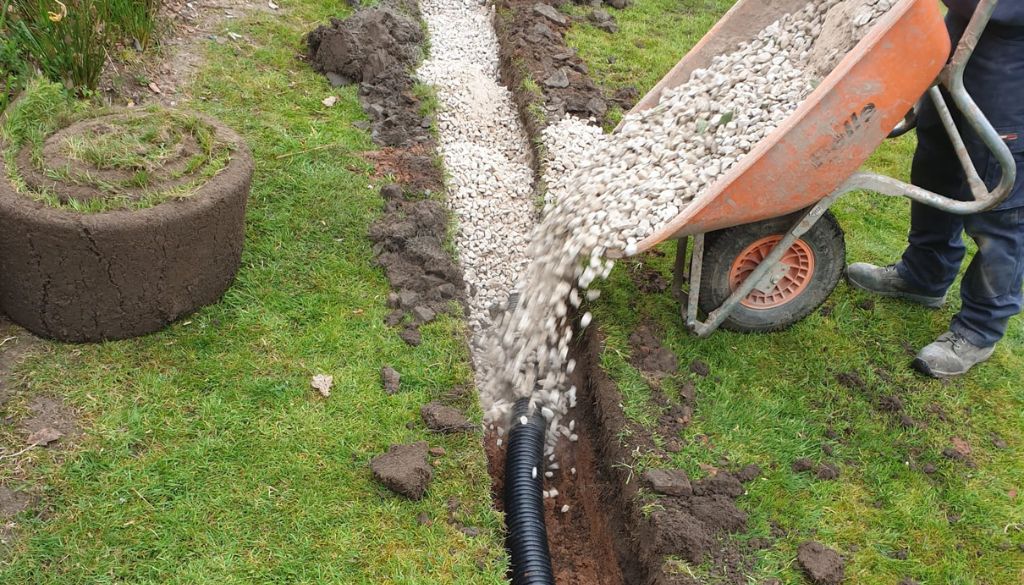
A French drain is one of the most reliable solutions for persistently wet areas. Dig a trench at a gradient of 1 in 50 to 1 in 100 (roughly 2 cm fall per metre), line it with permeable geotextile membrane, fill it with coarse gravel or crushed rock, and optionally lay a perforated agricultural pipe at the base. The trench redirects water to a soakaway pit or an approved stormwater outlet at the low end of your property. Always check your local council guidelines on where and how stormwater can be directed before you dig.
Soakaways
A soakaway is a rubble-filled pit — typically 1 m x 1 m x 1 m — lined with permeable membrane and positioned at the lowest accessible point in your garden. Water drains into the pit and disperses gradually into the surrounding subsoil. Soakaways work best where the underlying soil (below the clay layer) has reasonable drainage.
Quick Fixes vs Long-Term Solutions
| Method | Effort Level | Best For |
|---|---|---|
| Garden fork aeration | Low | Mild compaction, lawns |
| Add compost/organic matter | Low–Medium | Clay soil improvement |
| Hollow tine aerator + sand | Medium | Compacted lawn areas |
| Temporary drainage trench | Medium | Emergency flood relief |
| French drain | High | Persistent wet zones |
| Soakaway pit | High | Chronic low-lying areas |
| Raised beds / regrading | High | Replacing heavy clay soil |
Raise or Regrade Problem Areas
Where soil drainage cannot be improved sufficiently, raising the growing level is the most reliable fix. Build raised garden beds directly over the problem area, laying cardboard as a weed barrier first, then filling with a quality compost-and-loam mix. Raised beds warm up faster in spring and drain freely regardless of what lies beneath. For flat lawns with recurring flooding, a landscape designer can regrade the surface — removing heavy clay and replacing it with a layer of sharp sand topped by quality loamy topsoil and new turf — to create positive drainage flow away from the house. If this is your first time tackling a garden project of this scale, our beginner’s guide to landscaping gives you a solid foundation in soil preparation, plant selection, and planning before you pick up a spade.
Lawn Recovery After Waterlogging
Resist the urge to mow a waterlogged lawn — wait until the surface is firm enough that you don’t leave deep footprints. Once dry enough to work on:
- Aerate thoroughly with a garden fork or hollow tine aerator
- Top-dress with a fine sand and compost blend, working it into the aeration holes
- Overseed bare or thinning patches once temperatures are suitable
- Apply a wetting agent (soil wetter) if you notice water beading on the surface rather than soaking in
- Monitor closely for moss and fungal issues over the following weeks
Helping Flood-Damaged Plants Recover
Plants can be more resilient than they look. Begin by gently washing away silt from stems and leaves with clean water. Re-cover any exposed roots with soil and firm them in. Hold off pruning unless branches are visibly dead or diseased — many plants will push new growth once conditions improve. Apply a diluted liquid fertiliser once the soil has dried out sufficiently, to help replace leached nutrients. Be patient: some symptoms such as leaf yellowing or tip dieback may not appear until several weeks after the flooding event.
Turn a Problem Spot Into a Feature: Bog and Rain Gardens
If one corner of your garden reliably collects water, consider working with it rather than fighting it. Direct excess stormwater into a dedicated low-lying area planted with moisture-loving species such as Amsonia, Astrantia, Cardamine, hardy Geraniums, and Persicaria. This approach — sometimes called a rain garden — filters runoff naturally, reduces erosion, and creates a distinctive planting zone that thrives where other plants would struggle. It’s a sustainable landscaping solution that suits Melbourne’s variable rainfall patterns especially well.
Testing Your Soil Drainage Before You Start
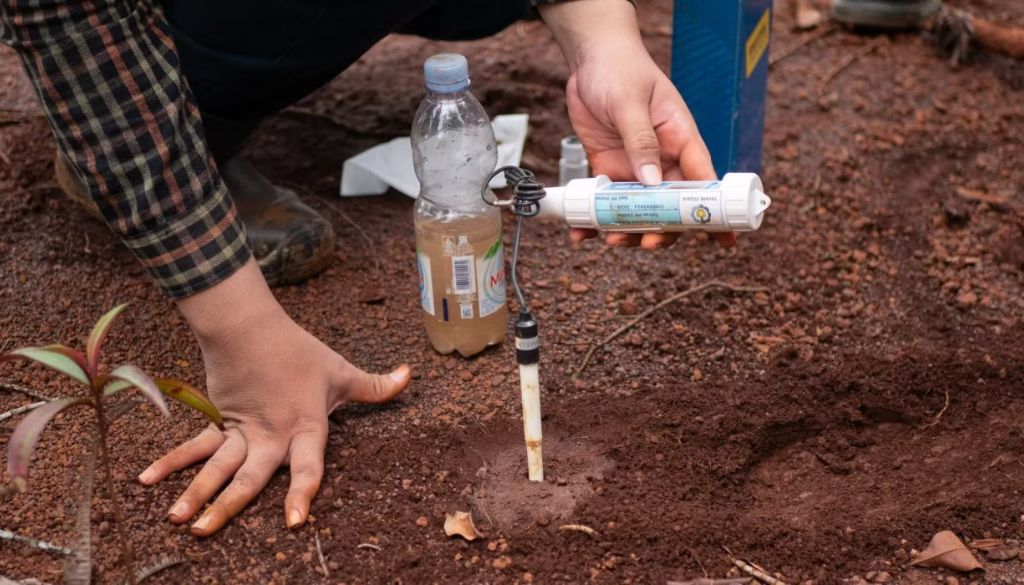
Before investing in drainage systems, do a simple percolation test: dig a hole roughly 30 cm deep and 30 cm wide, fill it with water, allow it to drain, then refill and time how long the second fill takes to drain. Healthy soil drains at roughly 2.5–5 cm per hour. Slower than that and you have a drainage problem worth addressing. Clay-heavy soil that barely moves after 24 hours will likely need a structural solution — French drain, soakaway, or ground replacement — rather than organic matter alone. Once your drainage is sorted, choosing drought-tolerant and low-maintenance shrubs that suit Melbourne’s variable conditions will help you build a garden that’s resilient whether the season brings too much rain or too little.
When to Call a Professional
DIY solutions work well for mild to moderate waterlogging, but some situations call for professional assessment:
- Persistent standing water that remains for days after dry weather
- Waterlogging affecting foundations, retaining walls, or structural elements
- Extensive lawn areas requiring regrading or full replacement
- Drainage redesign involving stormwater connections or council approvals
At John French Landscape Design, we’ve been solving drainage problems for Melbourne homeowners since 1981. From Eltham to Kew, Viewbank to Doncaster East, our team can assess your drainage conditions, design a targeted solution — whether that’s a French drain, raised beds, or a full regrading — and manage the construction process from start to finish. Get in touch for a consultation to discuss your garden’s drainage needs.
Preventing Future Waterlogging
- Incorporate compost into your soil every season to maintain structure
- Install permanent drainage early — before the next storm season
- Avoid walking on lawn and garden beds during or immediately after heavy rain
- Plan raised beds in low-lying areas rather than fighting gravity
- Inspect and clear stormwater drains and gutters before winter
Narrow passages alongside the home are a frequent source of drainage problems — if that’s where water is pooling, our side of house landscaping ideas cover practical ways to improve both the function and appearance of those often-neglected zones.
Frequently Asked Questions
How long can plants survive in waterlogged soil?
Most garden plants can tolerate brief waterlogging (24–72 hours) without permanent damage. Extended periods beyond 5–7 days, particularly in warm weather when bacteria are most active, can cause irreversible root rot. Hardy natives and bog-adapted species can tolerate longer periods.
Will my lawn recover after flooding?
Yes, in most cases — provided the flooding was relatively short-term. Aerate, top-dress, overseed bare patches, and give it time. Severe or prolonged flooding may require partial or full lawn replacement.
Can you fix clay soil drainage permanently?
You can significantly improve it with consistent annual compost additions, aeration, and where necessary, a French drain or soakaway. Clay soil rarely becomes ‘sandy’ but can be transformed into a productive, well-draining garden bed over 2–3 seasons of organic matter addition.
Should I fertilise a waterlogged garden?
Wait until the soil has dried out before fertilising. Applying fertiliser to waterlogged soil wastes product (it will leach away immediately) and can further stress already weakened roots. Once conditions normalise, a diluted liquid fertiliser helps plants recover.
Need Professional Drainage Help?
If your garden has recurring drainage issues that DIY solutions haven’t solved, John French Landscape Design can help. With over 40 years of experience designing and building landscapes across Melbourne’s northern suburbs, we understand the drainage challenges unique to this region — from Eltham’s clay-rich soils to sloped blocks in Research and Viewbank. Learn about our design and construction process or contact us on 0419 725 344 to book a consultation.
