
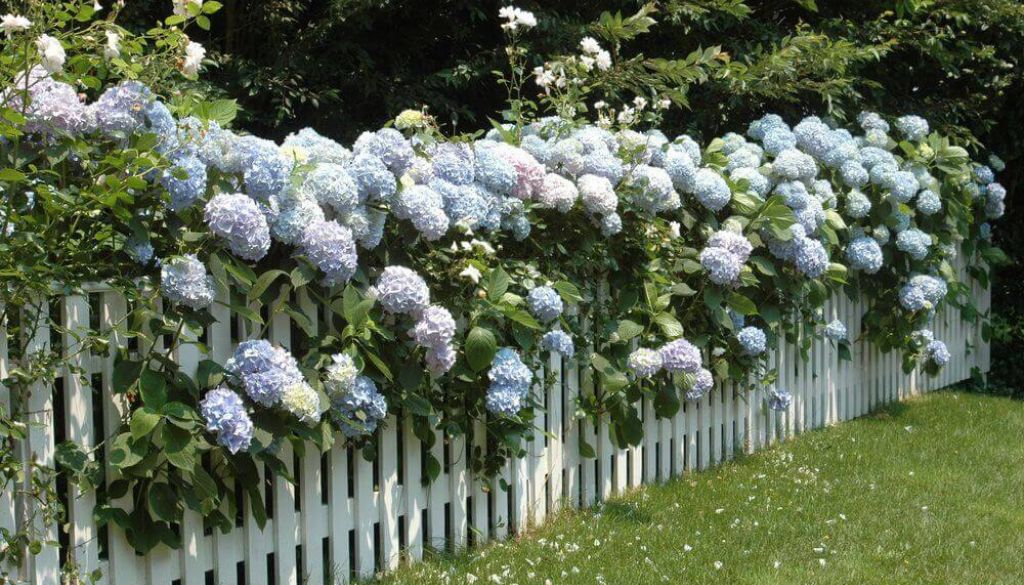
If you want year-round privacy, seasonal colour, or a softer look for your boundary lines, perennial climbing plants for fences are one of the most effective garden solutions. Unlike annual vines that need replanting each season, perennial climbers come back year after year — many becoming fuller and more impressive with age.
Whether you’re screening a side fence, softening a brick wall, or adding vertical interest to an outdoor entertaining area, the right climber transforms a bare structure into a living feature. Below, we’ve grouped the best options by sun needs and growth habits so you can match the right plant to your garden conditions.
Evergreen Perennial Climbers (Year-Round Coverage)
If you need greenery that stays put through every season, evergreen climbers are the obvious starting point. These plants keep their foliage year-round, providing consistent screening and a lush backdrop regardless of the time of year.
1. Star Jasmine (Trachelospermum jasminoides)
Best for: Fragrant privacy screens
Star Jasmine is one of the most reliable perennial climbing plants for fences in Melbourne and across temperate Australia. It produces glossy, dark green foliage year-round with highly fragrant white flowers appearing in spring and summer. As a twining climber, it needs wires or lattice to grip onto, but once established it forms a dense, self-supporting screen. It handles both sunny and part-shade positions, making it one of the most versatile choices for boundary fences.
Star Jasmine suits everything from modern rendered walls to traditional timber fencing — a genuine all-rounder.
2. Hardenbergia violacea (Happy Wanderer)
Best for: Native gardens
Hardenbergia is an excellent Australian native climber that delivers a mass of purple pea-flowers in late winter and early spring, right when most gardens need a colour boost. It’s evergreen, low-maintenance, and fast to cover a trellised fence. It handles full sun to part shade and thrives in well-drained soils — a smart pick if you’re building a sustainable, low-maintenance garden that leans into native plantings.
3. Climbing Hydrangea (Hydrangea petiolaris)
Best for: Shady fences
If your fence sits in a shaded or south-facing position, Climbing Hydrangea is hard to beat. It attaches via self-clinging aerial roots, produces beautiful white lacecap flowers in summer, and develops attractive peeling bark in winter. It’s slow to establish in its first two to three years, then becomes vigorous and full. Perfect for cool, shaded boundary walls or fences under established tree canopies.
Flowering Perennial Climbers
For gardeners chasing colour and seasonal drama, these flowering climbers deliver impressive blooms that transform a plain fence into a statement feature.
4. Clematis
Best for: Colour variety
Clematis offers one of the widest colour ranges of any climbing plant — from deep purples and rich magentas to soft whites and pale pinks. Depending on the variety, you’ll get spring or summer blooms (and sometimes both). Most Clematis are deciduous and need support wires or lattice. Plant with “cool roots, warm head” in mind: mulch the base well and let the top growth reach into sunlight. One of the longest-blooming perennial fence climbers available.
5. Wisteria
Best for: Pergolas and strong fences
Few climbers match the sheer drama of Wisteria in full bloom. Those cascading racemes of purple or white flowers create a breathtaking spring display and provide excellent summer shade once the canopy fills in. However, Wisteria is extremely vigorous and develops heavy, woody stems over time. It demands sturdy structural support — avoid lightweight timber fencing. Best suited to steel frames, brick walls, or robust pergola structures.
6. Pandorea jasminoides (Bower Vine)
Best for: Warm climates
Pandorea produces elegant pink trumpet flowers and maintains semi-evergreen foliage in mild areas. It’s fast-growing but manageable with light annual pruning, making it a practical choice for screening along sunny fences. An excellent option for Melbourne’s warmer northern and western suburbs.
7. Passiflora incarnata (Passionflower)
Best for: Exotic flowers
Passionflower produces some of the most striking, intricate blooms you’ll find on any climber. It’s a tendril climber that attaches easily to wire or lattice, and some varieties produce edible fruit as a bonus. Full sun is preferred. If you’re looking to add a tropical feel to a backyard fence, this is a standout choice.
Sun-Loving Fence Climbers
Hot, exposed fences call for tough climbers that thrive in full sun and can handle heat radiating off hard surfaces.
8. Bougainvillea
Best for: Hot, dry climates
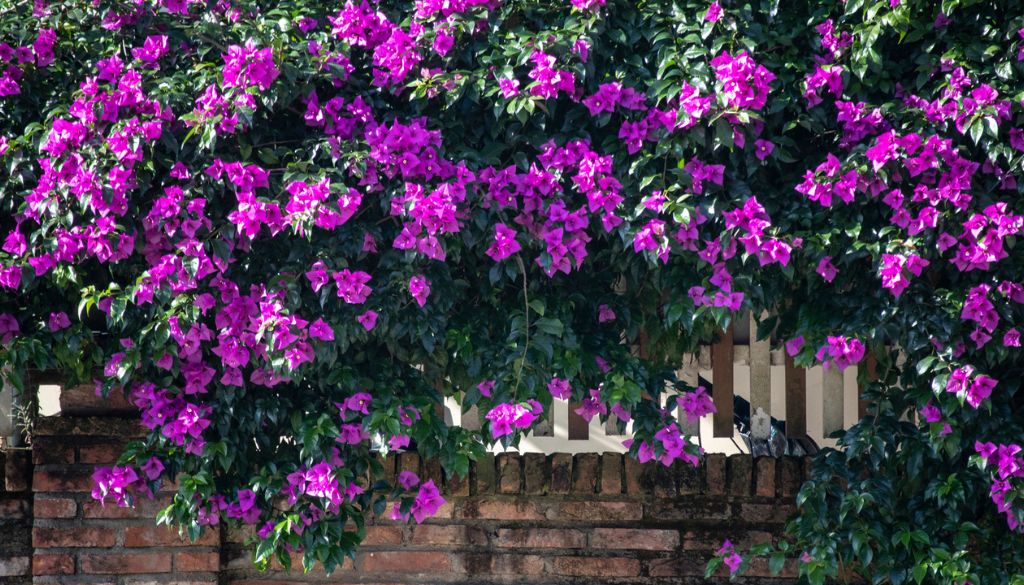
Bougainvillea delivers some of the most brilliant colour of any climbing plant, with vivid bracts in magenta, orange, red, and white. It’s evergreen in warm zones and remarkably drought-tolerant once established. Keep in mind that the thorny stems need strong support, and regular pruning is essential to prevent structural stress on lighter fencing.
9. Mandevilla
Best for: Tropical-style gardens
Mandevilla combines glossy foliage with large trumpet flowers in pink, red, or white. It stays evergreen in frost-free areas and works particularly well on decorative fence panels where you want a polished, resort-style look.
Shade-Tolerant Climbers
Shaded fences are often the trickiest spots in a garden, especially along narrow side-of-house corridors where light is limited. These climbers handle lower light conditions and still perform well.
10. Akebia quinata (Chocolate Vine)
Best for: Semi-shade
Akebia produces fragrant purple flowers with a subtle chocolate scent and maintains semi-evergreen foliage in milder climates. It’s a fast twiner that adds soft, layered foliage to darker corners and shaded fence lines.
11. Ivy (Hedera helix)
Best for: Dense green coverage
Ivy is the classic self-clinging climber for shaded positions. It’s evergreen, incredibly vigorous, and covers surfaces quickly. However, it can become invasive without regular maintenance, so it’s best used where you’re committed to periodic trimming. Avoid planting against timber fencing that may deteriorate under dense growth.
Climbing Roses (Perennial Classics)
12. Climbing Roses
Best for: Romantic garden style
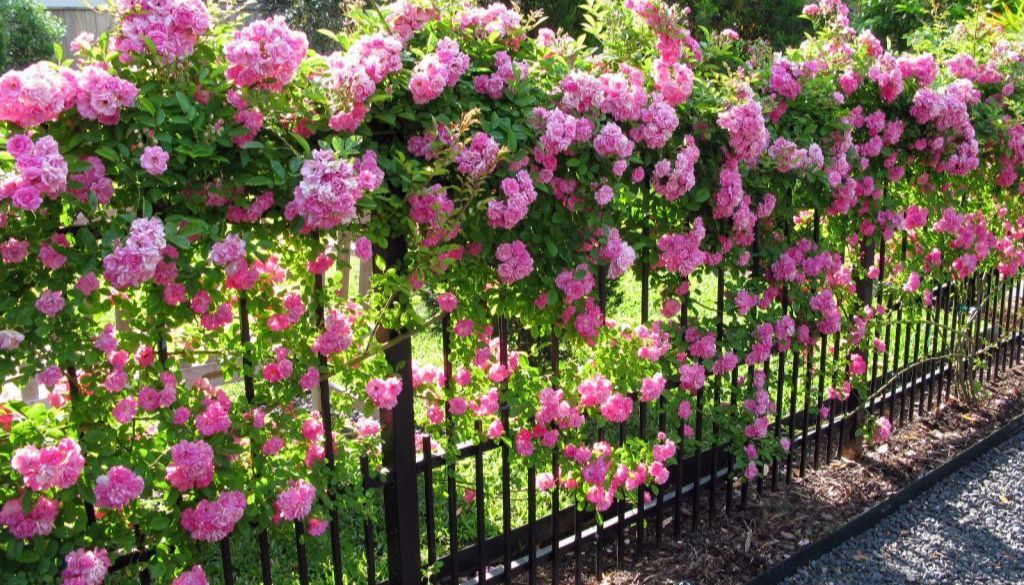
Nothing says cottage garden charm quite like climbing roses trained along a fence. Long canes are tied horizontally to encourage maximum flowering along the length of the support. They’re seasonal bloomers that reward careful placement and regular feeding. Best on timber or wire fencing where canes can be secured easily.
Fast-Growing Privacy Climbers
If your primary goal is quick screening — perhaps for a new build or recently installed fence — these climbers can grow several metres per year once established:
- Hardenbergia violacea
- Wisteria
- Passiflora incarnata
- Bougainvillea
For the fastest results, prepare your soil well before planting, install support wires or lattice at the time of fencing, and water regularly through the first growing season.
How to Choose the Right Fence Climber
Selecting the right climber is about matching the plant to your specific conditions. If you’re new to garden planning, consider these key factors before planting:
- Fence material – Heavy, woody vines like Wisteria and Bougainvillea can damage lightweight timber. Match vigorous growers to sturdy structures.
- Sun exposure – Full sun versus partial shade dramatically affects performance. Place sun-lovers in north or west-facing positions and shade-tolerant species on south-facing fences.
- Support system – Twining climbers need wires or lattice to grip. Self-clingers like Ivy and Climbing Hydrangea attach directly to surfaces.
- Maintenance level – Some climbers need regular pruning to prevent overgrowth and keep them within bounds. Factor this into your long-term garden maintenance plan.
Pairing your climbers with complementary low-maintenance shrubs at the base creates a layered, professional look with minimal upkeep.
Frequently Asked Questions
What is the best perennial climbing plant for a fence in shade?
Climbing Hydrangea is one of the best options for shaded fences. It self-clings via aerial roots, produces white lacecap flowers in summer, and develops attractive peeling bark through winter. For dense, year-round green coverage in shade, Ivy is another reliable choice — though it requires regular trimming to keep it under control.
How long do perennial climbers take to cover a fence?
It depends on the species. Fast growers like Hardenbergia, Wisteria, and Bougainvillea can cover several metres per year once established. Slower species like Climbing Hydrangea may take two to three years before they hit their stride. In most cases, good soil preparation, consistent watering in the first season, and a sturdy support system will speed up coverage significantly.
Do climbing plants damage fences?
They can if you choose the wrong plant for the wrong fence. Heavy, woody climbers like Wisteria can warp or break lightweight timber panels over time. Self-clinging species like Ivy may leave marks or cause surface damage on rendered walls. The key is matching the plant’s vigour to the strength of your fence — twining climbers on wire or lattice are generally the safest option for standard residential fencing.
Can I grow perennial climbers in pots along a fence?
Yes, many perennial climbers grow well in large containers. Star Jasmine, Clematis, and Mandevilla are all well-suited to pot culture, provided you use a quality potting mix, water regularly, and feed during the growing season. Position the pot at the base of the fence and install a small trellis or wire panel for the plant to climb.
What is the lowest-maintenance perennial climber for fences?
Star Jasmine and Hardenbergia violacea are among the easiest to maintain. Both are evergreen, drought-tolerant once established, and require only light annual pruning to keep tidy. Hardenbergia is particularly well suited to Australian conditions and needs very little intervention once it’s settled in — making it ideal for homeowners who want a set-and-forget screening solution.
Final Thoughts
The best perennial climbing plants for fences combine beauty with practicality. For low-maintenance, year-round greenery, go evergreen with Star Jasmine or Hardenbergia violacea. For dramatic seasonal blooms, Clematis or Wisteria are hard to beat. And for quick screening on a tight timeline, fast-growing options like Bougainvillea and Passionflower deliver results within a single growing season.
The key is matching the right plant to your fence type, sun exposure, and how much ongoing care you’re willing to invest. Get that combination right, and you’ll have a living fence feature that improves with every passing year.
Need Help Designing Your Garden?
At John French Landscape Design, we’ve been creating landscapes across Melbourne’s northeast since 1981. Whether you’re screening a boundary fence, designing a complete garden overhaul, or integrating climbers into an existing planting scheme, we can help you choose the right plants for your conditions and bring the whole design together.
Call us on 0419 725 344 or book a consultation to get started.
