
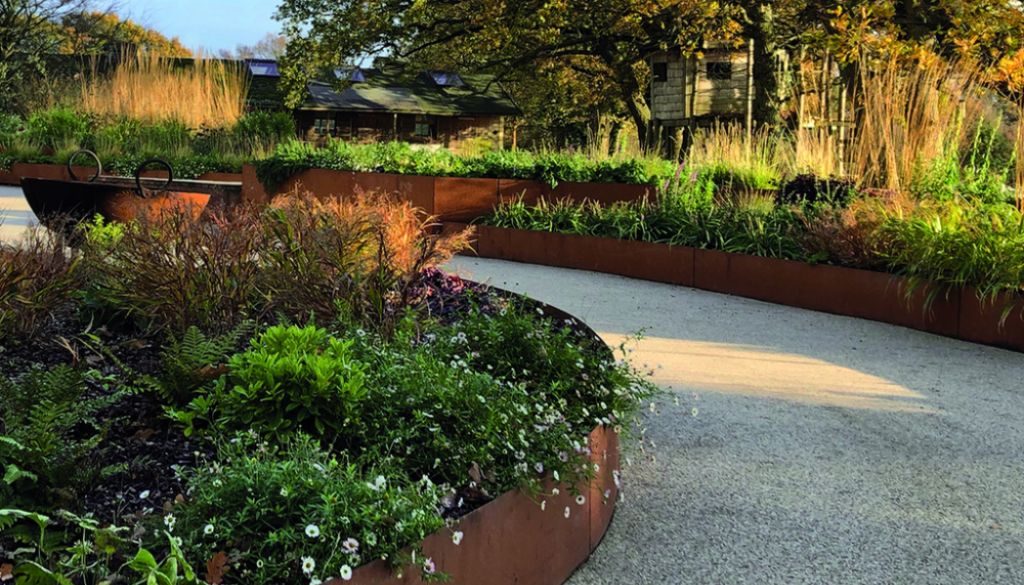
Few materials bridge the gap between raw industrial character and natural beauty quite like corten steel. Originally developed for railway coal wagons and outdoor sculpture, this weathering steel has become one of the most sought-after materials in contemporary landscape design across Melbourne and beyond. Its distinctive burnt-orange patina evolves over time, creating a living surface that complements stone, timber, concrete and native planting palettes.
Whether you are defining garden beds with crisp edging, building architectural planter boxes or screening a boundary wall, corten steel offers a rare combination of strength, low maintenance and timeless aesthetic appeal. In this guide, we explore what corten steel is, why it works so well in Australian gardens, how to use it across a range of applications and what to consider before you commit.
What Is Corten Steel?
COR-TEN is a trademarked group of weathering steels originally developed in the 1930s by United States Steel Corporation. Unlike standard mild steel, corten contains small amounts of copper, chromium and nickel that cause it to form a stable, protective oxide layer when exposed to the elements. This patina starts as a grey-blue tone before transitioning through deep orange to a rich, earthy rust brown over roughly two to three years.
The key distinction is that this rust layer actually protects the steel underneath rather than eating into it. Once the patina stabilises, atmospheric corrosion slows dramatically, giving corten a functional lifespan of 80 years or more without painting, sealing or chemical treatment. That self-protecting quality is what makes it so attractive for outdoor landscape applications where ongoing maintenance is a genuine concern. For homeowners exploring broader hardscaping material options, corten sits firmly at the premium end of the spectrum.

Why Corten Steel Works in Australian Landscape Design
A Natural, Earthy Aesthetic
The warm ochre tones of weathered corten harmonise with the Australian landscape in a way that few manufactured materials can. Paired with native grasses such as Lomandra and Dianella, local sandstone and recycled timber, corten creates an organic material palette that feels rooted in its surroundings. It works equally well in a minimalist courtyard in Alphington as it does in a bushland-edge garden around Eltham.
Strength and Durability
Corten’s structural performance is impressive relative to its slim profile. A 5–10 mm corten panel can replace a 200 mm masonry block wall in many edging and low-retaining applications, freeing up valuable garden space. This slimline advantage is particularly useful in narrow side yards, tight courtyard builds and steep hillside landscapes where every centimetre counts.
Low Maintenance
Once the patina has fully developed, corten requires virtually no upkeep. There is no repainting schedule, no sealing regime and no risk of the flaking or peeling that plagues powder-coated or painted steels over time. For time-poor Melbourne homeowners looking for sustainable, low-maintenance garden solutions, corten delivers lasting results without ongoing cost.
Cost Considerations
Corten steel carries a higher material cost than mild steel or basic concrete edging. However, when you factor in the absence of painting, sealing and replacement cycles over a 20- to 30-year window, the lifecycle cost often compares favourably to alternatives that demand regular upkeep. It is also typically more affordable than natural granite or marble hardscape features.
Applications of Corten Steel in Landscaping
Garden Edging
Corten edging strips create clean, defined lines between lawn, gravel and planting beds. At just a few millimetres thick, they occupy a fraction of the footprint of traditional block or brick borders while providing a striking visual contrast. Edging is available in flat-pack bundles (commonly 10 m, 24 m and 48 m lengths) as well as custom-fabricated profiles to suit curves, steps and level changes. This is one of the most accessible entry points for homeowners considering corten in their patio or outdoor entertaining area.
Planter Boxes and Planter Rings
Raised corten planters bring architectural form to garden beds, vegetable patches and feature plantings. Tiered planter rings are especially effective on sloped sites, creating cascading levels of greenery that add depth and visual interest. Available in a range of diameters and heights, they can be supplied as flat-pack kits or custom-fabricated to match your design.
Retaining Walls
Where space is tight, corten retaining walls offer a slim-profile alternative to traditional block or timber sleeper systems. Their structural rigidity suits terraced gardens, driveway transitions and level changes between outdoor zones. Proper drainage planning behind any corten retaining structure is essential to manage hydrostatic pressure and prevent water pooling against the steel.
Privacy Screens and Wall Cladding
Laser-cut corten panels serve as both functional screening and sculptural garden art. Patterns range from geometric motifs to organic leaf designs, filtering light and wind while maintaining a degree of airflow. This makes corten an excellent option for exposed, windy garden settings where solid fencing can create turbulence. When used as wall cladding, corten adds warmth and texture to rendered or timber-clad facades.
Sculptural Features
Corten lends itself to bespoke fabrication, from water features and fire bowls to abstract sculpture and letter-cut signage. These pieces become natural focal points in a garden, blending artistic expression with the material’s inherent durability.
Corten Steel vs Other Steel Finishes
Choosing the right steel finish depends on your aesthetic preference, budget and willingness to maintain it over time. The table below provides a practical comparison.
| Steel Type | Maintenance | Lifespan | Aesthetic | Cost |
|---|---|---|---|---|
| Corten Steel | None (self-protecting patina) | 80+ years | Warm rust-orange patina | Higher upfront, lower lifecycle |
| Mild Steel | Regular painting/sealing | 15–25 years unprotected | Silver-grey (rusts destructively) | Low upfront, higher ongoing |
| Galvanised Steel | Periodic inspection | 30–50 years | Silver metallic finish | Moderate |
| Powder-Coated Steel | Recoating every 10–15 years | 20–30 years | Custom colour, uniform | Moderate to high |

Design Tips for Using Corten Steel
Balance and Context
Corten is a statement material. Use it deliberately within a broader palette rather than applying it to every surface. In small courtyards, a single corten feature wall or planter can anchor the space without overwhelming it. In larger gardens, corten edging or retaining walls provide continuity across zones without dominating the planting.
Pairing Materials
Corten pairs beautifully with natural stone for texture contrast, hardwood timber for warmth and off-form concrete for a modern minimalist effect. Gravel mulches in warm tones (such as Tuscan or decomposed granite) extend the earthy colour story across adjacent surfaces.
Installation Considerations
Most corten elements are fabricated off-site and delivered ready to install, which reduces on-site construction time significantly. Smaller edging projects are manageable as a DIY weekend task, while retaining walls, screens and large planter builds generally benefit from professional design and installation to ensure structural adequacy and correct drainage detailing.
One practical point to plan for: during the first 12 to 18 months of weathering, corten produces a rust-coloured runoff. This can stain adjacent concrete, limestone pavers and light-coloured surfaces. Positioning new corten elements away from pale hardscapes during the initial oxidation phase, or planning sacrificial gravel borders, helps manage this.
Frequently Asked Questions
How long does corten steel last in landscaping?
With proper installation and drainage, corten steel can last 80 years or more. The protective patina forms within two to three years and continues to strengthen over time, making it one of the most durable landscape materials available.
Does corten steel stain surrounding surfaces?
Yes, during the initial weathering period (roughly 12–18 months), rust-coloured runoff can stain concrete, stone and other porous surfaces. Planning for this phase by using gravel buffers or positioning corten away from light-coloured paving minimises the impact.
Can corten steel be used in coastal areas?
Corten performs best in environments with regular wet-dry cycles. In coastal settings with persistent salt spray, the patina may not stabilise correctly and the steel can corrode more aggressively. If you are within direct salt-spray zones, consult a landscape designer or materials engineer before specifying corten.
Does corten steel require sealing?
No. Sealing or painting corten defeats its purpose by preventing the protective oxide layer from forming. The material is designed to weather naturally. Some suppliers offer accelerant solutions to speed up the initial patina, but sealing is not recommended.
Ready to Design with Corten Steel?
At John French Landscape Design, we have been creating distinctive residential landscapes across Eltham and Melbourne’s suburbs since 1981. Whether you are considering corten edging for a garden refresh or a full design incorporating retaining walls, planters and privacy screens, our team can guide you from concept through to construction handover.
Call us on 0419 725 344 or book a consultation to discuss how corten steel can transform your outdoor space.
