
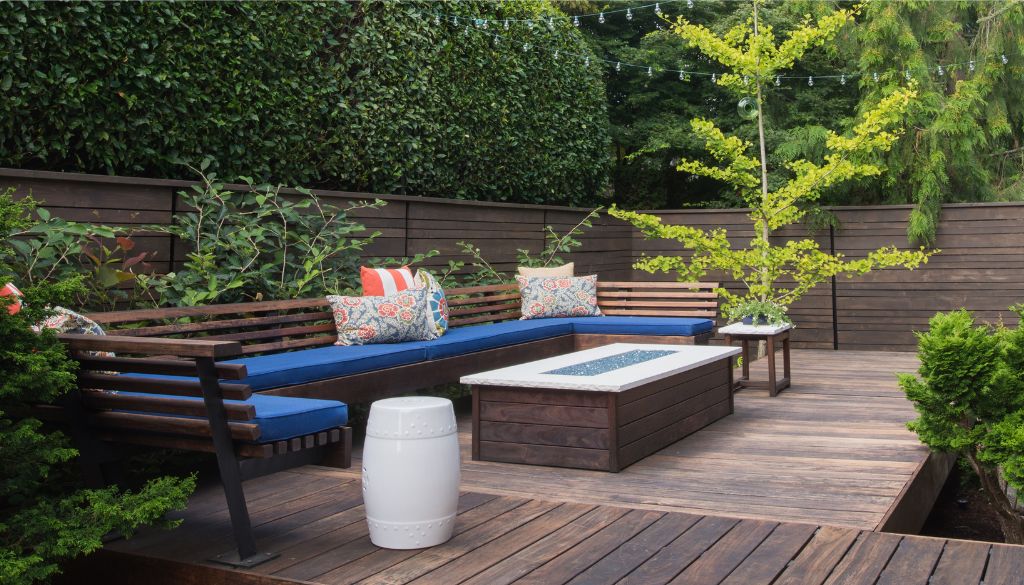
A sloping garden might seem like a headache, but experienced landscape designers know it’s actually one of the most exciting canvases to work with. With the right design approach, a sloped backyard can be transformed into a multi-level outdoor living space that’s more dynamic, more functional, and far more impressive than a flat yard could ever be.
Whether you’re dealing with a gentle incline or a steep drop, this guide walks you through the most practical and stylish decking ideas for sloping gardens — including materials, structural solutions, planting integration, and design tips from Melbourne’s own landscape professionals.
Why Sloping Gardens Are a Unique Opportunity
Most homeowners view a sloped block as a problem to solve. In reality, elevation changes give landscape designers a powerful tool for creating visual interest, natural garden ‘rooms’, and layered outdoor living experiences that flat blocks simply can’t replicate. If you’re looking for more ways to create usable outdoor spaces beyond the ground level, explore our rooftop garden ideas for Melbourne homes for design inspiration, plant selection tips, and structural guidance.
Slopes allow you to:
- Create distinct entertaining zones at different elevations
- Frame views across the garden or beyond the fence line
- Add natural privacy through height and level changes
- Incorporate water features, retaining walls, and planting terraces that flow naturally with the land
If you’re thinking about hardscaping your sloped block, our guide on the best hardscaping materials for outdoor spaces is a great starting point.
Challenges of Sloped Gardens
Before diving into design inspiration, it’s worth understanding the practical challenges that come with sloped backyards:
- Drainage and water runoff — water follows gravity, which can cause erosion and pooling
- Slope stability — loose soil on steep gradients requires structural support
- Accessibility — stairs and level changes need careful planning for children, elderly users, or pets
- Limited flat usable space — furniture, BBQs, and outdoor dining need level ground
The good news? Each of these challenges has a proven design solution — and decking is often at the heart of it.
Decking Solutions for Sloping Gardens
Multi-Level or Tiered Decks
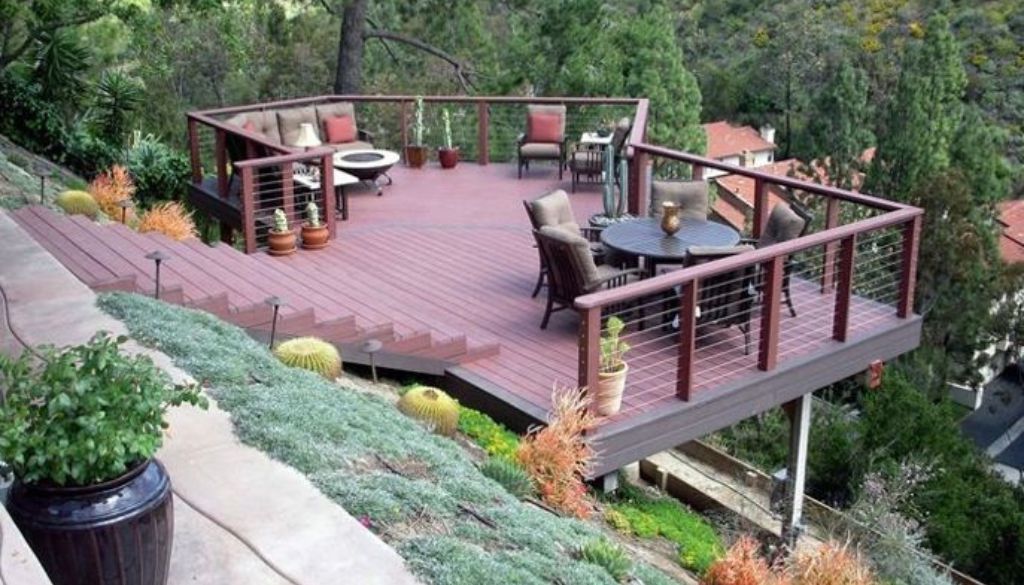
The most popular approach for sloped blocks, tiered decking breaks the slope into two or more flat platforms connected by steps or pathways. Each level can serve a different purpose — a lower dining terrace, a mid-level lounging area, and an upper zone for a BBQ or fire pit, for example.
Tiered decks work especially well for large elevation changes and can be designed to feel like a seamless extension of the home rather than a series of disconnected platforms.
Decks with Retaining Walls
Combining timber or composite decking with stone or timber retaining walls is a classic Melbourne approach to slope management. The retaining wall does two jobs: it stabilises the slope and creates a flat, usable platform for the deck above.
Retaining walls can be purely functional or made a key design feature — think sandstone block walls with built-in garden beds, or sleek timber walls that complement the deck material.
Integrated Staircases
Staircases are what make multi-level sloped gardens actually usable. Timber, steel, or even spiral staircases can link different deck levels or connect the deck to lower garden zones without eating into usable floor space.
Well-designed staircases become a feature in their own right — wide, low-rise timber steps flanked by native plantings are a signature look in Melbourne’s inner and outer north.
Elevated or Hanging Decks
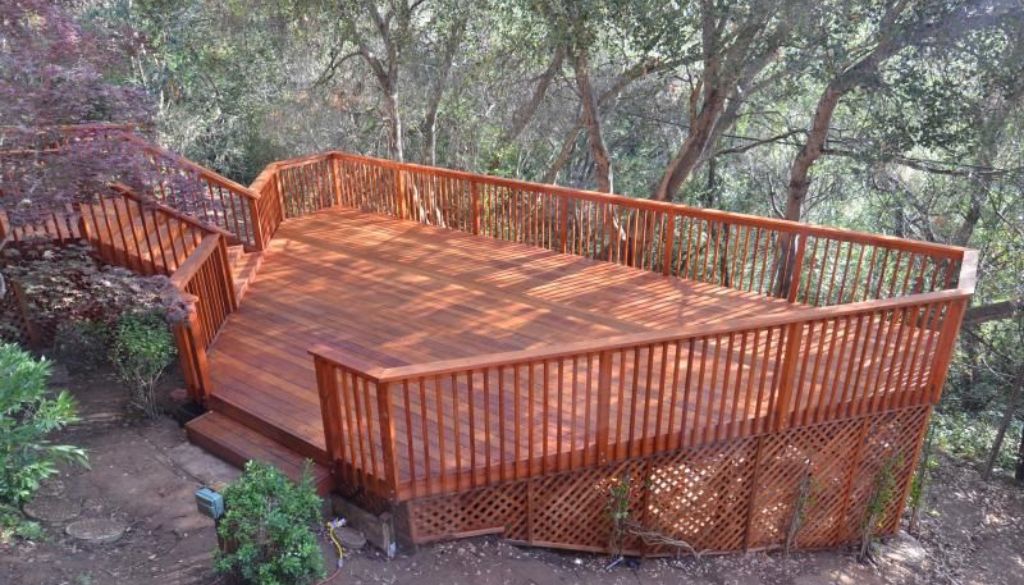
For steep drops, an elevated deck perched above the slope can unlock views and create a dramatic outdoor living space that ‘floats’ above the garden below. Privacy screens, built-in planters, and stainless steel railings are common additions that add both safety and style.
These structures require solid engineering and careful planning around council requirements — especially where height relative to neighbouring properties is concerned.
Deck Materials and Finishes
Material choice has a significant impact on both the look and longevity of a sloped garden deck. Here’s a quick comparison of the most common options:
| Material | Pros | Cons |
|---|---|---|
| Hardwood Timber | Natural look, classic, easy to work with | Requires regular oiling/sealing; can warp |
| Composite Decking | Low maintenance, weather-resistant, long-lasting | Higher upfront cost; can feel less natural |
| Steel / Aluminium | Excellent for elevated structures; slim profiles | Can look industrial; specialist fabrication required |
For Melbourne’s variable climate, composite decking with non-slip finishes and UV protection is increasingly popular — especially on elevated decks that take the full force of summer sun. Regardless of material, consider built-in lighting strips, integrated bench seating, and concealed storage to maximise every square metre.
Planting and Landscaping Around Sloped Decks
A deck without planting can look hard and disconnected from the garden. On sloped blocks, thoughtful planting is also a functional tool for controlling erosion and softening retaining structures.
Groundcover plants such as native grasses, lomandra, and prostrate grevilleas are ideal for anchoring soil on slopes between deck platforms. Combine these with terraced garden beds, raised planters, or rock gardens for a layered look that ties hardscape and softscape together.
For inspiration on plants that work hard in difficult garden conditions, see our guide to low-maintenance shrubs that suit sloped garden planting.
Design Tips for Sloping Garden Decks
These principles guide the best sloped garden deck designs:
- Keep deck proportions in balance with the slope — overly large decks on small slopes look out of place
- Ensure safe, gradual transitions between levels — a max 150mm riser height for stairs is a common standard
- Balance hardscape and softscape — too many retaining walls without planting looks harsh
- Design for sunlight and views — orient key zones toward the best light and outlook
- Plan for privacy — elevated decks may need screens or strategic planting to maintain privacy from neighbours
- Think about drainage from day one — direct water away from structures and towards garden beds or drainage systems
If you’re new to landscape planning, our landscaping for beginners guide covers the fundamentals of how to approach an outdoor design project from scratch.
Inspiring Sloping Garden Deck Ideas
Not sure where to start? Here are some of the most popular sloping garden deck concepts our clients in Eltham and surrounding Melbourne suburbs request:
- Tiered entertaining areas with separate BBQ, dining, and lounge zones on different levels
- Decked pool surrounds on uneven ground, integrating pool coping with deck boarding for a seamless look
- Multi-level decks with pergolas or sail shades providing protection at the highest and most exposed level
- Hillside decks connecting the home to a lower garden room via a long, gently sloping boardwalk
- Compact tiered solutions for smaller sloped backyards where every square metre counts
For real-world examples of how we tackle uneven and challenging sites, browse our completed landscape design projects across Melbourne — including work in Doncaster East, Viewbank, and beyond.
The Design Process for a Sloped Garden Deck
At John French Landscape Design, every sloped garden project follows a structured process developed over 40 years of Melbourne residential work:
- Consultation & site assessment — we evaluate slope angle, drainage conditions, soil type, and sun orientation
- Design brief — we define your intended uses, aesthetic preferences, and must-have features
- Concept plans — layout of decks, stairs, retaining structures, and planting zones
- Final plans & construction administration — we manage materials, contractors, and safety compliance throughout the build
- Walkthrough & handover — you receive a completed space built to specification with post-construction support
Our Eltham studio works with homeowners across Melbourne’s inner and outer suburbs, and our typical projects range from $20,000 to $80,000 AUD depending on scope and complexity.
If you have a challenging narrow or side garden area as part of your project, our article on landscaping ideas for challenging side-of-house areas includes design strategies you can adapt.
Frequently Asked Questions
Can I build a deck on a steep slope?
Yes. Steep slopes are typically addressed with elevated or hanging deck structures supported by engineered posts and footings. Council approval and engineering sign-off may be required depending on the height and location.
What’s the best material for a sloping garden deck?
Composite decking is a popular choice for exposed sloped sites because it’s weather-resistant, low-maintenance, and available with non-slip finishes. Hardwood timber remains a beautiful option where regular maintenance is manageable.
How do I prevent soil erosion near my deck?
Retaining walls, groundcover planting, and well-designed drainage channels are the primary tools for controlling erosion. Your landscape designer should factor these in from the start of the design process — not as an afterthought.
Can multi-level decks work in small sloped yards?
Absolutely. Compact tiered solutions with slim staircases and integrated seating can make even modest sloped backyards highly functional. The key is designing each level with a clear purpose.
How do I integrate plants with decking on a slope?
Use built-in planter boxes on the deck itself, and native groundcovers on the slopes between levels. This combination looks natural, controls erosion, and reduces maintenance compared to mulched garden beds on steep gradients.
Ready to transform your sloping garden? Contact John French Landscape Design to book your consultation.
