

Fencing a large property presents challenges that suburban blocks simply don’t face. Whether you’re managing livestock on rural acreage, securing a lifestyle property, or defining boundaries on a sprawling estate, the right fencing solution needs to balance practicality, durability, and cost across potentially kilometres of perimeter.
The stakes are higher too. A poor fencing choice on a large property doesn’t just look wrong—it can mean escaped animals, ongoing maintenance headaches, and significant replacement costs down the track. Understanding your options before committing to a fencing solution can save considerable time, money, and frustration. For foundational concepts and material comparisons applicable to all scale projects, see our homeowner’s guide to choosing the right fence for your property.
Why Fencing Matters on Large Properties
Fencing serves multiple purposes on large properties, and understanding your primary needs is the first step toward making the right choice. Boundary definition remains fundamental—clearly marking where your land begins and ends prevents disputes with neighbours and establishes legal property lines. On rural and semi-rural properties, this boundary function often extends across significant distances, making material choice and installation quality critical.
Animal containment is another major consideration. Whether you’re keeping horses, cattle, sheep, or smaller livestock, your fencing must be appropriate for the animals in question. Horses require different fencing considerations than cattle, and both differ from what you’d need for poultry or goats. Getting this wrong can result in injured animals, escaped stock, and considerable stress.
Security matters too, particularly for properties with valuable equipment, isolated buildings, or areas requiring restricted access. And while aesthetics might seem secondary on working rural land, the visual impact of fencing shouldn’t be dismissed—particularly for lifestyle properties and larger residential estates where the fence contributes significantly to overall property presentation and value. To complement your fencing layout with greenery and hardscape features along property edges, see our article on landscaping ideas for the side of your house.
Key Factors to Consider Before Choosing a Fence
Before selecting a fencing type, several factors deserve careful consideration. Property size and terrain play obvious roles—what works on flat paddocks may be impractical on steep, undulating land. The length of fencing required directly impacts budget, and some materials become prohibitively expensive at scale while others prove economical precisely because they’re designed for large-area applications.
Purpose should drive your decision. A fence primarily intended to contain horses has different requirements than one designed for privacy around a homestead or security around outbuildings. Many large properties require multiple fencing types serving different functions across various zones.
Budget encompasses more than initial installation costs. Maintenance requirements, expected lifespan, and eventual replacement all factor into the true cost of any fencing solution. A cheaper upfront option that requires constant repair or replacement every decade may prove more expensive than a premium solution that lasts thirty years with minimal attention.
Fencing Options for Livestock and Rural Use
Rural and livestock fencing demands practical solutions that can cover large areas economically while providing reliable containment. Two options dominate this space, each with distinct advantages depending on your specific situation.
Post and Rail Fencing
Post and rail fencing remains the classic choice for equestrian properties and rural estates where appearance matters alongside function. The traditional aesthetic—whether in natural timber or painted white—creates an unmistakable rural character that many property owners value highly.
Timber selection significantly affects both appearance and longevity. Cypress pine offers natural termite resistance and weathers to an attractive grey. Treated pine provides cost-effective durability. Hardwoods like ironbark deliver exceptional strength and lifespan but at premium prices. For properties containing smaller animals alongside horses or cattle, adding wire mesh between rails prevents escapes without compromising the traditional look.
Star Picket and Wire Fencing
When fencing kilometres of boundary on working rural land, star picket and wire fencing offers unmatched economy. Steel star pickets driven into the ground at regular intervals, connected by plain or barbed wire, provide functional containment at a fraction of the cost of more elaborate options.
This isn’t a solution for every situation—it lacks visual appeal and isn’t suitable where horses might run into it. But for distant boundary lines, paddock subdivision, and general livestock management across large areas, it remains the practical choice for most working properties. Properly installed with good-quality materials, star picket fencing requires minimal maintenance and provides decades of reliable service.
Low-Maintenance Fencing Options for Large Properties
For areas where reduced ongoing maintenance is a priority—homestead surrounds, entrance zones, or properties where owners prefer to invest time elsewhere—several modern materials offer excellent longevity with minimal upkeep.
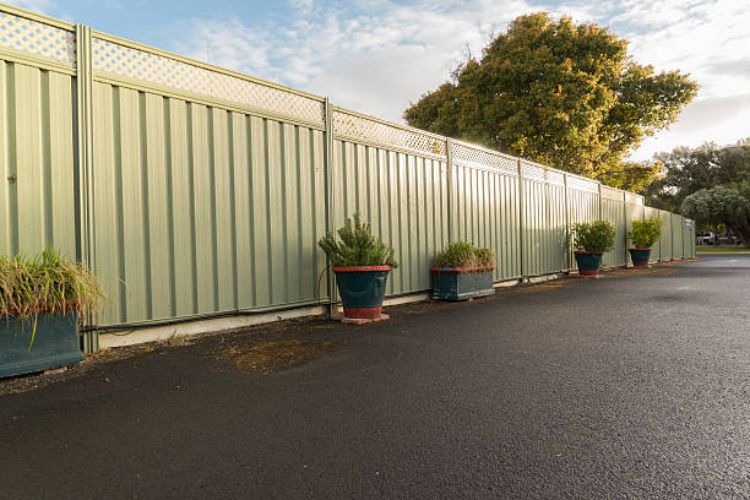
Colorbond Fencing
Colorbond steel fencing delivers strength, privacy, and security with virtually no maintenance requirements. The pre-painted steel won’t rot, warp, or attract termites, and the colour is baked on rather than applied as paint, meaning it won’t peel or require recoating.
On large properties, Colorbond typically makes sense for specific zones rather than entire perimeters—around homesteads, pool areas, or service compounds where privacy and security matter most. Its bushfire resistance also makes it valuable in fire-prone areas, providing a defensible barrier around key structures.
Aluminium Fencing
Aluminium fencing offers a modern, clean aesthetic with excellent corrosion resistance—particularly valuable in coastal areas or regions with high humidity. Lighter than steel, it’s easier to transport and install across large properties, and the powder-coated finish maintains its appearance for decades.
The open design of most aluminium fencing means it doesn’t provide privacy, but where boundary definition and visual appeal matter more than screening, it creates an elegant, contemporary look that suits modern rural estates and lifestyle properties.
PVC Fencing
PVC or vinyl fencing replicates the appearance of painted timber without the maintenance. It won’t rot, split, or require painting, and cleans easily with a hose. For property owners who love the look of white post and rail but don’t want the ongoing upkeep, PVC offers a compelling alternative.
The higher upfront cost compared to timber is offset by dramatically reduced maintenance over the fence’s lifetime. In harsh coastal environments where salt air accelerates deterioration of other materials, PVC proves particularly valuable.
Timber Fencing for Large Properties
Despite the rise of engineered alternatives, timber remains deeply appealing for many property owners. Nothing quite matches the warmth and natural character of well-chosen wood, and timber fencing can be customised in ways that manufactured products cannot.
The key to successful timber fencing lies in species selection appropriate to your climate and conditions. Hardwoods offer superior durability but at significant cost. Treated softwoods provide good value but require quality treatment to prevent premature decay. Whatever timber you choose, proper installation with adequate drainage around posts dramatically extends lifespan.
Maintenance is the trade-off. Timber fencing requires periodic inspection, treatment, and occasional repair or replacement of damaged sections. For those who value the aesthetic enough to invest this time, timber delivers a result that alternatives struggle to match.
Security and Access Solutions for Large Properties
Large properties typically require multiple access points—main entrances, service gates, paddock access, and machinery entry. Managing these access points effectively is as important as the fencing itself.
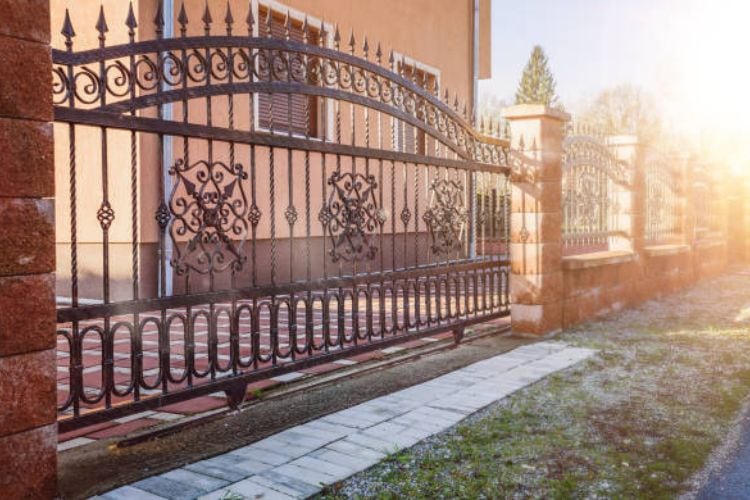
Gate Options for Large Properties
Gate selection should complement your fencing while meeting practical requirements. Swing gates suit most residential applications and work well with post and rail or timber fencing. Sliding gates handle wider openings more effectively and suit automated systems where space is limited.
For properties with long driveways, automated gates provide security and convenience—particularly valuable when you’d otherwise need to leave your vehicle multiple times to open and close manual gates. Intercom systems, keypads, and remote controls can be integrated to balance access with security.
Cost and Installation Considerations
Material costs per metre vary dramatically across fencing types. Star picket and wire represents the most economical option for large-scale boundary fencing, while Colorbond and quality timber post and rail sit at the premium end. Aluminium and PVC fall somewhere between, with higher upfront costs offset by reduced maintenance.
Installation on large properties presents unique challenges. Difficult terrain, rocky ground, creek crossings, and sheer distance all complicate the process. Professional installation typically proves worthwhile—experienced fencing contractors have the equipment and expertise to handle these challenges efficiently, and poorly installed fencing causes ongoing problems regardless of material quality. For a step‑by‑step approach to creating a cohesive outdoor plan that factors fencing into the bigger picture, check out our guide on how to design landscape.
Choosing the Right Fence for Your Property Type
Different property types naturally suit different fencing approaches. Working farms and grazing properties typically rely on functional star picket and wire for most boundary and paddock fencing, with more refined options around homesteads and yards. Equestrian properties often prioritise post and rail or safe horse fencing that prevents injury while containing animals effectively.
Lifestyle properties and large residential estates balance practical requirements with aesthetic considerations. Here, the fence contributes to overall property presentation, and investing in attractive options around visible areas often makes sense even if distant boundaries use simpler solutions.
The best approach for many large properties involves combining fencing types strategically—using premium materials where they’ll be seen and appreciated, practical options where function matters most, and matching gates and access points to their specific contexts. To ensure your fencing complements broader aesthetics and spatial flow, review core landscape architecture principles that guide thoughtful outdoor design.
Frequently Asked Questions
What is the best fencing option for large rural properties?
There’s no single best option—it depends on your primary purpose. For boundary fencing across large distances, star picket and wire offers the best combination of economy and function. For equestrian properties, post and rail remains the standard. For homestead surrounds where appearance and security matter, Colorbond or quality timber often proves ideal. Most large properties benefit from combining different fencing types strategically across different zones.
What fencing is best for livestock?
The best livestock fencing depends on the animals you’re containing. Cattle generally do well with plain or barbed wire on star pickets. Horses require safer options—post and rail, or purpose-designed horse fencing—as they can injure themselves on wire. Sheep and goats need fencing with smaller gaps to prevent escape or entanglement. Always match your fencing to your specific livestock requirements.
How long does rural fencing typically last?
Lifespan varies considerably by material and installation quality. Well-installed star picket and wire fencing typically lasts twenty to thirty years. Quality hardwood post and rail can exceed thirty years with proper maintenance. Colorbond and aluminium often come with warranties of fifteen to twenty years but frequently last longer. Treated pine fencing generally lasts fifteen to twenty years depending on conditions and treatment quality.
Which fencing option is the lowest maintenance?
Colorbond steel and aluminium fencing require the least ongoing maintenance—essentially just occasional cleaning. PVC fencing also demands minimal attention beyond washing. Star picket and wire needs periodic tensioning and post checking but relatively little active maintenance. Timber fencing requires the most attention, with regular inspection, treatment, and occasional replacement of damaged components to maintain appearance and function.
Planning Your Property Fencing
Fencing decisions on large properties benefit from careful planning and professional input. The right combination of materials, placement, and installation can serve your property well for decades. The wrong choices lead to ongoing frustration and unnecessary expense. As part of maximizing your landscape’s appeal, see how strategic upgrades can boost value in our article on enhanced property value through landscape design.
For Melbourne-area properties, working with an experienced landscape designer helps integrate fencing decisions into broader property planning. With over forty years creating outdoor spaces across Eltham and surrounding suburbs, John French Landscape Design understands how fencing fits within the complete landscape picture—from functional paddock divisions to beautifully designed entrance statements.
Ready to discuss fencing solutions for your property? Contact John French Landscape Design on 0419 725 344 or email info@johnfrenchlandscapes.com.au to start the conversation.
