
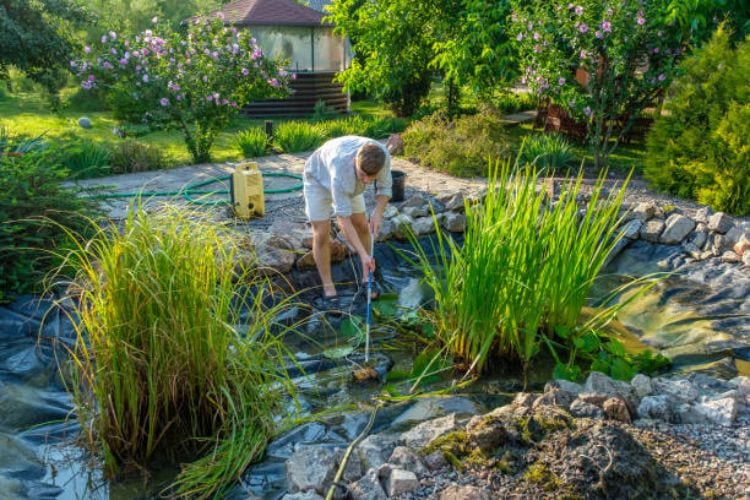
A garden pond transforms an outdoor space. Whether it’s a small water feature tucked into a courtyard or a larger ecosystem pond with fish and aquatic plants, these living elements bring movement, sound, and wildlife into your garden. But unlike a static hardscape feature, ponds require ongoing attention to remain healthy and beautiful.
Garden pond maintenance isn’t complicated, but it does require consistency. Understanding what your pond needs—and when—makes the difference between crystal-clear water and a murky, algae-choked disappointment. This guide covers the essentials of pond care, from seasonal routines to troubleshooting common problems. To complement your outdoor design with broader landscape ideas, see our creative backyard landscaping tips on how ponds can fit into a stunning garden layout.
What Is Garden Pond Maintenance?
Garden pond maintenance encompasses everything required to keep a pond functioning as a healthy ecosystem. This includes managing water quality, removing debris, caring for plants and fish, and maintaining the mechanical equipment that keeps water circulating and filtered.
A well-maintained pond balances several interconnected elements. Plants absorb excess nutrients and provide oxygen. Beneficial bacteria break down organic waste. Filters and pumps keep water moving and remove particulates. Fish, if present, add interest but also contribute waste that must be managed. When these elements work together, you get clear water and a thriving mini-ecosystem. When something falls out of balance, problems emerge quickly.
Preventative maintenance—regular small tasks performed consistently—is far easier than dealing with major problems after they develop. A pond that receives weekly attention rarely needs the intensive clean-outs that neglected ponds require. Understand how water movement and pond ecology interact with your landscape’s design in our groundwater landscape design insights for eco‑friendly gardens.
How Often Should a Garden Pond Be Maintained?
Maintenance frequency depends on several factors: pond size, fish population, surrounding vegetation, and the time of year. A small pond beneath overhanging trees will need more frequent debris removal than a larger pond in an open position. A heavily stocked fish pond demands closer attention to water quality than an ornamental water feature without livestock.
As a general guide, most garden ponds benefit from weekly checks during the warmer months and fortnightly attention through winter. These routine visits should include skimming surface debris, checking pump operation, and observing fish behaviour for signs of stress. Partial water changes of around ten to fifteen percent every few weeks help dilute accumulated nutrients and refresh the system.
Full clean-outs are rarely necessary and can actually harm established ponds by destroying beneficial bacteria colonies. Most ponds only need a thorough clean every few years, and even then, preserving some of the existing pond water helps maintain biological balance.
Seasonal Garden Pond Maintenance
Pond care follows natural seasonal rhythms. Spring is the critical period for Melbourne pond owners, as warming temperatures trigger increased biological activity. Decomposing organic matter that accumulated over winter begins releasing nutrients just as algae becomes active, creating ideal conditions for green water blooms if not managed proactively.
Summer demands vigilance around water levels and oxygenation. Evaporation accelerates, and warm water holds less dissolved oxygen than cool water—a particular concern for fish ponds. Autumn means falling leaves and the need for protective netting or diligent skimming to prevent organic matter entering the pond. Winter brings slower biological processes and reduced maintenance requirements, though pumps and filters still need occasional attention.
Spring Pond Maintenance Checklist
Spring maintenance sets the tone for the entire growing season. Start with a partial water change of up to twenty-five percent, removing water from the bottom where debris accumulates. Use a pond vacuum or siphon to extract sludge and decomposing matter from the pond floor without disturbing the entire system.
Check and clean filters thoroughly. Rinse filter media in pond water rather than tap water to preserve beneficial bacteria. Inspect pumps for debris blockages and ensure they’re operating at full capacity. This is also the time to divide and repot overgrown aquatic plants, adding slow-release aquatic fertiliser to support strong growth.
If you have fish, begin feeding gradually as water temperatures rise above fifteen degrees. Add beneficial bacteria supplements to kickstart biological filtration after winter dormancy. These bacteria colonies are essential for converting fish waste and preventing ammonia spikes that can harm livestock.
Pond Cleaning and Debris Removal
Organic debris is the primary driver of pond problems. Leaves, twigs, dead plant material, and uneaten fish food all decompose in pond water, releasing nutrients that fuel algae growth and consuming oxygen as they break down. Staying ahead of debris accumulation prevents most water quality issues before they start.
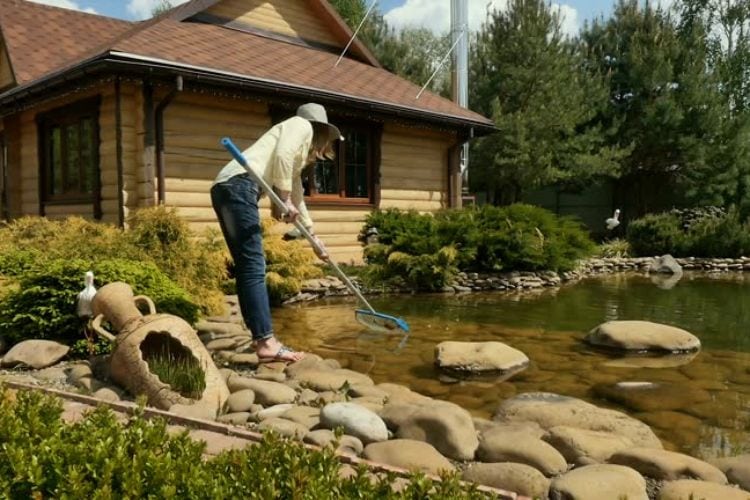
Surface skimming should happen at least weekly, more often during autumn leaf fall. A long-handled pond net makes quick work of floating debris. For material that sinks, a pond vacuum allows targeted removal without draining the pond. These devices work like underwater vacuum cleaners, sucking up sludge and depositing it away from the pond.
Resist the temptation to over-clean. A thin layer of sediment on the pond bottom is natural and provides habitat for beneficial organisms. The goal is removing excess organic matter, not sterilising the environment. When planning stone details around your water garden, refer to landscaping design ideas with stone to harmonise aesthetics with maintenance needs.

Water Quality, Algae and Cloudy Ponds
Green or cloudy water is the most common pond complaint, and it’s almost always caused by excess nutrients combined with sunlight. Single-celled algae bloom rapidly when conditions favour them, turning clear water pea-soup green within days. String algae—the filamentous type that forms mats on rocks and pond edges—thrives in similar conditions.
The solution isn’t chemical warfare against algae but addressing the underlying nutrient imbalance. Reduce organic inputs through better debris management. Add more plants to compete with algae for nutrients—water lilies, floating plants, and submerged oxygenators all help. Ensure filtration is adequate for your pond volume and fish load. Provide some shade to limit direct sunlight on the water surface.
Ultraviolet clarifiers can help control green water by killing suspended algae as water passes through the unit, though they won’t address string algae or the root causes of nutrient excess. Barley straw, either loose or in extract form, offers a natural algae suppressant that many pond keepers find effective.
Filtration, Pumps and Equipment Maintenance
Mechanical equipment keeps pond water healthy and circulating. Pumps move water through filters and power features like waterfalls or fountains. Filters provide both mechanical filtration—physically trapping particles—and biological filtration, where beneficial bacteria process fish waste and other organic compounds.
Pumps require regular inspection for debris blockages, particularly around intake screens. A pump working harder than necessary due to restricted flow will fail sooner and consume more electricity. Clean intake screens weekly during heavy debris periods. Listen for changes in pump noise that might indicate bearing wear or impeller damage.
Filter maintenance varies by type, but the principle remains consistent: clean often enough to maintain flow without destroying bacterial colonies. Rinse mechanical filter pads when flow reduces noticeably. Clean biological media gently and infrequently, always using pond water rather than chlorinated tap water.
Plants, Fish and Pond Ecosystem Care
Aquatic plants do heavy lifting in a balanced pond ecosystem. They absorb nutrients that would otherwise feed algae, provide oxygen through photosynthesis, offer shade and shelter for fish, and create habitat for beneficial insects and amphibians. A well-planted pond largely maintains itself.
Maintain plants by removing dead foliage before it decomposes in the water, dividing overcrowded specimens, and fertilising during the growing season with tablets designed for aquatic use. Watch for pests like aphids on water lily pads—a strong jet of water knocks them into the pond where fish will eat them.
Fish add interest but also complexity. They produce waste that must be processed by biological filtration, and they require appropriate feeding, water quality, and protection from predators. Observe fish regularly for signs of disease or stress: gasping at the surface, flashing against rocks, or unusual lethargy all warrant investigation.
Pond Repairs and Leak Detection
Water loss beyond normal evaporation suggests a leak. Before assuming the worst, check that waterfalls and streams aren’t losing water through splashing or seepage along edges. Confirm that pump connections and filter housings are sealed properly. Sometimes the simplest explanations prove correct.
For genuine liner leaks, the first step is identifying the water level where loss stops—this indicates the leak’s approximate height. Inspect the liner carefully at that level for punctures, tears, or deterioration. Small holes in flexible liners can often be patched with appropriate repair materials. Larger damage or concrete pond cracks may require professional assessment to determine whether repair or replacement makes more sense.
DIY Pond Maintenance vs Professional Services
Most routine pond maintenance suits confident DIY homeowners. Weekly debris removal, filter checks, fish feeding, and water top-ups are straightforward tasks requiring minimal equipment. Many pond owners find these regular interactions with their water feature genuinely enjoyable.
Professional help makes sense for major clean-outs, equipment repairs, leak diagnosis, and situations where problems persist despite your best efforts. An experienced eye can often identify issues that aren’t obvious to someone without pond-keeping background. For homeowners who lack time for regular maintenance, scheduled professional servicing keeps ponds healthy without demanding ongoing attention.
The best outcomes often combine both approaches: homeowner involvement for routine care and professional support for annual servicing or when problems arise.Pair your pond maintenance plan with serene garden design ideas like those in our Japanese garden feature guide to create a harmonious outdoor space.
Frequently Asked Questions
How often should I clean my garden pond?
Routine maintenance like skimming debris and checking equipment should happen weekly during warmer months and fortnightly in winter. Partial water changes every few weeks help maintain water quality. Full clean-outs are only needed every two to three years for most ponds, and over-cleaning can actually harm the beneficial bacteria that keep your pond healthy.
Why is my pond water green or cloudy?
Green water is caused by microscopic algae blooming in response to excess nutrients and sunlight. Cloudy water can result from suspended particles, bacterial blooms, or disturbed sediment. Address the root cause by improving debris removal, adding more plants to absorb nutrients, ensuring adequate filtration, and providing some shade over the water surface.
Is it safe to fully drain a pond?
Fully draining a pond should be a last resort. Complete drainage destroys the beneficial bacteria colonies that maintain water quality, essentially resetting the pond’s biological system. It also stresses fish and can damage flexible liners exposed to sunlight. Partial water changes and targeted cleaning with a pond vacuum achieve better results while preserving the established ecosystem.
Can I maintain a pond with fish myself?
Yes, most homeowners can successfully maintain fish ponds with basic knowledge and consistent attention. The key requirements are adequate filtration for your fish load, regular water quality monitoring, appropriate feeding schedules, and prompt attention to signs of stress or disease. Start with hardy species like goldfish or shubunkins before progressing to more demanding fish like koi.
What causes a pond to leak?
Common leak causes include punctured or deteriorated liners, cracks in concrete ponds, shifting ground that pulls liner edges below water level, and water loss through waterfalls or stream edges. Before investigating liner damage, rule out simpler causes like splash loss, evaporation during hot weather, or leaking pump connections.
Keeping Your Pond Thriving
A garden pond rewards the attention you give it. Regular maintenance prevents small issues becoming major problems, and a balanced pond ecosystem largely looks after itself once established. The key is consistency—little and often beats occasional intensive intervention.
If your pond is part of a broader landscape that needs attention, or you’re considering adding a water feature to your garden, working with an experienced landscape designer ensures your pond integrates seamlessly with surrounding plantings and hardscape. With over forty years creating gardens across Melbourne’s suburbs, John French Landscape Design understands how water features contribute to cohesive outdoor spaces—from initial design through to the practical considerations that make ongoing maintenance manageable. For broader strategies on reducing upkeep across your outdoor areas, check out the benefits of low maintenance landscaping and how it ties into water feature care.
Considering a new pond or water feature for your garden? Contact John French Landscape Design on 0419 725 344 or email info@johnfrenchlandscapes.com.au to discuss how water can enhance your outdoor space.
