
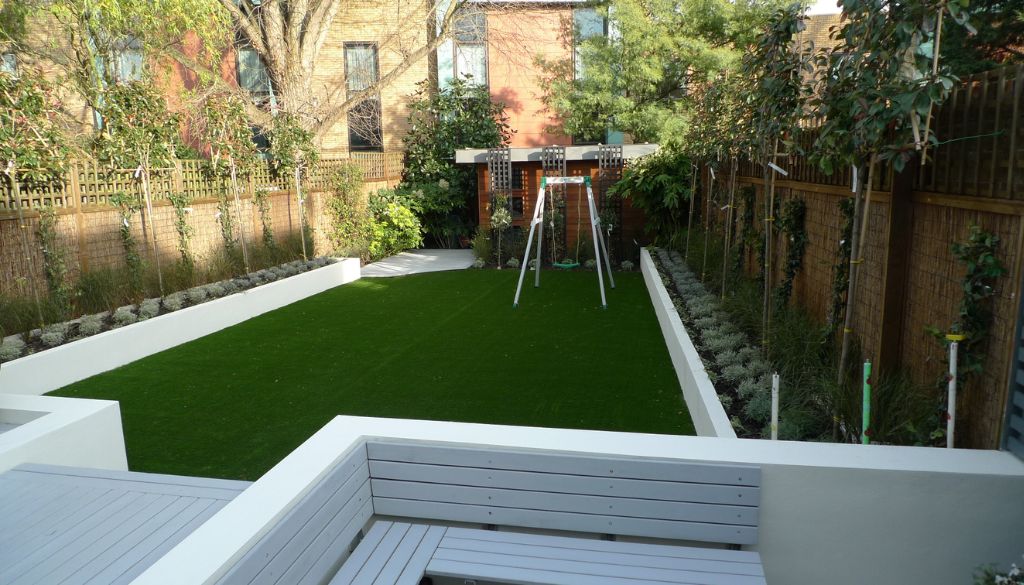
A well-designed garden wall does far more than mark a boundary. It defines how your outdoor space feels — whether that means adding privacy to a busy suburban block, framing a planting bed, supporting a vertical garden, or anchoring an outdoor entertaining zone.
Modern garden wall design has moved well beyond the plain brick fence. Today’s homeowners are combining timber, steel, stone, and concrete to create walls that are as functional as they are beautiful. Whether you have a large Eltham backyard or a compact urban courtyard, there is a contemporary wall solution that can elevate your space.
This guide walks you through the best materials, design ideas, and practical considerations for creating a modern garden wall — along with tips on when to DIY and when to bring in a professional landscape designer.
Why Modern Garden Walls Are So Popular
Contemporary garden walls have surged in popularity for good reason. Homeowners across Melbourne are increasingly looking for outdoor spaces that offer genuine liveability — not just a patch of lawn surrounded by a tired timber fence.
Modern garden walls deliver on several levels:
- Privacy without sacrifice: A well-placed wall screens your garden from neighbours or street traffic while still looking stylish from both sides.
- Visual structure: Walls create zones within a larger garden, giving distinct areas for dining, relaxing, or planting.
- Functional versatility: Modern walls can double as windbreaks, frost shields, retaining structures, seating platforms, or supports for climbing plants.
- Kerb appeal and property value: A thoughtfully designed contemporary wall is one of the most visible improvements you can make to the exterior of your home.
In Melbourne’s Eltham and surrounding suburbs, where block sizes and garden styles vary widely, a well-designed garden wall gives homeowners the flexibility to create an outdoor room that genuinely works.
Choosing the Right Materials for a Modern Garden Wall
Material choice is the single biggest decision you will make in modern garden wall design. Each option brings its own aesthetic, durability profile, and cost range.
Brick and Stone
Brick and stone remain the gold standard for durability and timeless appeal — but in a contemporary context, they are used very differently to the solid rendered walls of decades past. Clean dry-stack profiles, exposed aggregate finishes, and the pairing of pale natural stone with dark steel or timber all give classic masonry a modern edge.
Stone walls also retain heat through the day and release it slowly in the evening, which can extend the usefulness of an outdoor entertaining area through Melbourne’s cooler months.
If you are interested in how hardscaping materials perform over time, our guide to the best hardscaping materials for your garden covers durability, maintenance, and cost comparisons in detail.
Timber and Slatted Wood Panels
Horizontal slatted timber panels are one of the defining features of contemporary Australian garden design. They bring warmth, texture, and a sense of enclosure without making a garden feel boxed in — the gaps between slats allow light and air to move through while still providing privacy.
Hardwood species such as spotted gum or ironbark weather beautifully in Melbourne’s climate. Treated pine is a more budget-conscious option that can be painted or stained to suit your palette. For a cleaner look, powdercoated aluminium slats can replicate the timber aesthetic with zero maintenance.
Metal and Corten Steel
For a bold, industrial-influenced aesthetic, metal panels and Corten steel are hard to match. Corten — also known as weathering steel — develops a rich, rust-toned patina over time that contrasts beautifully with lush greenery and neutral rendered surfaces.
Perforated or laser-cut steel panels can also function as decorative screens, filtering light and shadow in compelling ways. These work particularly well as feature walls in outdoor dining zones or pool surrounds.
Mixed Materials
Some of the most visually interesting contemporary garden walls combine two or more materials — a rendered concrete base with a slatted timber top, or a dry-stack stone retaining wall capped with a steel planter rail. Mixed-material walls add depth, texture, and a layered quality that single-material walls can sometimes lack.
For homeowners working with sloped or difficult terrain, a combined stone-and-timber approach can solve both an engineering challenge and a design brief at the same time.
Modern Garden Wall Design Ideas
Vertical Green Walls
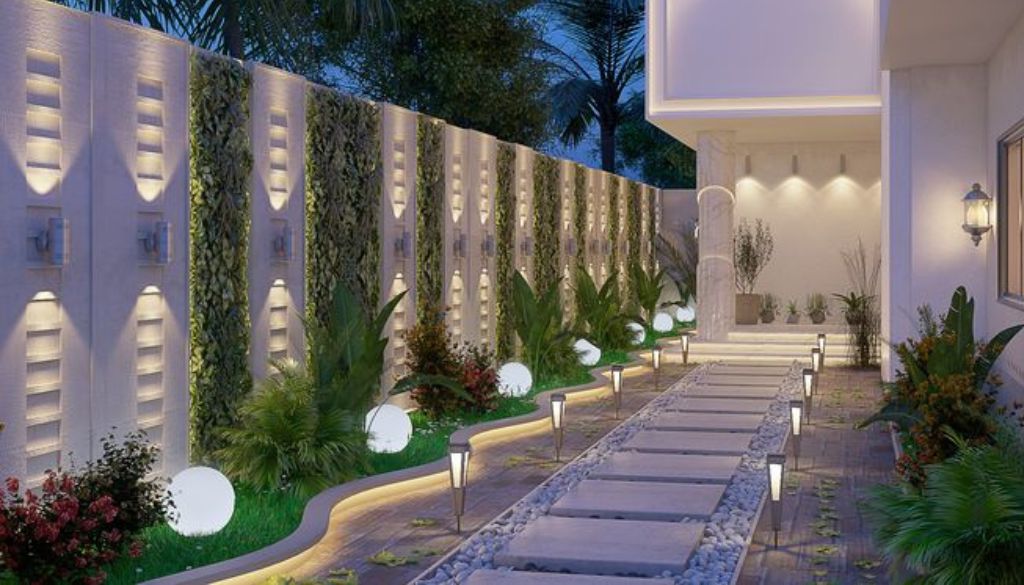
A living wall — where plants grow directly on or against the wall surface — transforms a blank fence into a lush focal point. Herbs, succulents, native ground covers, and climbing plants can all be incorporated using modular planting pods, trellis frameworks, or open planter pockets.
For homeowners interested in drought-tolerant or native plantings, a vertical green wall is an excellent way to add lush visual impact without heavy watering demands. Our article on the best low-maintenance shrubs for your garden includes plant varieties that perform well in these applications.
Water Feature Walls
Integrating a water feature into your garden wall adds a layer of sensory experience that few other design elements can match. A wall-mounted waterfall or a series of spout jets falling into a basin below creates gentle ambient sound and a compelling visual focal point for outdoor entertaining areas.
Dark granite, textured concrete, or charcoal-toned render make ideal backdrops for water feature walls, providing contrast that makes the movement of water pop visually.
Curved and Angled Wall Forms
Rigid straight lines can make a garden feel formal and static. Introducing a curved or gently angled wall breaks this up, adding movement and visual interest. Curved walls work particularly well in courtyard gardens or terrace settings, and can double as informal seating when finished with a smooth coping stone or hardwood cap.
Walls with Built-In Seating and Planters
One of the most practical trends in modern garden wall design is integrating seating or planter boxes directly into the wall structure. A rendered masonry wall with a timbered bench top creates a cohesive look and eliminates the need for standalone outdoor furniture.
This approach is particularly well suited to smaller urban blocks and courtyard gardens, where every square metre counts. For smaller garden zones — like a side passage or narrow strip — our guide on landscaping ideas for the side of house offers targeted inspiration.
Minimalist and Geometric Designs
Clean lines, neutral tones, and modular concrete or rendered block work define the minimalist end of modern garden wall design. These walls let the planting do the visual work — a simple white rendered wall becomes a canvas for dramatic shadow play, feature trees, or cascading climbers.
Minimalist walls are especially effective in contemporary city gardens and rooftop spaces where an uncluttered aesthetic is the goal.
Functional Uses of Garden Walls
Beyond aesthetics, modern garden walls serve a range of practical functions that can genuinely improve how you use your outdoor space:
- Zone definition: Walls divide large gardens into dedicated areas — a dining zone, a children’s play space, a vegetable garden, or a pool surround.
- Retaining and erosion control: For sloped blocks common in Eltham and the Yarra Valley corridor, retaining walls are an engineering necessity as much as a design choice.
- Privacy screens: Walls block sightlines from neighbours or passing traffic without the need for dense hedging that takes years to establish.
- Support for climbing plants: A garden wall is an ideal structure for climbing roses, jasmine, wisteria, or native climbers.
- Integrated lighting and art: LED strip lighting recessed into a wall cap, or decorative tiles set into rendered surfaces, can make a garden wall a true design feature after dark.
DIY vs Professional Installation
Whether a garden wall is a reasonable DIY project depends heavily on the material, scale, and purpose of the wall.
Straightforward DIY options include small slatted timber screens, modular rendered concrete block walls, and simple dry-stack stone borders. If you are new to landscaping projects, our landscaping for beginners guide is a good starting point for understanding scope and planning before you pick up a shovel.
However, professional installation is strongly recommended for:
- Retaining walls over 500mm in height (engineering certification may be required)
- Heavy masonry, reinforced concrete, or Corten steel fabrication
- Walls incorporating electrical elements such as integrated lighting
- Water feature walls requiring waterproofing and pump systems
- Any structural work on sloped or difficult terrain
Always check with your local council before beginning construction. In Victoria, walls exceeding certain height thresholds — typically 1 metre for front boundaries and 2 metres elsewhere — may require a planning permit.
Maintenance Tips for Modern Garden Walls
A quality garden wall is built to last, but basic maintenance keeps it looking sharp for years:
- Stone and masonry: Clean annually with a pressure washer on a low setting to remove moss, lichen, and grime. Re-point mortar joints every few years if you notice deterioration.
- Timber: Re-stain or re-oil every 1–2 years depending on exposure. Check fixings and batten screws annually for rust.
- Metal and Corten: Corten steel is designed to rust to a stable patina — no treatment needed. Powdercoated steel should be cleaned periodically and any chips touched up to prevent underlying corrosion.
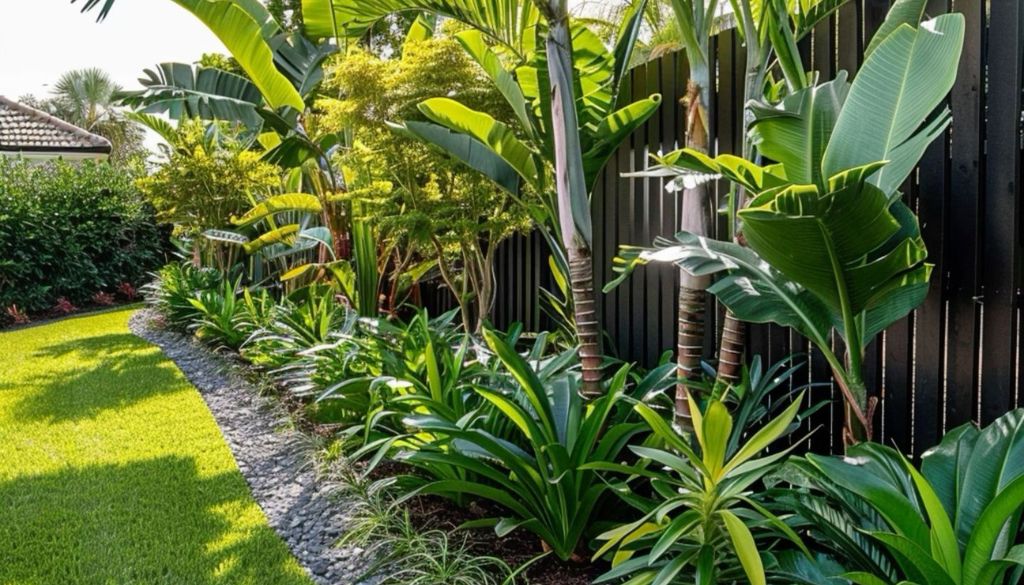
- Green walls: Prune climbing plants regularly to keep growth directed and prevent root damage to the wall surface. Check irrigation systems for blockages each season.
Work With a Landscape Designer Who Knows Your Neighbourhood
Designing a garden wall that genuinely enhances your outdoor space requires more than picking a material from a catalogue. It takes an understanding of your block’s orientation, soil conditions, local planning requirements, and how the wall will interact with the rest of your garden over time.
John French Landscape Design has been creating residential landscapes across Eltham and surrounding Melbourne suburbs since 1981. From dry-stack stone retaining walls to contemporary slatted timber screens and integrated pool surrounds, John and his team bring 40+ years of hands-on experience to every project. Typical project budgets range from AUD $20,000 to $80,000, spanning design, construction administration, and final handover — so you know your garden will be finished to specification.
Browse our completed projects to see how we have approached garden walls in Doncaster East, Viewbank, and across the Eltham area: John French Landscape Design – Projects. Or get in touch to book an in-home consultation.
Call: 0419 725 344 | ✉ Email: info@johnfrenchlandscapes.com.au | Contact John French Landscape Design
Frequently Asked Questions
What materials are best for a modern garden wall?
The best material depends on your aesthetic goals and budget. Dry-stack stone and rendered masonry offer the most durability; slatted timber and Corten steel give a contemporary feel; mixed materials create the most visual depth. For harsh sun or drought-prone areas, stone and metal outperform timber on longevity.
Can I build a modern garden wall myself?
Small slatted timber screens and modular block walls are manageable DIY projects for confident handypeople. Anything involving retaining, heavy masonry, or integrated electrical or water features should involve a qualified professional.
How high can I make a garden wall without a permit?
In most Victorian local government areas, boundary walls up to 1 metre at the front boundary and up to 2 metres on side or rear boundaries do not require a permit — but this varies. Always check with your local council before starting construction.
What plants work best for vertical garden walls?
For low-maintenance vertical walls, succulents, native ground covers, and drought-tolerant climbers (such as hardenbergia or pandorea) perform well in Melbourne’s climate. Herbs like rosemary and thyme also work well in sunny aspects.
How do I maintain a modern garden wall?
Annual cleaning, periodic re-sealing for timber, and seasonal plant pruning for green walls cover most maintenance needs. Masonry walls benefit from mortar re-pointing every few years. Metal walls generally require the least upkeep of any material.
