

If you have a sloped side yard, you already know the frustration — water rushes through after every downpour, the ground is too uneven to use, and maintaining it feels like a constant battle. For Melbourne homeowners with hilly or undulating blocks, retaining walls are one of the most effective tools available. They hold back soil, flatten usable space, and — when designed well — transform a steep, neglected corridor into one of the most attractive parts of your property. Retaining walls are often just one element of a larger project, and our full landscape design package covers everything from site-specific planning through to planting and material selections across your entire property.
This guide covers the most practical retaining wall ideas for sloped side yards, from material choices and terracing layouts to drainage planning and integrated planting. Homeowners who enjoy transforming difficult or underutilised spaces will find plenty of inspiration in our article on how to plan and build a rooftop garden, covering everything from structural assessments to plant selection and waterproofing.
Why Retaining Walls Work for Sloped Side Yards
A sloped side yard presents challenges that flat gardens do not. The narrowness of a typical side passage means water, soil, and wind move through quickly, creating erosion hotspots and unstable ground. Retaining walls address these issues structurally — engineered to hold back tonnes of earth while creating habitable, level zones in their place. Retaining walls on sloped blocks face enormous pressure from water moving through the soil, so understanding how to manage backyard water drainage effectively is essential reading before any retaining wall project gets underway.
The three core benefits:
- Soil stabilisation and erosion control — preventing soil from washing away during Melbourne’s unpredictable wet seasons
- Improved usability — converting steep, unusable slopes into flat zones for pathways, garden beds, or seating
- Aesthetic enhancement — blending quality hardscaping with landscaping for a cohesive, designed result
Common Challenges of a Sloped Side Yard
Most homeowners with sloped side yards deal with one or more of these:
- Erosion and soil movement after rain
- Poor drainage and water runoff against fences or foundations
- Accessibility issues — steep grades make the space difficult to navigate safely
- Limited width and wasted functionality
Terracing and Levelling Ideas
Terracing cuts a sloped yard into a series of flat “steps,” each separated by a retaining wall. It is one of the most popular approaches for steep side yards because it maximises usable area while keeping the aesthetic natural and layered.
Single Retaining Wall Cut-In
For gentle to moderate slopes, a single well-placed retaining wall can be enough. Cut into the higher side of the yard, hold back the excavated soil with the wall, and backfill the lower side to create one level platform. This works especially well when the primary goal is a clear, safe pathway from the front to the back of the property.
Multi-Level and Tiered Walls
For steeper blocks — common in Melbourne’s hillside suburbs such as Eltham, Research, and Viewbank — a single wall is rarely enough. Multi-level terracing uses two, three, or four stacked walls to gradually step down the slope. Each terrace can serve a different purpose: the first a pathway, the second a garden bed, the third a patio or seating zone.
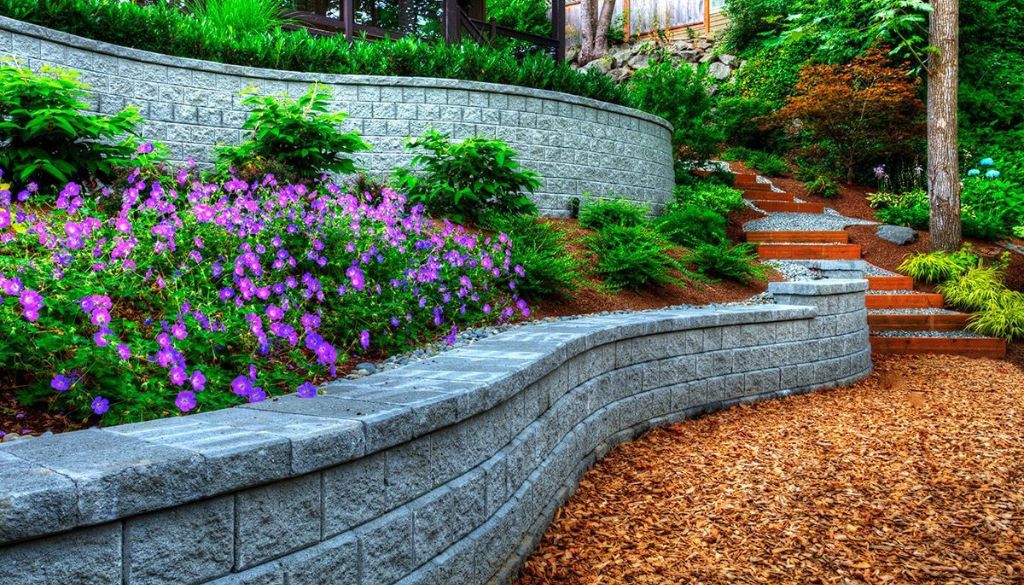
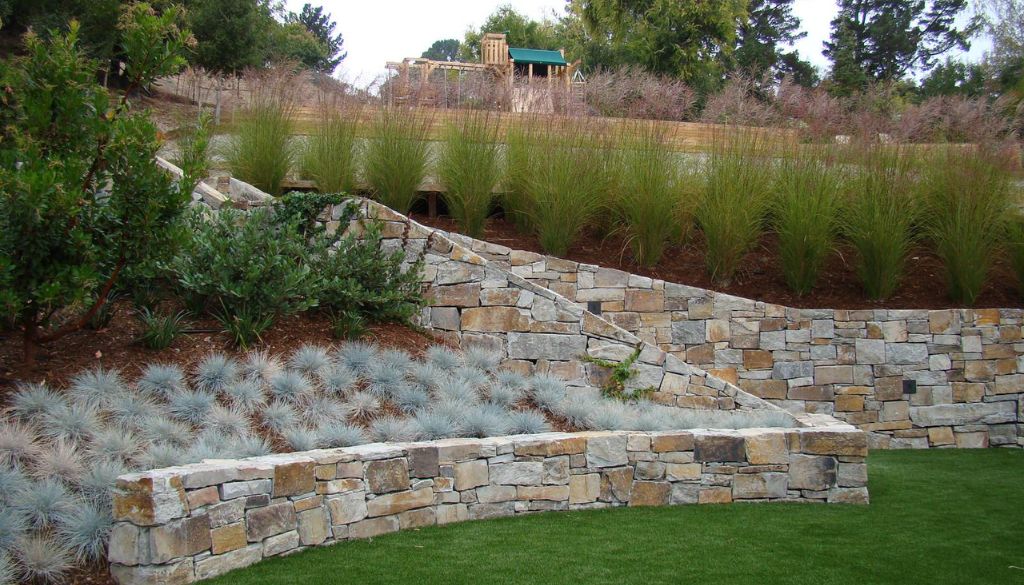
Curved wall designs add organic flow to what can otherwise feel like a rigid structure. Sweeping curves along tiered stone walls soften the overall look and integrate naturally with surrounding planting, particularly native Australian species.
Excavated Retaining Walls
Where the slope rises steeply from the boundary, an excavated wall cuts directly into the hillside. The excavation removes material from behind the wall’s intended line, which is then constructed to hold the remaining soil above. This is common where a neighbour’s land or boundary fence sits at a higher elevation.
Material Options
Material choice affects structural performance, visual style, maintenance, and cost. Here is a quick comparison:
| Material | Durability | Cost | Best For |
|---|---|---|---|
| Natural Stone | 50+ years | $$$ | Organic, classic styles |
| Concrete Sleepers | 40+ years | Steep slopes, height | |
| Treated Timber | 15–25 years | $ | Low walls, garden beds |
| Gabion Wire | 30+ years | –– $ | Modern, industrial look |
| Besser Block | 50+ years | $$ | Structural, rendered finish |
Natural Stone and Boulders
For a timeless, high-end result, natural stone is hard to beat. Stacked stone walls blend seamlessly into native garden designs — a natural fit for the Australian bush aesthetic John French has championed since 1981. Boulder walls work well on steep slopes where visual mass is needed to balance the grade. Flagstone capping ties the wall back into adjacent paving and patios.
Concrete Sleepers
Concrete sleepers are the workhorse of Melbourne retaining walls. Cast in a range of textures and colours, they are engineered for significant height and aggressive slopes. Walls over one metre typically require a structural engineer’s certificate before council approval. For more on choosing durable materials across your landscape, see our guide to the best hardscaping materials.
Treated Timber and Gabion Walls
Treated pine sleepers are a budget-friendly option for walls under 600mm, suiting garden bed borders and informal designs well. Gabion walls — wire cages filled with stone or rubble — offer a contemporary look at modest cost and are permeable by design, making them well-suited to drainage-challenged side yards. Filling cages with locally sourced or on-site rubble cuts material costs further.
Stairs, Pathways, and Access
A retaining wall without safe access between levels is only half the job. Integrated staircases are essential in any multi-level design. Key considerations include step depth (ideally 280–300mm), gradient, and handrails on steep drops. In Melbourne, council requirements around step heights should always be confirmed with your designer.
Stone and flagstone steps pair naturally with stone walls — basalt landings and crushed rock walkways keep costs manageable while maintaining a cohesive earthy palette. For severe slopes, a raised deck structure connecting upper and lower zones replaces the need for multiple staircase runs and creates usable entertaining space at the same time.
Landscaping and Planting
Planting transforms a retaining wall from a structural element into a feature. The right plants soften hard edges, add colour and movement, and reduce long-term maintenance. For Melbourne’s climate, drought-tolerant and native species perform best on retained terraces.
Cascading plants over wall edges — trailing rosemary, native grasses, or lomandra — create a softening effect that makes even a concrete wall look intentional. Ground covers across terrace faces bind the upper soil layer and reduce weeding. For plant recommendations suited to Melbourne conditions, read about the best low-maintenance shrubs for Melbourne gardens.
Tall structural plantings — Murraya, Viburnum, or native screening hedges — positioned along the top of a boundary wall add privacy and green volume to an otherwise hard-edged structure. For more on how planting and side-yard design work together, explore landscaping ideas for the side of your house.
Functional Features to Add
Retaining walls are design opportunities, not just structural necessities.
Built-in seating — cappings at 450–500mm height become garden banquettes. A smooth granite or honed concrete cap paired with a fire pit on the lower terrace creates a complete entertaining zone from the level change alone.
Water features — steep level changes suit water blades, spillways, or cascading waterfalls built directly into the upper wall face, turning the terracing into a showpiece rather than a structural afterthought.
Lighting — recessed step lights, in-ground uplighters, and wall-mounted bollards dramatically improve nighttime safety and usability. Adjustable colour-temperature lighting shifts the mood from practical to ambient depending on the occasion.
Drainage, Engineering, and Council Requirements
Poor drainage behind a retaining wall is the number one cause of structural failure. Saturated soil increases pressure on the wall’s back face dramatically, and without proper relief even well-built walls can bow or fail.
The standard solution is agricultural drainage pipe (ag-pipe) in a gravel-filled trench at footing level, with drainage outlets at both ends and geotextile fabric behind the gravel to prevent fine soil particles from blocking the system over time.
In Victoria, walls over 1 metre generally require a building permit and structural engineer’s sign-off. Walls over 800mm near boundaries or buildings are most likely to trigger permit requirements. Always confirm with your local council before committing to materials or design. If you are still getting your bearings on the overall process, our beginner’s guide to landscaping covers the fundamentals from the ground up.
Side Yard-Specific Considerations
Sloped side yards have constraints that backyard projects do not:
- Narrow width — most side yards are under 2.5m wide. Wall thickness, step width, and planting depth must all be planned to keep the corridor functional.
- Boundary fencing — wall footing placement and fence post location must be coordinated carefully along shared boundaries.
- Neighbour privacy — if the wall sits on the boundary line, choose planting that screens without overhanging next door.
Budget-Friendly Ideas
- Use existing site boulders rather than carting them away — incorporate them into a stacked boulder wall
- Dense ground cover on gentle slopes under 1:4 gradient can stabilise soil without any hard wall at all
- Keeping walls under 600mm avoids permit costs and reduces materials significantly
- Treated pine sleeper edging for garden beds is the most DIY-accessible option for low applications
To see how these principles come together across real Melbourne projects, browse our completed project portfolio.
FAQs
What is the best way to make a sloped yard usable?
Terracing with retaining walls is the most effective structural solution. For gentle slopes, a single wall creates one flat zone; for steeper grades, multi-level terracing creates several. Pair walls with integrated pathways and planting for the best result.
Do I need council approval for a retaining wall in Victoria?
In most Victorian councils, walls over 1 metre require a building permit. Walls over 800mm near boundaries or structures may also trigger requirements. Check with your local council or a licensed landscape designer.
What materials suit steep slopes best?
Concrete sleepers and natural stone are the strongest performers. Concrete can be engineered to significant heights; stone provides excellent long-term durability with minimal maintenance once properly built.
How do you manage drainage behind a retaining wall?
Install ag-pipe in a gravel-filled trench behind every wall at footing level, with geotextile fabric between soil and gravel. Keep drainage outlets clear and directed away from foundations.
Ready to Transform Your Sloped Side Yard?
John French Landscape Design has been creating functional, beautiful outdoor spaces for Melbourne homeowners since 1981. With over 40 years of hands-on experience across Eltham, Viewbank, Doncaster East, Kew, and beyond, every project is managed from consultation through construction to final handover. Typical residential projects range from AUD $20,000 to $80,000.
Contact John French Landscape Design | Call: 0419 725 344 | Email: info@johnfrenchlandscapes.com.au
