
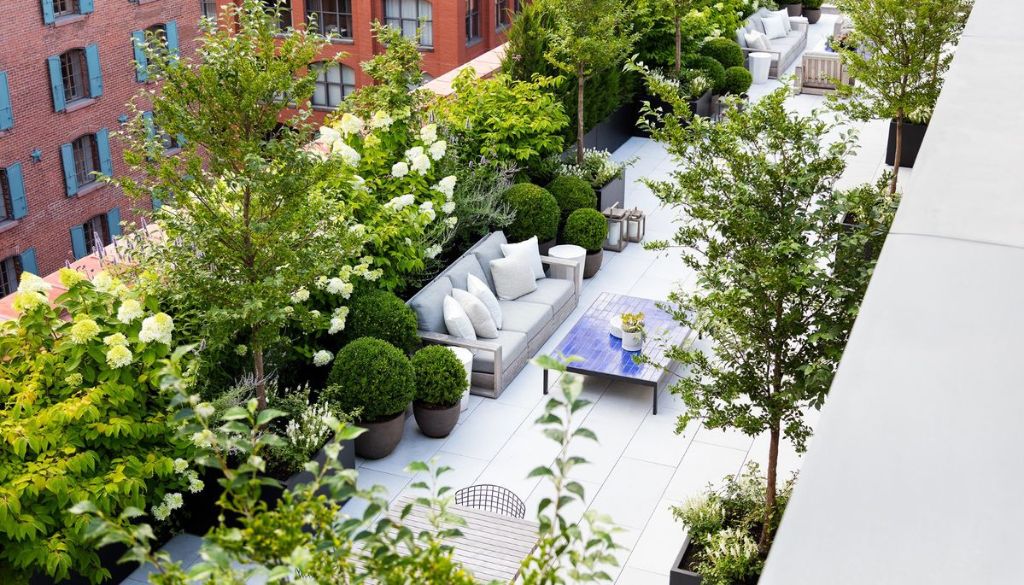
Rooftop gardens are no longer the exclusive domain of high-rise hotels and commercial buildings. Across Melbourne’s inner and middle suburbs — from Alphington to Eltham — homeowners are discovering that their rooftops offer some of the most underutilised outdoor space on their property. With the right home rooftop garden design, a flat or lightly pitched roof can become a thriving garden retreat: somewhere to relax, grow food, entertain guests, or simply add layers of greenery to an urban environment.
Whether you’re working with a small terrace roof above a single-storey extension or a full flat rooftop, this guide covers everything you need to plan, design, and build a rooftop garden that looks stunning, performs well, and stands the test of Melbourne’s variable climate.
Related reading: If you’re exploring other space-limited garden options, read our guide on balcony garden design ideas for small spaces.
Why Consider a Rooftop Garden?
Urban blocks rarely offer expansive garden space, and many Melbourne homeowners are making the most of every square metre. A rooftop garden provides several compelling benefits beyond the obvious visual appeal.
From an environmental standpoint, green roofs help manage stormwater by absorbing rainfall before it enters the drainage system — a significant benefit in areas prone to runoff after heavy rain. They also improve insulation, reducing heating and cooling costs by buffering temperature extremes, and contribute to improved local air quality.
For the homeowner, the lifestyle rewards are equally appealing. A well-designed rooftop garden creates a private outdoor sanctuary away from street-level noise and activity. It can function as an entertaining space, a kitchen garden, or simply a place to sit quietly among plants. Property value uplift is another commonly cited benefit, particularly for well-executed designs with durable materials and thoughtful planting.
Planning Your Rooftop Garden
Getting Approval and Checking Regulations
Before any soil or pot touches your roof, you’ll need to understand the planning requirements for your property. In Victoria, rooftop structures — including permanent garden installations, pergolas, and irrigation systems — may require council permits depending on height and proximity to boundaries. Body corporate rules apply for strata or apartment buildings, so check with your building manager early.
Engaging a structural engineer before committing to a design is strongly recommended. This is not optional — it is essential. Every rooftop has a load-bearing limit, and understanding yours shapes every decision that follows.
Determining Roof Strength and Weight Limits
The distinction between an extensive and an intensive green roof is largely determined by structural capacity. Extensive green roofs use shallow growing media — typically 75 to 150mm deep — with lightweight, low-maintenance plants like sedums and native grasses. They add relatively little weight (around 60 to 150 kg/m²) and suit roofs with limited load capacity.
Intensive rooftop gardens, by contrast, use deeper soil profiles and can accommodate larger shrubs, small trees, raised vegetable beds, and even water features. The weight loading is significantly higher (150 to 500+ kg/m²), meaning the structural assessment must be undertaken by a qualified engineer before you proceed.
Other weight contributors to account for include: pots and planters filled with growing media, furniture, irrigation infrastructure, and people using the space. A structural engineer will factor all of this in as part of their assessment.
Accessibility and Safety
Safe access is non-negotiable. Whether via an internal staircase, external ladder, or purpose-built roof hatch, the route onto the roof must be practical and safe for regular use. Edge protection is equally critical — building regulations require appropriate barriers along exposed roof edges, and this requirement can be met creatively through planter walls, timber or metal balustrades, or trellis screens that double as privacy features.
If ongoing maintenance is required — and it always is — consider how service access will work over time. Installing anchor points for safety harnesses is worth planning into the design from the outset, particularly on larger or higher rooftops.
Designing Your Rooftop Garden
Layout and Space Planning
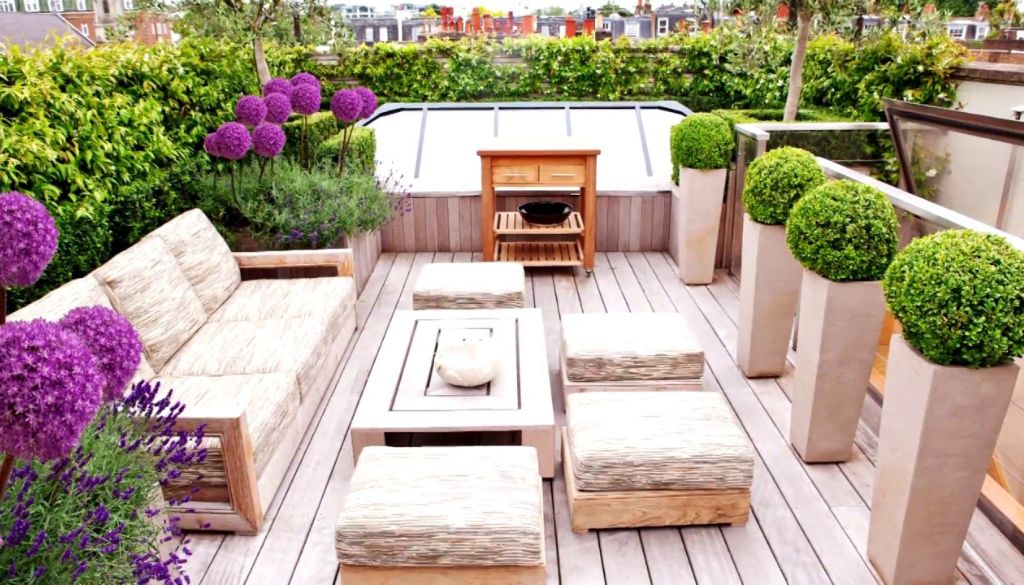
Good rooftop garden design balances planting zones with functional areas. On most residential rooftops, space is at a premium, so the layout needs to work harder than a conventional garden. Consider zoning the space into distinct areas: a seating or entertaining zone, a planting zone, and a circulation path connecting the two.
Vertical elements — trellises, planter walls, and espalier frames — are your best friends in a compact rooftop setting. They bring planting density without consuming floor area, and they provide privacy screening and wind buffering that makes the space more comfortable to use.
For inspiration on how to create structured outdoor living areas within a defined footprint, our article on decking ideas for sloping gardens covers transferable principles around zoning, material selection, and multi-level spatial thinking.
Plant Selection
Rooftops are exposed environments. Wind, intense sun, and limited soil depth create challenging conditions that demand careful plant selection. The most resilient choices include:
- Native grasses and sedges (e.g., Poa, Carex) — hardy, low-maintenance, and water-wise
- Succulents and sedums — ideal for extensive green roofs with shallow growing media
- Drought-tolerant Australian natives — consistent with John French’s design philosophy of using plants suited to Melbourne’s climate
- Compact ornamental shrubs — lavender, westringia, and dwarf grevilleas perform well in exposed conditions
- Seasonal colour through bulbs and perennials — adds visual interest while keeping root depth manageable
Wind is often underestimated in rooftop design. At height, even moderate suburban wind speeds can desiccate plants quickly. Windbreak planting using tougher species around the perimeter can protect more delicate interior plantings and make the space usable for longer throughout the year.
Theme and Aesthetic
John French Landscape Design has worked with styles spanning Australian naturalism, Japanese-influenced gardens, Balinese resort aesthetics, and French provincial design — all of which can be interpreted beautifully in a rooftop setting. The key is choosing a theme that aligns with the architecture of the building and the homeowner’s lifestyle.
An ornamental native garden suits contemporary Melbourne architecture and minimises ongoing water requirements. An edible rooftop garden — with raised vegetable beds, herb spirals, and compact fruit trees in containers — is increasingly popular with homeowners wanting to grow food at home. A structured entertaining terrace with formal clipped hedging and low-maintenance groundcovers works well where the primary function is social.
Furniture and Décor
Weight is everything on a rooftop. Heavy concrete furniture, thick paving, and oversized rendered planters should be avoided unless the structural assessment explicitly accommodates them. Instead, look to lightweight alternatives:
- Fibreglass and resin planters — visually convincing, dramatically lighter than concrete or terracotta
- Powder-coated aluminium furniture — durable, weather-resistant, and far lighter than steel or hardwood
- Composite decking boards — lightweight and low-maintenance, avoiding the weight of traditional bluestone or concrete pavers
- Shade sails and retractable awnings — preferable to permanent pergola structures unless the structural load allows for it
Essential Components
Waterproofing and Drainage
This is the most technically critical component of any rooftop garden. An existing roof surface must be protected from root penetration and ongoing moisture. A professional-grade waterproofing membrane — typically a root-resistant modified bitumen or synthetic liner — must be installed before any growing media or planting begins.
Drainage design is equally important. Growing media must be able to drain freely without pooling, and roof drainage channels must remain accessible and clear. Many rooftop garden failures can be traced back to inadequate drainage design — water that sits against the waterproofing membrane will eventually find a way through.
Our guide on permeable landscaping and sustainable garden drainage solutions is useful background reading before your rooftop design consultation.
Irrigation Systems
Manual watering on a rooftop is rarely practical long-term. A drip irrigation system connected to a timer is the most effective approach — it delivers water directly to root zones, minimises evaporation, and can be set to operate early in the morning before the roof surface heats up.
Where possible, connecting to a rainwater harvesting system reduces reliance on mains water and adds a sustainability dimension to the garden design. Even a modest 500-litre slimline tank positioned adjacent to the rooftop access point can meaningfully reduce irrigation costs over time.
Hard Landscaping and Vertical Features
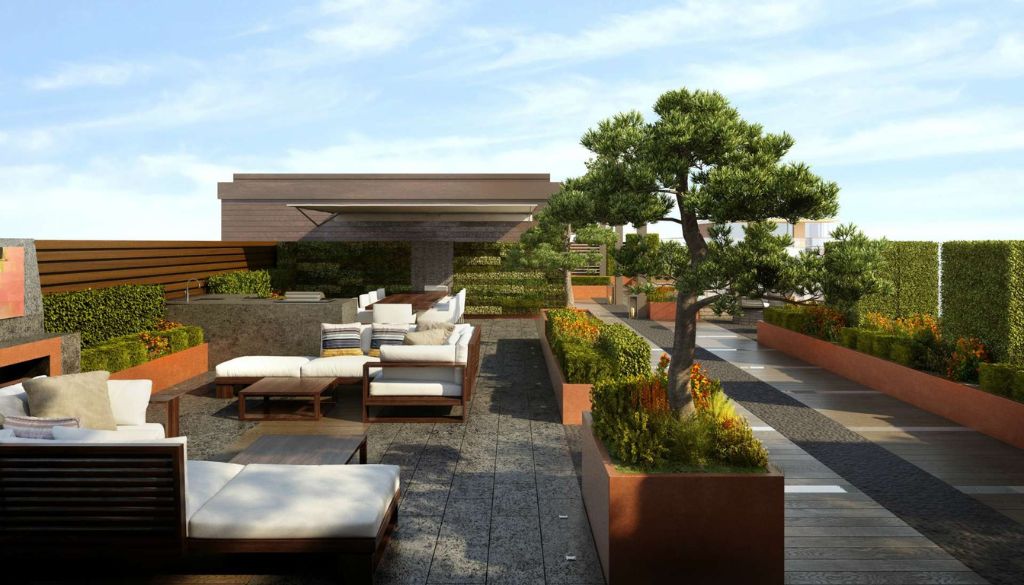
The hardscape palette you choose affects both the weight loading on the roof and the visual character of the space. Porcelain pavers on pedestals are a popular choice — they’re lightweight, durable, and allow water to drain beneath them without compromising the waterproofing membrane. Composite decking on a raised frame achieves a similar outcome with a warmer aesthetic.
For material selection ideas that work beautifully in Melbourne garden settings, our article on bluestone landscape design and material selection for Melbourne gardens offers helpful context on durable, locally relevant materials.
Maintenance Tips
Rooftop gardens require more attentive maintenance than conventional gardens, primarily because the conditions are more extreme and the consequences of neglect are more visible and potentially costly. A seasonal maintenance routine should include:
- Spring: Review irrigation systems after winter, feed established plants with slow-release fertiliser, check drainage outlets
- Summer: Increase watering frequency during heatwaves, check windbreak planting, monitor for pest activity on stressed plants
- Autumn: Remove spent summer planting, top-dress raised beds with compost, inspect waterproofing membrane for any signs of damage
- Winter: Reduce irrigation, protect tender species if frost is likely, clear leaves from drainage channels after storms
Our related article on retaining wall ideas and solutions for sloped Melbourne properties may also be useful if your rooftop connects to adjacent earthwork or retaining structures below.
Cost Considerations
Rooftop garden costs vary enormously depending on structural requirements, waterproofing scope, planting density, and the inclusion of irrigation, lighting, or bespoke furniture. As a general guide for Melbourne homeowners:
- Extensive green roof installation (lightweight, sedum-based): AUD $200–$400 per m²
- Intensive rooftop garden with raised beds, irrigation, and furniture: AUD $500–$1,200+ per m²
- Structural assessment and engineering report: AUD $800–$2,500 depending on complexity
- Professional waterproofing membrane installation: pricing varies significantly with roof area and existing condition
John French Landscape Design typically works on residential projects in the AUD $20,000–$80,000 range, and rooftop projects can sit comfortably within this bracket depending on scope. The most important investment is getting the structural and waterproofing elements right at the start — retrofitting these after the garden is installed is far more disruptive and expensive.
Frequently Asked Questions
How much weight can a rooftop garden add to my roof?
This depends entirely on your roof structure and must be determined by a qualified structural engineer. Extensive green roofs typically add 60–150 kg/m²; intensive gardens can add 150–500+ kg/m². A professional assessment is essential before any installation begins.
Which plants are best for windy, sunny rooftop gardens?
Hardy natives such as westringia, native grasses, lomandra, and compact grevilleas perform well. Succulents and sedums are excellent for extensive green roofs. Avoid large-leafed tropical species that suffer in wind and sun exposure.
Can I grow vegetables on a rooftop garden?
Yes, provided you have sufficient structural capacity for deeper raised beds (typically 300–450mm of growing media) and a reliable irrigation system. Tomatoes, herbs, leafy greens, and beans are among the most successful rooftop crops in Melbourne’s climate.
Do I need professional waterproofing for a rooftop garden?
Yes — without exception. A root-resistant waterproofing membrane installed by a qualified professional is the foundation of any rooftop garden. Attempting to garden directly on an existing roof surface without this protection risks significant water damage to the building structure.
How often does a rooftop garden need maintenance?
At minimum, a seasonal review four times per year should cover irrigation, drainage, fertilisation, and structural checks. During summer, weekly watering checks may be needed during extended dry periods. An automated drip irrigation system dramatically reduces the time burden of routine maintenance.
Ready to Design Your Rooftop Garden?
A well-designed rooftop garden is a significant undertaking — but the rewards in lifestyle, sustainability, and property value make it one of the most compelling landscape investments available to Melbourne homeowners. Getting the structural assessment, waterproofing, and design right from the start is critical, and that’s where professional expertise makes the difference.
John French Landscape Design has been creating beautiful, functional residential gardens across Melbourne and Eltham since 1981. Whether you’re in the early planning stages or ready to commission a design, contact us to book a consultation and take the first step toward your rooftop garden.
Call us on 0419 725 344 or email info@johnfrenchlandscapes.com.au to arrange a convenient time to talk through your project.
