
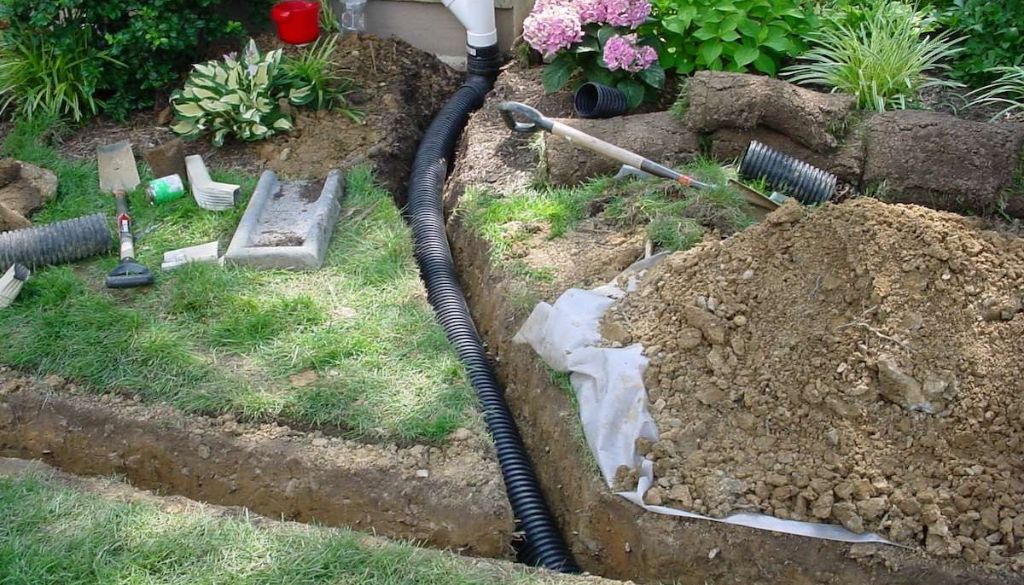
Water is one of the most powerful forces in any garden — and one of the most destructive when it has nowhere to go. Landscaping drainage connections are the invisible infrastructure that keeps your outdoor space healthy, functional, and protected. From French drains and trench drains to stormwater outlets and permeable paving, a well-designed drainage network quietly does the hard work of moving water away from where it causes damage and towards where it can be absorbed or safely discharged.
At John French Landscape Design, we’ve been designing and building residential landscapes in Eltham and across Melbourne’s suburbs since 1981. Drainage is never an afterthought in our projects — it’s one of the first things we plan. Whether you’re dealing with a waterlogged lawn, erosion on a sloped block, or pooling water near your home’s foundation, understanding how drainage connections work is the first step toward solving the problem permanently.
Why Proper Landscaping Drainage Matters
Poor drainage isn’t just an inconvenience — it’s a genuine threat to your home and garden. Melbourne’s weather patterns, with concentrated seasonal rainfall and long dry spells, make drainage management especially critical. Water that has nowhere to go puts enormous pressure on soil, plants, and structures alike.
Common problems caused by inadequate drainage connections include:
- Waterlogged lawns and garden beds that suffocate plant roots
- Soil erosion on slopes and retaining wall failures
- Persistent standing water that becomes a mosquito breeding ground
- Damage to home foundations and slab edges
- Plant die-off from root rot in poorly draining beds
- Flooding of driveways, patios, and entertaining areas
The good news is that most residential drainage problems are solvable with the right combination of drainage connections and landscape design. An integrated system — one where every drain connects to a properly sized pipe, which in turn connects to a safe discharge point — transforms a problem yard into a resilient one.
How Landscaping Drainage Connections Work
A drainage system is rarely a single component. It’s a network of connected elements that work together to capture, transport, and discharge excess water safely. Understanding this network helps you see why every connection point matters.
The typical flow through a residential drainage system works like this: rainwater falls on surfaces such as lawns, roofs, driveways, and patios. Surface drains, pits, and channels capture this water at ground level. Underground pipes then transport the collected water beneath the landscape. Finally, the system discharges into a stormwater drain, soakwell, rainwater tank, or approved outlet.
When any link in this chain is missing, undersized, or poorly connected, water backs up and finds its own path — usually through your garden bed, under your paving, or toward your house. To understand how different drainage systems interact with your overall landscape design, our detailed guide on landscape drainage systems explains the full picture.
Common Types of Landscape Drainage Systems
French Drains
French drains are one of the most versatile and commonly used solutions for residential drainage problems. A French drain consists of a trench filled with gravel or crushed rock, with a perforated pipe buried inside and wrapped in geotextile fabric to prevent soil from clogging the system.
Water enters through the gravel, flows into the perforated pipe, and is carried away from the problem area to a designated discharge point. French drains are particularly effective for waterlogged lawns, sloped blocks where groundwater migrates laterally, and garden beds suffering from poor permeability. They can be installed close to the surface or at depth depending on where the water is entering the system.
Trench Drains and Channel Drains
Trench drains (also called channel drains) are long, narrow drainage channels installed flush with paved surfaces. They capture sheet flow — water running across a hard surface — and direct it into underground pipes connected to the stormwater system.
You’ll typically find trench drains at the base of driveways, around pool decks, across patio entries, and at the threshold of garage doors. They come with decorative grates that can complement stone, concrete, or timber surrounds, making them a functional and aesthetically considered solution in hardscaped outdoor areas.
Stormwater Drainage Systems
Stormwater systems connect your landscaping drainage to a larger discharge network — either a municipal stormwater drain or an on-property soakwell and rainwater harvesting system. Key components include downpipes from roof guttering, stormwater pits, junction boxes, and outlet pipes sized to handle peak rainfall volumes.
These systems are essential for managing the high volumes of water generated during heavy Melbourne storms. Poor connections between downpipes and the underground drainage network are one of the most common — and most damaging — failures we see in residential gardens. Our resource on proper water management for your garden covers stormwater connection requirements in detail.
Swales and Dry Creek Beds
Swales are shallow, planted channels that guide water across a property using gentle gradients. Unlike piped systems, they allow water to infiltrate slowly into the soil as it moves, reducing runoff volume and recharging groundwater. Dry creek beds serve a similar function while also acting as a designed landscape feature, using rocks and pebbles to mimic a natural streambed.
Both solutions are well suited to Melbourne’s native garden aesthetic — they complement drought-tolerant and indigenous plantings beautifully while doing serious drainage work. John French has incorporated swales and creek beds into numerous residential projects across Eltham and surrounding suburbs, blending function with naturalistic design.
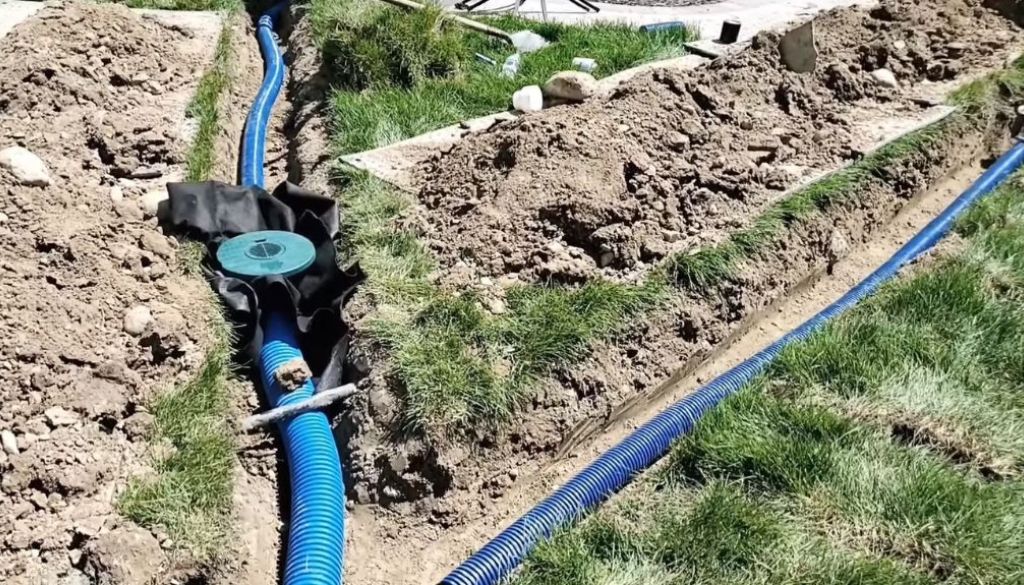
Key Landscaping Drainage Connections Explained
The effectiveness of any drainage system depends on the quality of its connections. Here are the most critical connection points in a residential landscape drainage network:
Downpipe to Underground Drainage Pipe
Roof runoff is one of the largest contributors to drainage problems in residential gardens. Every square metre of roof area collects a significant volume of water during a storm event. Downpipes must connect directly to underground drainage pipes — not simply terminate at the surface or discharge onto garden beds — to manage this volume effectively.
Surface Drain to Underground Pipe
Surface drains and channel drains must be correctly connected to underground pipes with properly sealed joints and adequate fall (gradient). A surface drain that flows into an undersized or poorly graded pipe will overflow during heavy rain, defeating its purpose entirely.
Underground Pipe to Discharge Point
Underground drainage pipes must ultimately connect to an approved discharge point — a stormwater drain, soakwell, rainwater tank, or approved outfall. In Victoria, connections to municipal stormwater infrastructure must comply with local council requirements. Unconnected or improperly terminated pipes simply relocate water problems rather than solving them.
Drainage Integration with Hardscaping
Retaining walls, paved areas, and outdoor entertaining spaces all create drainage challenges. Retaining walls must include agricultural pipe or weep holes to relieve hydrostatic pressure, or they risk structural failure. Paved areas need falls designed into the surface, with drains positioned at low points. When we design patio and outdoor living spaces at John French Landscape Design, drainage connections are engineered into the design from the outset — not retrofitted after the fact.
Landscape Features That Support Better Drainage
Good drainage isn’t only about pipes and drains — landscape design itself plays a major role in managing water. Several design features can significantly reduce the drainage burden on your system:
- Grading and soil shaping: Subtle changes to land contour can direct water away from structures and toward drainage outlets without any piping at all.
- Permeable paving: Gravel paths, permeable pavers, and decomposed granite allow water to infiltrate rather than run off.
- Raised garden beds: Lifting planting areas above ground level prevents waterlogging in heavy soils.
- Berms: Raised mounds of soil can act as deflectors, redirecting runoff away from buildings or vulnerable planting areas.
- Native and drought-tolerant plantings: Deep-rooted native plants improve soil structure and increase water infiltration over time. This is a cornerstone of John French’s design philosophy — landscapes that work with Melbourne’s climate rather than against it.
How to Plan a Landscaping Drainage System
Designing an effective drainage system for your property doesn’t need to be overwhelming, but it does require systematic thinking. Here’s how we approach it:
Step 1 — Identify Problem Areas: Walk your property during and after rainfall. Note where water pools, where soil erodes, and where runoff concentrates. Photograph problem areas for reference.
Step 2 — Map Water Flow: Observe the natural gradient of your land. Water always moves toward the lowest point — understanding this flow is essential for locating drains correctly.
Step 3 — Choose the Right Solutions: Match drainage types to your specific problems. Subsurface waterlogging calls for French drains. Surface flooding on paved areas needs trench drains. Large-volume events require stormwater connections.
Step 4 — Design the Connections: Plan every connection point before installation begins. Ensure adequate fall throughout the system, correct pipe sizing for anticipated flow volumes, and compliant discharge to an approved outlet.

Maintaining Your Landscape Drainage System
Even the best-designed drainage network requires regular maintenance to remain effective. Blocked drains are one of the most common — and most avoidable — causes of garden flooding. Recommended maintenance tasks include:
- Clear debris from surface drains and grates after storms and in autumn when leaf fall is heavy
- Inspect underground pipe outlets and stormwater pits for sediment build-up annually
- Clean gutters and downpipes before the wet season
- Check for signs of soil subsidence near drainage pipes, which may indicate pipe failure
- Monitor any swales or dry creek beds for vegetation overgrowth blocking flow
If your drainage system repeatedly fails despite maintenance, it’s likely a design or capacity issue rather than a maintenance one. Our team at John French Landscape Design can assess your existing system and recommend upgrades — reach us at https://johnfrenchlandscapes.com.au/contact-us/ or call 0419 725 344.
When to Call a Professional Landscaper
Some drainage projects are well within the capability of a hands-on homeowner. Others require professional expertise, equipment, and knowledge of local council requirements. Consider engaging a professional if:
- Your yard floods during moderate or heavy rainfall events
- Water is pooling within one metre of your home’s foundation
- You need to connect to the municipal stormwater network
- Large-scale excavation or retaining wall construction is required
- Previous drainage attempts haven’t resolved the problem
With over 40 years of residential landscape design and construction experience across Eltham and Melbourne’s northern suburbs, John French Landscape Design has solved drainage problems on some of the region’s most challenging sites — sloped blocks, clay-heavy soils, high water tables, and complex multi-level gardens. To discuss your property’s drainage needs, get in touch at or call 0419 725 344.
Frequently Asked Questions About Landscaping Drainage Connections
What is the most common drainage problem in Melbourne residential gardens?
Pooling water after rainfall is the most common issue, usually caused by poor soil permeability, inadequate surface grading, or missing connections between surface drains and underground stormwater pipes. Clay-heavy soils common across Melbourne’s northern suburbs make this especially prevalent.
Do I need council approval to install a drainage system?
For most standard residential drainage work — French drains, surface drains, and internal pipe connections — approval is typically not required. However, any connection to the municipal stormwater network in Victoria will need to comply with local council requirements, and in some cases a licensed plumber must carry out that connection.
How deep should drainage pipes be installed?
This depends on the type of drainage and the site conditions, but most residential drainage pipes are installed at a minimum depth of 300mm to protect them from surface traffic and root intrusion. The critical factor is maintaining adequate fall — a minimum gradient of 1:100 — to ensure water flows toward the discharge point rather than sitting in the pipe.
Can I install a French drain myself?
A basic French drain in an open garden area is within reach of a motivated DIYer with the right tools. However, connecting it correctly to a discharge point, ensuring the right pipe sizing, and managing the geotextile fabric properly are where most DIY drainage projects fall short. For anything involving stormwater connections or complex site conditions, professional installation is strongly recommended.
How do I know if my existing drainage system has failed?
The clearest signs are persistent pooling after rain that takes more than 24 hours to drain, soggy soil in garden beds during dry periods, unexplained plant deaths in specific areas, or visible erosion channels forming across your lawn. If you’re seeing any of these consistently, contact the team at John French Landscape Design on 0419 725 344 for an assessment.
Final Thoughts
Landscaping drainage connections are the foundation of a garden that works in all conditions — not just when the weather is kind. A properly designed and installed drainage network protects your home’s structure, extends the life of your paving and retaining walls, keeps your plants healthy, and gives you an outdoor space you can enjoy year-round.
Whether you’re starting a new landscape project or dealing with a persistent drainage problem, John French Landscape Design brings the design expertise and construction experience to get it right. Visit our services page at https://johnfrenchlandscapes.com.au to learn more, explore our project portfolio, or read our complete guide to backyard drainage solutions for Melbourne homeowners at
