
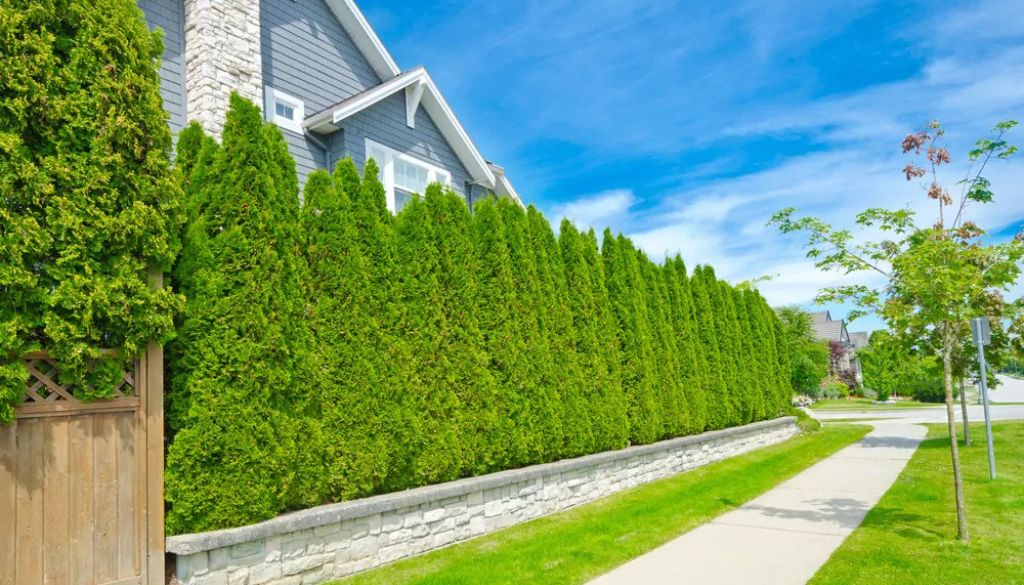
Privacy is one of the most common requests in residential landscape design. Whether your neighbours’ second-storey windows overlook your deck, a new development has opened up sight lines you never had before, or you simply want to feel more enclosed when you step outside, the right plants can solve the problem naturally—without the cost or council complications of a solid fence.
At John French Landscape Design, we’ve been creating landscapes across Melbourne since 1981, and privacy screening is a conversation that comes up in almost every consultation. The key is choosing plants that match your space, your soil, and your willingness to maintain them. This guide walks you through the best options for Australian conditions, from fast growers that deliver results within a single season to compact natives that earn their keep for decades.
Why Use Plants for Privacy Screening?
A living screen does far more than block a view. Dense foliage absorbs sound, reducing traffic and neighbourhood noise in a way that timber or Colorbond panels simply cannot. Layered planting creates habitat for birds and pollinators, adds seasonal colour to your garden, and provides a natural windbreak that protects more delicate plants behind it. If wind exposure is a significant factor on your block, our guide to landscaping for windy areas covers complementary strategies worth considering alongside your screening plan.
Plants also offer flexibility. A hedge can be shaped to follow curved boundaries, step down on sloped blocks, or remain informal where a manicured look would feel out of place. And unlike a fence that looks the same on day one as it does on day one thousand, a planted screen improves over time—filling out, flowering, and becoming a genuine feature of the garden.
Fast-Growing Plants for Quick Privacy
Syzygium smithii (Lilly Pilly)
Lilly Pilly is arguably the most popular hedging plant in Australian gardens, and for good reason. It grows quickly to four or five metres, produces dense evergreen foliage year-round, and tolerates heavy pruning—making it ideal for formal hedging along boundary lines. The small edible berries are a bonus, attracting birds without creating a mess. Plant in full sun to part shade, space at roughly 80 cm to one metre apart, and tip-prune regularly during the first two years to encourage a thick, bushy habit from the base up.
Pittosporum tenuifolium (Silver Sheen)
If your screening corridor is narrow—say, a side passage between your house and the fence—Pittosporum’s naturally upright growth habit makes it an excellent choice. It reaches three to five metres without spreading aggressively sideways, requires very little maintenance once established, and its small, silvery-green leaves create a fine-textured screen that looks tidy without constant clipping. For more ideas on making the most of those tight side-yard spaces, have a look at our landscaping ideas for the side of the house.
Photinia × fraseri (Red Robin)
Photinia delivers something most screening plants do not: a burst of colour. The glossy new growth emerges bright red before maturing to deep green, creating a two-tone effect that livens up any boundary. It can reach up to five metres and responds well to regular pruning, which actually encourages more of that striking red flush. It suits formal, structured gardens particularly well.
Clumping Bamboo (Bambusa multiplex)
Bamboo has a reputation for being invasive, but clumping varieties stay exactly where you plant them. Bambusa multiplex forms tight, upright clumps that reach three to four metres in most Melbourne climates, creating a lush tropical screen in a short time. The only real requirement is consistent moisture during establishment. Always confirm you’re purchasing a clumping—not running—variety, as running bamboo can quickly become a nightmare for you and your neighbours.

Best Australian Native Plants for Privacy Screening
Native species deserve special attention because they are adapted to local soils and rainfall patterns, require less ongoing water once established, and support the biodiversity that makes Australian gardens unique. If you’re exploring ways to reduce your garden’s water and maintenance demands more broadly, our article on sustainable lawn alternatives is a natural companion to this guide.
Callistemon (Bottlebrush)
Callistemon is one of the most versatile natives for screening. Depending on the variety, it ranges from compact two-metre shrubs to substantial trees reaching eight to ten metres. The iconic red bottlebrush flowers are a magnet for honeyeaters and lorikeets. Bottlebrush is drought-tolerant once established, handles a range of soil types including clay, and works beautifully as an informal, naturalistic screen.
Hardenbergia violacea (Native Sarsaparilla)
For vertical privacy—covering a fence, pergola, or trellis—Hardenbergia is hard to beat. This vigorous native climber produces cascading purple, pink, or white flowers in late winter and early spring, followed by dense evergreen foliage that provides coverage through the warmer months. It is fast-growing, low-maintenance, and pairs well with other screening plants in a layered arrangement.
Acacia cognata (River Wattle)
Acacia cognata offers a weeping, graceful habit that provides dense, soft screening without a rigid hedge appearance. It establishes quickly, tolerates a variety of conditions, and works particularly well in naturalistic or native garden designs. For small courtyards, the ‘Limelight’ cultivar stays compact while still offering genuine privacy.
Melaleuca linariifolia (Snow in Summer)
Melaleuca linariifolia earns its common name from the profuse white flowers that blanket the tree each summer. It is tall, dense, and particularly effective as a windbreak on exposed blocks. In suburban settings, it provides excellent upper-canopy screening where you need to block sight lines from elevated neighbouring properties.
Medium and Compact Screening Plants
Not every screening challenge requires a four-metre hedge. Sometimes a lower planting along a deck railing, around a spa, or beneath windows is all you need.
Viburnum tinus
Viburnum tinus grows to around two to three-and-a-half metres and produces clusters of white flowers followed by metallic blue berries. It handles shade better than most screening plants, making it a strong choice for south-facing boundaries. Its moderate growth rate means less frequent pruning, which suits time-poor homeowners.
Nandina domestica (Sacred Bamboo)
Nandina is a compact option that reaches only one to one-and-a-half metres, making it ideal for low hedges, planter boxes, and pool surrounds. The foliage shifts through shades of green, orange, and red across the seasons, adding year-round visual interest. It works well in small cottage garden designs where height is less important than texture and colour.
Magnolia grandiflora ‘Little Gem’
Little Gem is a compact cultivar that reaches about four metres, offering large glossy leaves with a rust-coloured underside and fragrant white flowers. It provides a more formal, architectural screen and suits front-yard boundaries where presentation matters.
How to Choose the Right Privacy Screening Plant
| Plant | Height | Growth Rate | Sun Needs | Maintenance |
|---|---|---|---|---|
| Lilly Pilly | 4–5 m | Fast | Full–Part | Moderate (pruning) |
| Pittosporum | 3–5 m | Moderate | Full–Part | Low |
| Photinia | Up to 5 m | Fast | Full sun | Moderate (pruning) |
| Clumping Bamboo | 3–4 m | Fast | Full–Part | Low (watering) |
| Bottlebrush | 2–10 m | Moderate | Full sun | Low |
| Hardenbergia | Up to 6 m | Fast | Full–Part | Low |
| Viburnum tinus | 2–3.5 m | Moderate | Part–Shade | Low |
| Nandina | 1–1.5 m | Moderate | Full–Part | Very low |
When selecting your screening plants, keep these factors front of mind:
- Mature size. A plant that grows to six metres when you only need two will create ongoing pruning work. Match the plant to the height you actually require.
- Growth speed. Fast growers like Lilly Pilly and bamboo deliver quick results, but moderate growers like Viburnum often need less long-term maintenance.
- Climate and soil. Melbourne’s clay-heavy soils and variable rainfall suit natives well. Coastal blocks or frost-prone areas need species selected for those specific conditions.
- Maintenance tolerance. Be honest about how much time you’ll spend on upkeep. If the answer is very little, lean toward natives and self-shaping varieties.
Planting Tips for Dense, Effective Screens
The Multi-Layer Screening Method
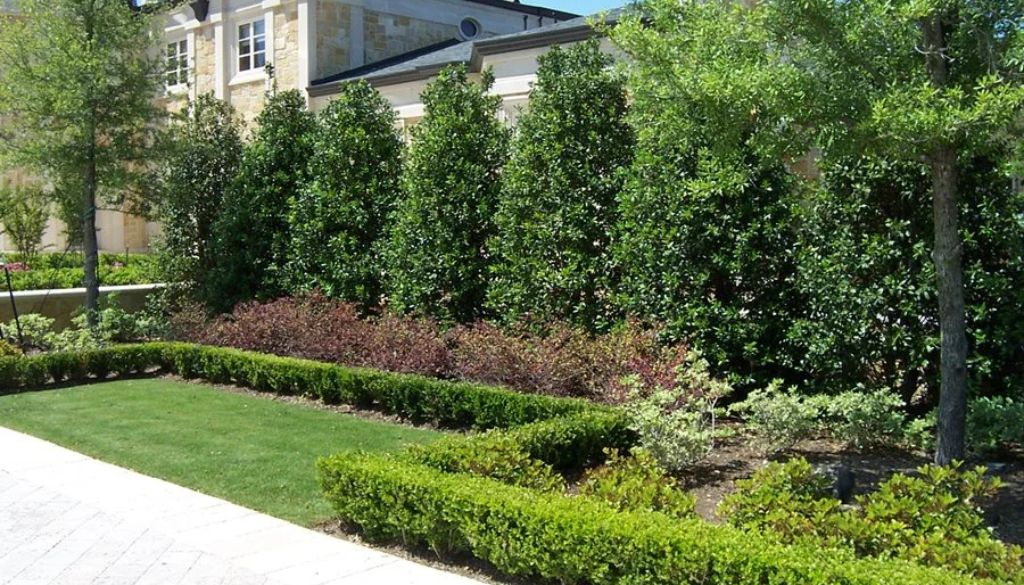
The most effective privacy screens combine multiple layers of planting rather than relying on a single row. Think of it in tiers: a ground cover layer at 30 to 80 cm for the front edge, low shrubs from 80 cm to two metres behind that, medium shrubs from two to four metres forming the core screen, and tall trees or shrubs at four metres and above providing overhead coverage. This layered approach not only delivers better privacy but also creates a more visually interesting garden—and it is a technique that works equally well on flat blocks and steep hillside landscapes where terraced planting already follows a natural gradient.
Establishment Tips
Stake young plants using the triangle method (three stakes with soft ties) to prevent wind rock without restricting trunk movement. Tip-prune leaders and lateral branches during the first year to encourage branching from the base—this is what creates density, not height, in the early stages. Water deeply but infrequently to encourage roots to reach down rather than staying shallow at the surface. Mulch annually with a 75 mm layer of organic material, keeping it clear of the trunk to avoid collar rot.
Frequently Asked Questions
What are the fastest-growing plants for privacy screening in Australia?
Lilly Pilly (Syzygium smithii), clumping bamboo (Bambusa multiplex), and Photinia × fraseri (Red Robin) are among the fastest options for Australian gardens. Under the right conditions—adequate water, full to part sun, and well-prepared soil—these species can add 50 cm to one metre of growth per year, delivering a functional privacy screen within two to three growing seasons.
How far apart should I plant a privacy hedge?
Spacing depends on the species and how quickly you want the hedge to close in. As a general guide, plant Lilly Pilly and Photinia at 80 cm to one metre apart, Pittosporum at around one metre, and clumping bamboo at one to one-and-a-half metres. Planting slightly closer gives faster coverage but may require more thinning later on. For larger screening trees like Bottlebrush or Melaleuca, allow two to three metres between each plant.
Are bamboo plants good for privacy?
Yes—provided you choose a clumping variety. Clumping bamboos such as Bambusa multiplex stay contained and form dense, upright screens that reach three to four metres. Running bamboo, on the other hand, spreads aggressively through underground rhizomes and can invade neighbouring properties. Always check the label or ask your nursery to confirm the variety is clumping before you buy.
Which native plants are best for screening in Melbourne?
Callistemon (Bottlebrush), Melaleuca linariifolia (Snow in Summer), Acacia cognata (River Wattle), and Hardenbergia violacea are all excellent native choices for Melbourne’s climate. They tolerate the region’s clay-heavy soils, cope well with variable rainfall, and require far less supplementary watering than exotic alternatives once their root systems are established.
Can I create privacy screening in a small garden?
Absolutely. Compact species like Nandina domestica (one to one-and-a-half metres), Viburnum tinus (two to three-and-a-half metres), and the ‘Limelight’ cultivar of Acacia cognata are well suited to tight spaces. You can also use climbers like Hardenbergia or Star Jasmine on a trellis or fence to achieve vertical screening without sacrificing ground-level floor space. The multi-layer planting method—combining ground covers, low shrubs, and a single taller species—works especially well in small courtyards where every centimetre counts.
Ready to Plan Your Privacy Screen?
Choosing the right plants for privacy screening is as much about understanding your block’s conditions as it is about picking what looks good in a nursery pot. Soil type, sun exposure, available width, and your long-term maintenance commitment all shape the right selection.
If you’d like personalised advice tailored to your property, John French Landscape Design can help. With over 40 years of experience designing residential landscapes across Eltham and Melbourne’s suburbs, we’ll create a screening solution that looks beautiful, performs reliably, and fits the way you actually use your garden.
Call 0419 725 344 or book a consultation to get started.
