
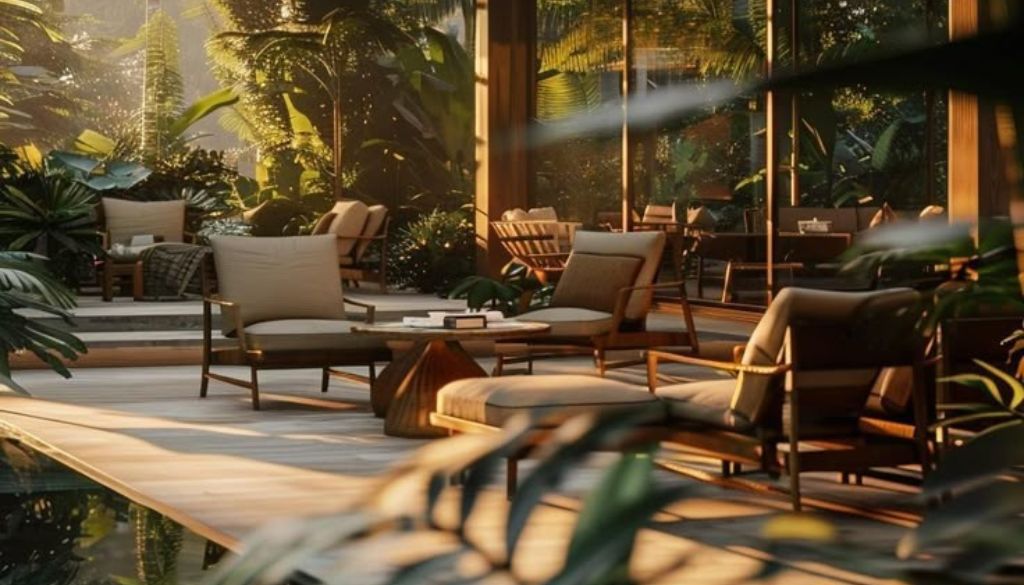
Most people design their outdoor spaces backwards.
They start with the stone sample, the timber stain, the tile they saw in a design magazine. They build something beautiful. And then, six months after completion, they realise they only ever use one corner of it — the bit closest to the back door, where the kids drop their shoes and the dog sleeps.
Luxury outdoor design in Australia has moved on from this approach. The most compelling residential outdoor spaces being built today — from inner-city courtyards in Sydney and Melbourne to sprawling garden estates in the Mornington Peninsula and coastal Queensland — are no longer designed to look impressive. They’re designed to be lived in.
That distinction matters more than it might seem. A space that photographs beautifully but doesn’t support how you actually spend your time isn’t a luxury — it’s an expensive underperformance. The shift towards lifestyle-led outdoor design is redefining what high-end looks like, and it starts with a simple question that too few designers actually ask their clients: How do you want to feel when you’re out here?
This article explores the design principles behind outdoor spaces that are genuinely used — broken down by zone, function, and the lifestyle logic that makes each one work.
Section 1: The Zoning Principle — Why Function Comes First
Walk through any truly exceptional outdoor space and you’ll notice something: it doesn’t feel like one big area. It feels like several smaller ones, each with its own purpose and atmosphere, all connected by a coherent design language.
This is zoning — and it’s the single most important concept separating high-end outdoor design from everything else.
Zoning is the practice of planning outdoor areas around how people actually move through and inhabit a space across the rhythm of a day or week. A Tuesday morning is different from a Saturday evening. The way you use your outdoor space at 7am — coffee, quiet, soft light — is completely different from how you use it at 7pm with guests. A well-zoned space supports both, without compromise.
In contrast, the most common approach to backyard design — particularly in mid-range residential builds — is a single open entertaining slab that tries to do everything and does none of it particularly well. It’s a space for neither the quiet morning nor the lively dinner party. It’s a compromise that satisfies no one.
High-end outdoor living design in Australia increasingly organises space around four core zones: the arrival sequence, the entertaining zone, the private retreat, and the pool and spa integration. Each has its own logic, its own design priorities, and its own role in the overall composition. Together, they create a space that doesn’t just look like luxury — it functions like it.
If you’re just starting to think about your outdoor space, understanding the foundational rules of layout and planning will help — our DIY landscape design tips for beginners walks through the core principles before you commit to any zone or material.
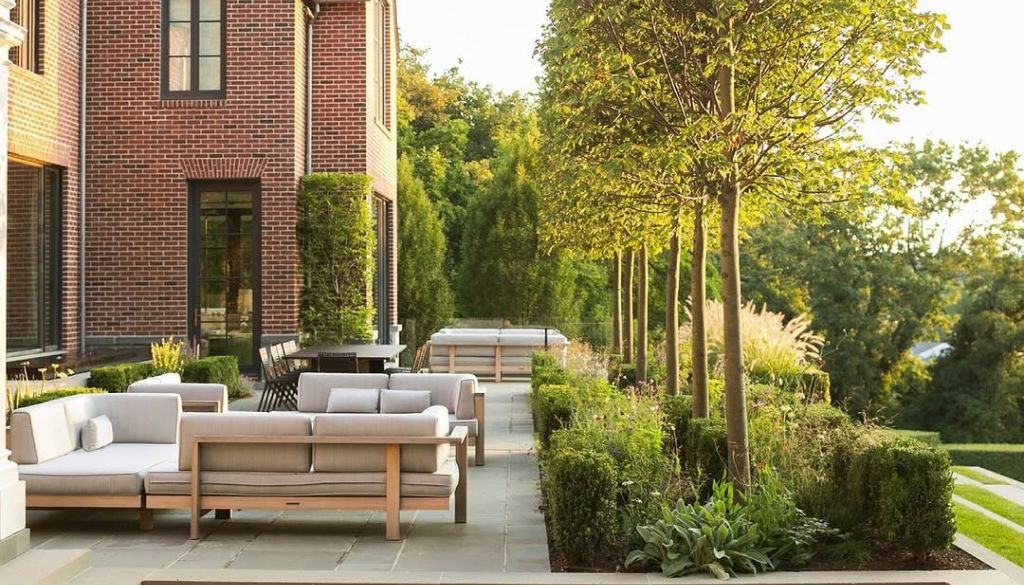
Section 2: The Arrival Sequence — Your Outdoor First Impression
Before anyone sits down, pours a drink, or jumps in the pool, they arrive. And the quality of that arrival — the transition from interior to exterior — sets the tone for everything that follows.
In high-end residential design, the arrival sequence is the deliberate choreography of how a person moves from the house into the outdoor space. It’s not a door and a step. It’s a considered series of elements that signals: you are somewhere different now. Slow down. You’re outside.
This psychological shift is more important than most clients initially recognise. We spend the majority of our lives in enclosed, climate-controlled environments. The transition outdoors needs to feel intentional — a threshold that separates the domestic from the atmospheric.
Design elements of a strong arrival sequence:
- Entry framing — a gate, overhead beam, pergola portal, or vertical planting that defines the moment of crossing
- Paving transitions — a deliberate change in material (from indoor tile to stone, from concrete to timber decking) that your feet register even before your eyes do
- Canopy or overhead structure — even a minimal shade sail or steel-framed overhead changes the spatial experience and creates a sense of sheltered arrival
- Arrival lighting — low, warm, directional light that guides rather than floods; think pathway markers and uplighting rather than floodlights
- Planting as framing — a hedge line, a row of standard trees, or a planted screen that narrows the eye and focuses attention before it opens out
Consider the difference between a 600mm step from a sliding door to a concrete slab, versus a 3-metre limestone path that curves gently between a pair of established olive trees before opening onto a shaded entertaining terrace. The destination might be the same. The experience of arriving is entirely different.
In modern courtyard design especially — where dimensions are often tighter — the arrival sequence does heavy lifting. It creates perceived depth and movement in spaces that might otherwise feel static. A courtyard that begins with a considered entry path, a water feature you hear before you see, and a canopy overhead is a fundamentally different spatial experience to one you simply step into.
Section 3: The Entertaining Zone — Designed for How You Actually Host
The entertaining zone is where most clients begin their brief — and where most designers spend the majority of their budget and attention. It’s the zone everyone imagines when they picture their ideal outdoor space.
But here’s what often goes wrong: entertaining zones are designed for the imagined dinner party rather than the actual one. They’re built around a visual anchoring point — a beautiful outdoor kitchen, a statement fire feature — without sufficient thought for how the host and guests actually move, interact, and feel over the course of an evening.
A well-designed entertaining zone isn’t a single space. It’s a cluster of sub-zones that each serve a specific social function.
The sub-zones of a high-functioning entertaining area:
- The kitchen and BBQ anchor — the functional centrepiece, positioned so the host faces guests rather than a wall; storage, prep space, and bin placement are as important as the aesthetic
- Conversation seating — a separate cluster of chairs and low tables for pre-dinner drinks or relaxed evenings; should be positioned with sightlines to both the kitchen and the garden
- Dining — a defined table zone that’s protected from wind and afternoon sun; overhead lighting and acoustic privacy matter here
- Bar or drinks station — increasingly a dedicated element in luxury backyard design; a properly positioned outdoor bar keeps guests in one place and away from the kitchen prep zone
- Fire feature — whether a fire pit, bioethanol wall piece, or inbuilt fireplace, this acts as a gathering point and extends usability into cooler months
The key design principle running through all of these: the host should never feel separated from their guests. The spatial flow of the entertaining zone should allow someone at the BBQ to hold a conversation with people at the seating cluster without shouting across the space.
Sightlines matter here as much as circulation. The ideal entertaining area allows visual connection to the pool (for households with children), the garden, and any secondary zones — so that even in a large party, the space feels integrated rather than fragmented.
For Australian climates, the orientation of the entertaining zone is critical. Outdoor living design in Australia needs to account for harsh afternoon sun in summer and the desire for winter sun in the same space. A north-facing orientation with adjustable louvre or retractable shade elements gives you year-round use without compromise — and that flexibility is increasingly non-negotiable in high-end builds.
For further inspiration on how to bring these entertaining elements together visually, browse our curated collection of residential landscaping design ideas covering the latest approaches to outdoor kitchens, dining zones, and alfresco living across Australian homes.
Section 4: Private Retreat Spaces — The Zone Most Designers Forget
Ask most designers to show you a luxury backyard and they’ll show you the entertaining zone. It photographs well. It’s where the investment is most visible.
Ask a homeowner what they actually use most, and a surprising number will point to something quieter — a spot by the garden where they have their morning coffee, a day bed tucked behind a screen of planting, a shaded seat that catches afternoon light in winter.
The private retreat zone is the one most often under-designed or missed entirely. And for a certain type of client — often the one with the largest budget — it’s the most important.
Not every outdoor moment is social. The outdoor space that supports quiet, solitary, contemplative use — reading, resting, thinking — is a fundamentally different kind of luxury to the one that performs well for guests. Both matter. A complete outdoor living design accounts for both.
What private retreat design looks like in practice:
- A shaded day bed or chaise positioned behind a planted screen, separated from the entertaining zone by at least a visual buffer
- A morning coffee nook oriented to catch early sun — east-facing, sheltered from prevailing winds, with a low seat and a small side surface
- A meditation or contemplative garden element — a water feature, a raked gravel section, a single specimen tree surrounded by low planting — that creates stillness through design
- An outdoor shower or bathing area adjacent to the master suite, creating a private extension of the bedroom experience
- A reading nook built into a retaining wall or garden structure, with built-in seating and overhead planting for canopy
The tools for creating privacy are planting, level changes, and overhead structure — not walls. A well-placed hedge, a bamboo screen, a garden bed with sufficient height and mass can create seclusion without enclosure. Level changes — even a step down of 600mm — psychologically separate a space and reduce its visual connection to adjacent zones.
The highest-end clients ask a question early in the briefing process that reflects this priority: “Where do I go when I want to be alone?” The fact that the question is even asked tells you how important the answer is to them. Design the retreat zone properly and you’ve understood something about how they want to live.
The idea of designing a space that genuinely feels like an escape is something we explore in depth in our article on garden design ideas for creating your ideal getaway — a useful companion read for anyone prioritising the retreat zone in their brief.
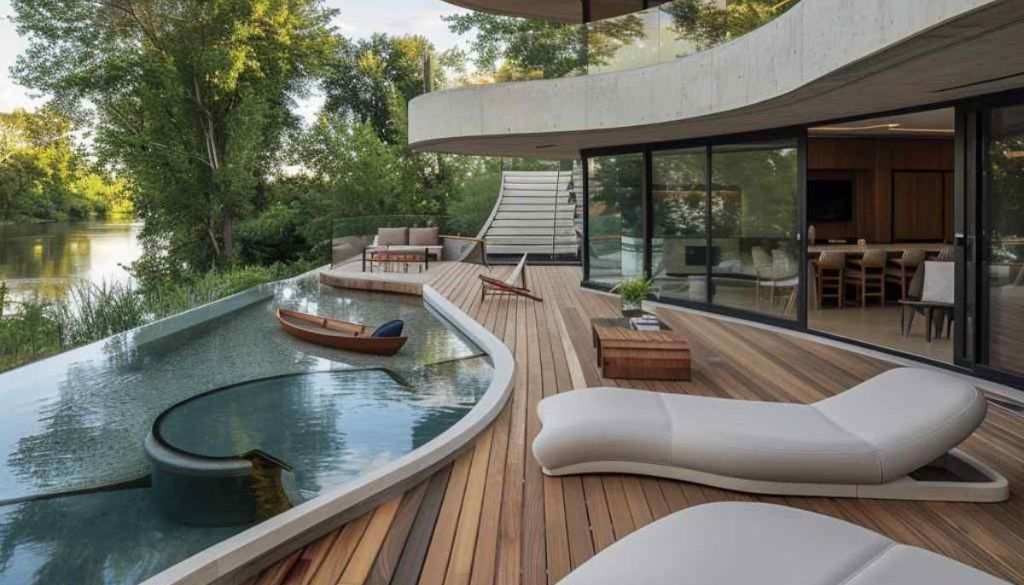
Section 5: Pool and Spa Integration — Where Design Gets Complex
The pool is the element that most commonly defines the character of a luxury backyard. It commands attention, dominates the budget, and shapes the rest of the design around it. Which means getting the integration right is essential — and getting it wrong affects everything.
The first decision is strategic, not aesthetic: is the pool the anchor of the outdoor space, or a feature within it? These are different design propositions.
An anchor pool is positioned as the centrepiece — the focal point that everything else orients around. A feature pool is one element among several, positioned to be seen but not to dominate. Neither is wrong, but the distinction needs to be made early, because it determines where the entertaining zone sits, how the retreat zone is positioned, and how the arrival sequence flows.
Pool placement considerations:
- Sightlines from the entertaining zone — guests and hosts should have a clear view of the pool without it feeling like a surveillance exercise
- Safety separation from dining — a low frameless glass balustrade or planting buffer between dining and pool edge maintains visual connection without proximity risk
- Solar orientation — a north-facing pool receives maximum sun in Australian conditions; shade over the pool for more than half the day is a significant usability issue
- Acoustic privacy — pool pumps and water features create ambient sound that should be oriented away from sleeping and private retreat zones
Spa and hot tub placement follows different logic to the main pool. Spas are typically used in the evening, often by fewer people, and in cooler weather. This suggests a position that’s sheltered, partially screened, and oriented towards a pleasant view or garden aspect — not necessarily adjacent to the main entertaining area. A spa at the far end of the garden, accessed via a lit path, creates a destination within the space. That’s a fundamentally different experience to a spa bolted to the side of the pool as an afterthought.
The wet-to-dry transition zone is one of the most frequently under-designed areas in residential pool design. The area immediately surrounding the pool — the coping, the deck, the towel storage, the outdoor shower, the shade structure — is the space that connects the pool experience to the rest of the outdoor living area. It receives significant traffic and daily use, and it needs the same level of design consideration as the pool itself.
Lighting design for pool and spa spaces operates on two levels: safety lighting (adequate illumination for steps, edges, and night-time movement) and ambience lighting (underwater LEDs, perimeter uplighting, floating candles). The best pool lighting design layers across both — ensuring the space is safe to use after dark while also being genuinely beautiful.
Section 6: How the Zones Talk to Each Other — The Design Language
A common mistake in outdoor design — even at the high end — is treating each zone as a separate project. The entertaining zone gets its material palette, the pool gets its tiling and coping, the retreat gets its planting scheme. And then they’re assembled together and something feels off. The space doesn’t cohere.
Design language is what makes a space feel whole rather than assembled. It’s the consistent thread — in materials, colour temperature, planting palette, and structural vocabulary — that runs through every zone and makes the composition read as intentional.
The elements of a coherent outdoor design language:
- Materials — the same stone, or complementary tones within the same material family, used throughout all hardscape elements from the arrival path to the pool coping
- Lighting temperature — warm white (2700K–3000K) throughout creates a unified atmosphere; mixing warm and cool light sources fragments the experience
- Planting palette — a limited selection of species, repeated and varied in scale, creates visual rhythm and ties zones together
- Level and edge treatment — consistent retaining wall profiles, step nosing details, and edge conditions prevent the “kit of parts” feeling
- Overhead structure vocabulary — whether timber, steel, or concrete, the structural language of pergolas, shade structures, and overhead elements should relate to the house architecture
Movement and sightlines across zones are as important as the zones themselves. Standing in the entertaining zone, you should be able to feel the presence of the pool, sense the garden beyond it, and know that somewhere behind the planting is a quieter space. You don’t need to see everything — but you should feel the depth of the space. That depth is what separates a well-designed outdoor environment from a paved rectangle with furniture.
The difference between a styled space and a designed space is this: a styled space looks cohesive in photographs. A designed space feels cohesive in life — at 7am, at 7pm, in summer, in winter, with guests, and without them.
The materials, structures, and planting choices that tie your zones together should also reflect a coherent overall style — if you’re still narrowing down your aesthetic direction, our guide to garden design styles for every home is a practical starting point.
Section 7: Working With a Designer — What to Expect
If the zoning principles in this article resonate, you’re already thinking about your outdoor space the right way. The next step is working with a designer who shares that philosophy.
A lifestyle-first outdoor design process starts with a different kind of brief. The first meeting isn’t about materials or budgets — it’s about how you live. A good landscape architect or outdoor designer will ask questions that might initially feel tangential: What time do you wake up? Do you work from home? Do your children use the outdoor space independently, or only with supervision? Do you entertain in small groups or large ones? When is the last time you actually sat in your backyard alone?
Those questions aren’t incidental. They’re the foundation of every design decision that follows. The position of the morning coffee nook, the orientation of the dining zone, the location of the spa — all of it flows from understanding how you live, not just what you like.
Expect a design process that takes seriously the approval of each zone before finalising the overall composition. The best outdoor projects involve iterative refinement — an arrival sequence adjusted after the client walks through it on site, a retreat zone that moves once the sun orientation is properly understood.
Understanding what a professional design process looks like — and the principles behind it — will help you arrive at your first consultation better prepared; our overview of the art of landscape design covers the core principles of balance, proportion, and visual flow that underpin every great outdoor space.
Conclusion
The outdoor spaces that define luxury in Australia today are not the most ornate or the most expensively finished. They are the ones that are used — deeply, habitually, and across the full texture of daily life.
That quality doesn’t come from material selection or styling instinct. It comes from design that begins with lifestyle — from a genuine understanding of how a person wants to live and move and rest and connect — and then builds a physical environment that supports all of that with precision and beauty.
Zoning is the framework. The arrival sequence, the entertaining zone, the private retreat, and the pool integration are its expressions. The design language that connects them is what makes the composition feel inevitable — like the space could only ever have been this way.
If you’re planning an outdoor project and want to begin with that question — how do you actually want to live out here? — we’d like to be part of that conversation.
Frequently Asked Questions
1. What is zoning in outdoor living design?
Zoning is the practice of dividing your outdoor space into distinct areas that each serve a specific purpose — entertaining, dining, private retreat, arrival, and pool or spa. Rather than one open slab that tries to do everything, zoning creates a space that supports how you actually live across different times of day and different occasions.
2. How do I know which outdoor zones I need?
It starts with how you use your time. A family with young children has different priorities to a couple who entertain regularly. A good designer will ask about your daily rhythms before recommending a layout — the zones that belong in your space are the ones that reflect your lifestyle, not a template.
3. What makes a luxury backyard design different from a standard one?
It’s less about budget and more about intentionality. Luxury outdoor design considers sightlines, orientation, material continuity, lighting atmosphere, and the flow between zones. The result is a space that feels cohesive and effortless to use — not a collection of expensive elements that happen to share the same garden.
4. How important is pool placement in overall backyard design?
Critical. The pool’s position affects every other zone — where the entertaining area sits, how the retreat is screened, where safety barriers are needed, and how the space reads visually from the house. Getting pool placement right early in the design process saves significant cost and redesign later.
5. How do I start an outdoor design project in Australia?
Begin with a lifestyle brief, not a materials wishlist. Before you think about stone finishes or timber decking, document how you want to use the space — morning to evening, weekday to weekend, solo to social. Bring that brief to your first designer consultation and the process will move faster and produce better results.
Ready to Design an Outdoor Space Built Around Your Life?
We design outdoor spaces that work as hard as they look. Whether you’re starting from scratch or rethinking what you have, let’s begin with the right question: how do you want to live out here?
Book a Design Consultation — or browse our portfolio to see how we approach every project.
