
Looking for gabion wall ideas that go beyond a basic rock-filled cage? Gabion walls are one of the most versatile, durable, and surprisingly design-forward materials in modern landscape construction. Whether your goal is slope retention, a bold garden feature, or a functional privacy screen, gabion baskets offer creative freedom that few other hardscape elements can match.
At John French Landscape Design, we have been creating landscapes since 1981 and have seen gabion walls evolve from purely structural elements into genuine design statements across Melbourne gardens. Below, we share 21 gabion wall ideas to inspire your next outdoor project, along with practical guidance on fill materials, design tips, and how to get started.
Structural Gabion Wall Ideas
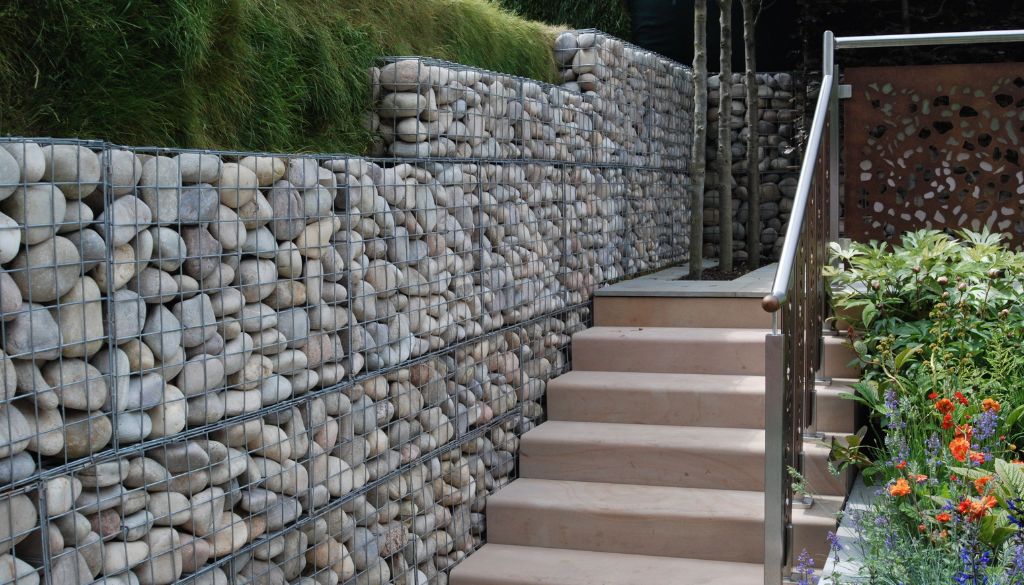
1. Tiered Retaining Walls
Stacked gabion baskets are ideal for managing sloped yards while creating layered planting zones between each tier. This approach works beautifully in contemporary or farmhouse-style landscapes, especially when paired with native grasses or orchard plantings. If you are dealing with a challenging gradient, our guide on how to landscape a steep hillside covers the broader principles of slope stabilisation and terracing that complement gabion retaining walls.
2. Curved Gabion Walls
Most people assume gabions must be straight, but that is not the case. Curved installations soften the industrial look and create a more organic flow along pathways or garden beds. The flexible mesh framework means you can follow the natural contour of your property rather than fighting against it.
3. Driveway Retaining Walls
Replace plain concrete retaining walls along your driveway with gabion baskets for a textured, more organic entry experience. The stone fill adds visual weight and a sense of permanence, while the open structure allows stormwater to pass through, reducing hydrostatic pressure behind the wall.
4. Pond and Waterfall Support Structures
Gabions can structurally support pond liners and waterfall formations while blending seamlessly into naturalistic landscapes. Their permeability makes them particularly well-suited to water features where controlled drainage is important.
Garden and Planting Gabion Ideas
5. Gabion Planter Walls
Build raised garden beds with gabion sides for excellent drainage and thermal mass. The stone absorbs heat during the day and releases it slowly overnight, helping to regulate soil temperature for both vegetables and ornamental plants. This is particularly valuable in Melbourne’s variable climate.
6. Gabion Garden Edging
For a bold alternative to steel or timber edging, use narrow gabion strips around 20 to 30 centimetres wide to define lawns, gravel paths, or garden borders. The result is a clean, architectural line that requires virtually no maintenance. To explore other options for defining hard and soft zones in your garden, take a look at our post on the best hardscaping materials for Australian landscapes.
7. Green Wall Integration
Incorporate geotextile pockets or planting cavities into gabion wall faces for succulents, bromeliads, or cascading plants. This technique softens the industrial aesthetic and creates a living wall effect that evolves with every season.
Outdoor Living and Entertainment
8. Built-In Gabion Seating
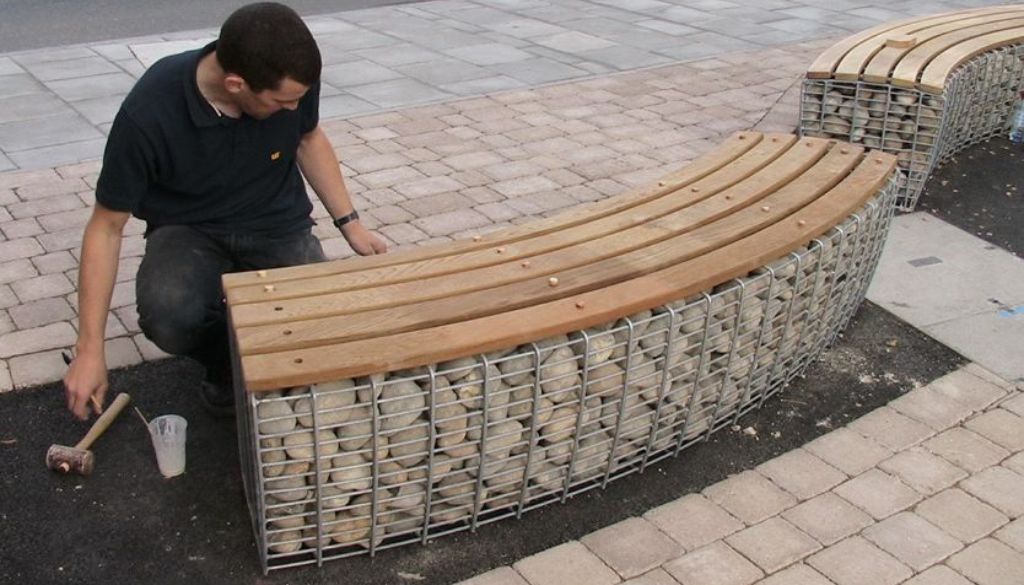
Top a low gabion wall with timber slabs, honed stone, or outdoor cushions to create permanent bench seating. This is an especially durable option for fire pit areas and poolside gathering zones where furniture would otherwise need constant replacement.
9. Fire Pit Surrounds
Create circular or U-shaped gabion seating walls around a central fire pit for a grounded, rustic gathering area. The stone fill radiates warmth, extending the comfort zone on cool Melbourne evenings. If you are also planning your patio layout around a fire feature, our concrete patio landscaping guide offers complementary design and material ideas.
10. Indoor–Outdoor Accent Walls
Use gabion baskets as feature walls in covered outdoor rooms. When paired with fireplaces, pendant lighting, or built-in seating zones, they add rich texture and warmth that bridges the transition between interior and exterior spaces.
Privacy, Screening, and Boundaries
11. Privacy Screens
Tall gabion panels make strong, semi-permanent privacy barriers that block sightlines without feeling as imposing as a solid rendered wall. For a lighter visual impact, use finer mesh and decorative fill materials like pale river stone or recycled glass.
12. Gabion Fence Columns
Instead of a full gabion fence, install stone-filled columns between timber or metal fence panels. The contrast between raw stone and sleek timber or aluminium creates a modern, high-end finish that suits Melbourne’s contemporary home styles.
13. Utility Screening
Hide pool equipment, air conditioning units, or bins behind a short gabion wall. Unlike a timber screen that weathers unevenly, a gabion enclosure looks intentional and improves with age. For narrow utility corridors along the house, our article on landscaping ideas for the side of your house includes additional strategies for making these overlooked areas work harder.
14. Gabion Gate Frames
Frame a timber or steel gate with gabion side walls for a striking entrance feature. The mass of the stone pillars anchors the gateway visually and feels both natural and architectural at the same time.
Water Features and Decorative Applications
15. Gabion Water Features
Wet stone intensifies colour and texture dramatically. Add a stainless steel blade spout, copper pipe, or cascading spillway into a gabion wall for a modern fountain effect that becomes the centrepiece of your garden.
16. Sculptural Features
Gabion mesh is surprisingly flexible. It can be shaped into spheres, abstract columns, or freestanding art pieces that double as garden focal points. These work particularly well in front-yard landscapes where you want to make a statement without relying on plants alone.
17. Gabion Mailbox Feature
A small gabion pillar built around your letterbox instantly boosts curb appeal. It signals quality throughout the rest of the property and sets the design tone before visitors even reach the front door.
Creative Fill and Design Techniques
18. Multi-Material Fill Designs
Mix stone with reclaimed brick, slate, timber offcuts, or coloured glass to create patterns or horizontal striping within the cage. Internal mesh dividers can separate materials for a clean, architectural look that tells a story about your site’s history.
19. Striped Stone Patterns
Alternate light and dark stone layers horizontally for a subtle but eye-catching design element. This is a simple technique that elevates a standard retaining wall into a curated feature.
20. Log-Filled Gabion Walls
Instead of rock, fill cages with salvaged timber or logs for a warmer, eco-conscious design statement. This works especially well in bushland-adjacent properties around Eltham and the Yarra Valley, where a natural timber aesthetic suits the surrounding environment.
21. Floating Rock Screens
For a contemporary twist, suspend stones within larger mesh panels to create the illusion of floating rock. This technique is ideal for high-end architectural gardens where visual lightness matters as much as structure.
Choosing the Right Fill Material
The fill you choose defines the personality of the entire wall. River rock delivers a soft, rounded, natural look that suits cottage and native gardens. Basalt or granite gives a bold, modern feel with clean dark tones. Reclaimed brick or crushed concrete creates an industrial aesthetic that pairs well with contemporary architecture. Coloured glass or slag is a striking contemporary statement for feature walls and water features.
Whenever possible, source local stone. It gives your project a strong sense of place, reduces transport costs, and ensures the material weathers naturally in your local climate. If you are comparing stone, brick, timber, and other surfacing options, our guide to L-shaped patio design and material planning explores how different hardscape materials work together in real outdoor layouts.
Design Tips for Getting Gabion Walls Right
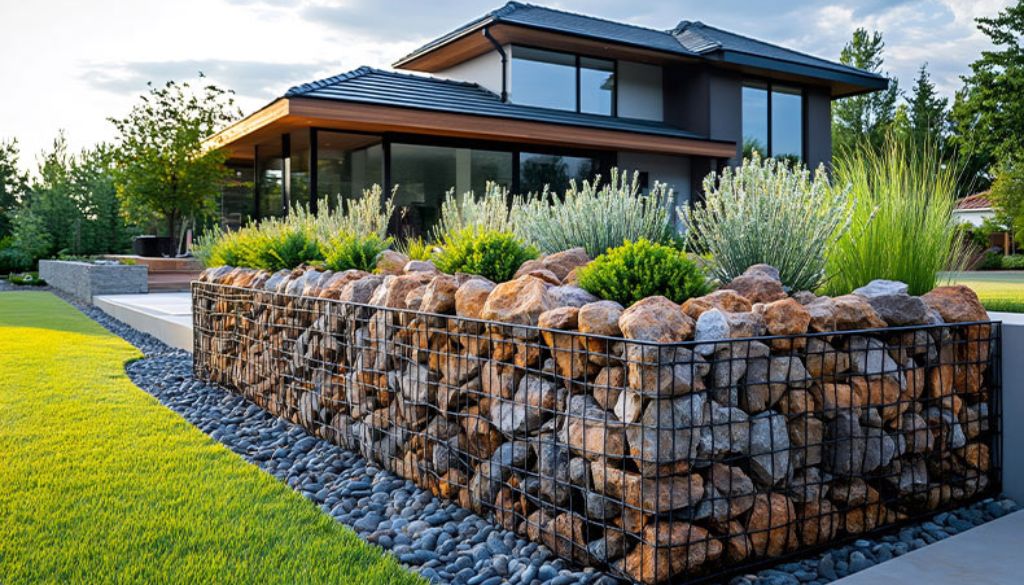
Pair gabion walls with smooth, contrasting surfaces such as large-format pavers, polished concrete slabs, or a well-maintained lawn. The textural contrast is what makes the gabion feel deliberate rather than rough. Keep surrounding plantings simple. Ornamental grasses, clipped shrubs, or cascading greenery soften the stone without competing with it.
For walls above one metre in height, always check local council building regulations and consider engaging a structural engineer. In Melbourne, retaining walls over a certain height typically require a building permit, and proper drainage behind the wall is essential for long-term stability.
It is also worth noting that gabion walls are climbable, which makes them less suitable for high-security perimeter fencing. However, for boundary definition, garden zoning, and aesthetic screening, they are hard to beat.
Frequently Asked Questions About Gabion Walls
How long do gabion walls last?
A well-constructed gabion wall with galvanised or galfan-coated mesh and quality stone fill can last 50 to 100 years with minimal maintenance. The wire coating protects against corrosion, and because the structure is flexible, it can absorb ground movement and settling without cracking the way rigid concrete walls often do. Over time, sediment and plant growth between the stones can actually strengthen the structure further.
Do gabion walls need foundations?
For low gabion walls under one metre, a compacted gravel base of around 100 to 150 millimetres is usually sufficient. Taller walls or those used for significant slope retention will typically require a concrete footing or engineered base, depending on soil conditions and the load the wall needs to carry. It is always worth checking with your local council, as retaining walls above a certain height in Melbourne require a building permit and may need structural certification.
Can gabion walls be used next to a pool?
Yes, gabion walls work well in poolside settings for retaining, screening equipment, or creating seating zones. The stone fill stays cool underfoot compared to rendered block walls, and the natural texture pairs beautifully with pool coping and timber decking. Just ensure the mesh is marine-grade or galfan-coated to handle the moisture and any chlorine splash exposure over time.
Are gabion walls cheaper than traditional retaining walls?
In many cases, yes. Gabion walls eliminate the need for formwork, mortar, and skilled bricklaying, which reduces labour costs significantly. The fill material — particularly if sourced locally — is often cheaper than engineered block or poured concrete. However, costs vary depending on wall height, site access, and the type of stone or decorative fill you choose. For a tailored estimate, we recommend booking a consultation so we can assess your specific site conditions.
Can I build a gabion wall myself?
Small, low gabion features like garden edging, mailbox pillars, or raised planter beds are achievable as DIY projects with pre-fabricated cage kits available from landscape suppliers. However, for retaining walls, tall privacy screens, or any structure on a slope, professional design and installation is strongly recommended. Incorrect drainage, inadequate foundations, or undersized mesh can lead to structural failure — and in some cases, council compliance issues.
Ready to Explore Gabion Wall Ideas for Your Garden?
Gabion walls have evolved well beyond basic slope stabilisation. From raised planters and permanent seating to sculptural art and water features, they offer one of the most adaptable materials in modern landscape design. The key is deciding whether the gabion will serve as a structural element, a decorative accent, or both — that choice will guide your sizing, fill material, and overall layout.
At John French Landscape Design, we have over 40 years of experience creating outdoor spaces across Eltham and Melbourne’s surrounding suburbs. Whether you are working with a sloped block, a compact courtyard, or a property that needs bold structural features, we can help you find the right gabion solution.
Book a consultation or call 0419 725 344 to discuss your project with our team.
