
If you’ve spent any time searching for landscaping costs online, you’ve likely encountered guides quoting $15,000 backyards and $50 per square metre paving. This is not that guide.
Premium landscape design in Melbourne operates in an entirely different category — one where the investment reflects a serious commitment to property, craft, and lasting quality. The projects covered in this guide range from $80,000 to well beyond $300,000. They involve experienced designers, specialist trades, considered materials, and outcomes that genuinely transform how a property looks, functions, and feels.
If you’re researching at this level, here is what you should expect to pay — and why.
What Premium Landscape Projects Typically Cost in Melbourne
Premium landscaping in Melbourne falls across three broad investment tiers. These are not budget categories — they are outcome categories, each reflecting a different level of scope, complexity, and finish.
$80,000–$130,000 — Refined residential transformation. Quality hardscape, considered planting design, lighting, and irrigation. Typically suits mid-size suburban blocks with moderate site complexity. The outdoor environment is cohesive and well-resolved, with materials and detailing that hold up over time.
$130,000–$200,000 — Full outdoor environment. Integrated pool or water feature, bespoke structures (pergola, pavilion, outdoor kitchen), premium stone or concrete work, comprehensive planting plan, and automated systems throughout. At this level the garden becomes a genuine extension of the home.
$200,000–$300,000+ — Landmark property landscapes. Architecturally detailed, large or complex sites, imported or rare materials, full project management, and multi-stage delivery. Designer collaboration with the property’s architect or builder is common. These projects are defined by what is not immediately visible — the precision of the engineering, the quality of the junctions, the depth of the planting scheme.
It’s worth noting that these ranges assume professional design, quality trades, and materials that will endure. They are not negotiating positions — they reflect what premium outdoor environments actually cost to deliver properly in Melbourne’s current market.
The connection between outdoor design and property value is well established — for a deeper look at how landscape architecture drives real estate returns, see our guide on the role of landscape architecture in enhancing property worth.
Cost by Element — Where the Budget Goes
Understanding how a premium landscape budget breaks down by component helps you think clearly about scope, trade-offs, and where value is generated.
Landscape Design Fees
Typical range: $8,000–$25,000+
Design fees at the premium end reflect more than drawings. An experienced landscape designer brings concept development, detailed construction documentation, planting schedules, materials specifications, and active coordination with your builder, architect, and specialist trades. The fee is not an administrative overhead — it is the intelligence that shapes every decision on site.
Clients who underinvest in design consistently overspend on construction. Vague documentation means constant on-site variations, which accumulate quickly on complex projects. A thorough design process pays for itself.
Hardscape & Paving
Typical range: $300–$800+ per m² installed
Paving is typically the single largest cost line in a premium landscape. At this level, materials move well beyond standard concrete: bluestone, travertine, natural sandstone, reconstituted stone with tight joints, large-format porcelain, and exposed aggregate concrete with custom edge detailing are all common selections.
Site complexity adds substantially to this figure. Level changes requiring engineered retaining walls, poor subgrade conditions, limited crane or machinery access, and integration with existing structures all push costs higher. On sloped inner-eastern or Mornington Peninsula properties, earthworks and retaining alone can represent $30,000–$60,000 of a project budget.
Pool & Water Features
Concrete pool with premium finish: $80,000–$150,000+ Standalone water features: $15,000–$60,000+
A concrete pool is the baseline for a premium outdoor environment. Within that figure you are selecting the finish (pebblecrete, glass bead, porcelain tile, mosaic), the coping material, the edge treatment (overflow, rolled edge, tiled), and the level of automation. Pool houses, feature walls, integrated spa, and heating systems sit on top of this. Overflow-edge pools — where the waterline sits flush with the paving level — require more precise civil engineering and typically sit at the upper end of the range. If you’re still exploring what’s possible before committing to a scope, our collection of residential landscaping design ideas covers the full range of outdoor concepts that can be brought together within a considered project brief.
Structures — Pergolas, Pavilions & Outdoor Rooms
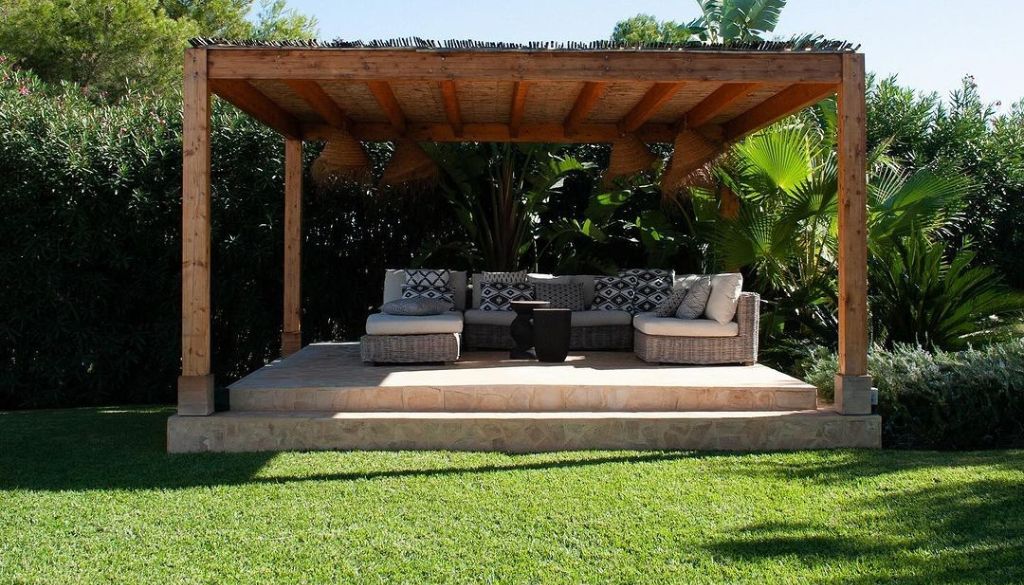
Bespoke pergola or pavilion: $30,000–$90,000+ Integrated outdoor kitchen: $20,000–$50,000+
Premium structures are engineer-certified, architecturally detailed, and built to last. Powder-coated steel frames with hardwood decking or timber battens, integrated louvred or fixed roofing, concealed drainage, and flawless transitions into adjoining paving — these are the details that distinguish a structure from something you could purchase from a supplier catalogue. Outdoor kitchens at this level include custom stone benchtops, integrated appliances, and proper waterproofing beneath all surfaces.
Lighting Design
Comprehensive architectural lighting: $15,000–$40,000+
Lighting is among the most underbudgeted elements in landscape projects and among the highest-return. A properly designed lighting scheme includes ambient lighting for general usability, accent lighting to draw the eye to planting, structures, and water, task lighting for cooking and dining zones, and pathway safety lighting — all on independently controllable circuits. Quality fixtures are rated for longevity in outdoor environments, and smart control integration allows scenes to be set automatically. A well-lit garden adds an entire dimension to property enjoyment that daytime photography cannot capture.
Planting & Soft Landscaping
Premium planting installation: $20,000–$80,000+
Planting at the premium end is structural and considered — not filler. Advanced specimen trees (often 150–400L container stock) establish an immediate sense of maturity and provide shade, privacy, and seasonal character from day one. Soil preparation is critical and frequently underestimated: proper soil profiling, amelioration, and organic matter incorporation before any planting goes in determines long-term performance. Integrated irrigation is non-negotiable. The cost of premium planting reflects not just the plants themselves, but the site preparation, the horticultural expertise behind species selection, and the installation precision that gives every plant the best possible start.
Irrigation & Automation
Full-property smart irrigation: $8,000–$20,000+
A properly designed irrigation system is a protection mechanism for the planting investment. At the premium level, this means zone-by-zone programming, moisture and weather sensor integration, and optional connection to home automation platforms. The system should be commissioned and handed over with full documentation. Projects that integrate smart home automation — Control4, Crestron, and similar — will have higher costs depending on scope.
What Drives Cost at the Premium End
The difference between a $90,000 project and a $250,000 project is rarely obvious in a photograph. It lives in the details — in the tightness of the joints, the precision of the level changes, the way a structure meets a paving surface, and the quality of the decisions made before a single trade came on site.
Materials sourcing. Premium stone, hardwood, and feature elements are frequently imported, selected individually from the slab or batch, or custom fabricated. This adds procurement time, freight costs, and often a specialist installer. These are not optional upgrades — they are the difference between a project that holds its quality over time and one that begins to show its limitations within five years.
Site complexity. Sloped blocks, poor drainage, limited crane or machinery access, heritage overlays, contaminated fill, and integration with existing architecture all require more engineering time, more precise construction, and more experienced trades. These factors cannot be value-engineered away.
Level of detailing. Premium projects are defined by what is not visible at a glance: the way a step nosing is profiled, a drainage channel recessed into paving at the base of a wall, the shadow line between a coping and a pool tile, the concealment of structural elements behind planting. This kind of detailing requires a designer who specifies it, trades who can execute it, and a project manager who enforces it.
Trade quality and coordination. Premium outcomes require specialist trades — natural stone masons, arborists, irrigation engineers, lighting designers, concrete finishers — working in the right sequence, with clear documentation and active oversight. Finding these trades, coordinating their schedules, and managing the handoffs between them is itself a skilled service.
Design documentation. Thorough construction documentation reduces variations — and on complex projects, variations are where budgets collapse. An experienced designer anticipates problems before they reach site. Clients with detailed documentation consistently complete their projects closer to budget and faster than those who build from loose specifications.
How to Think About Cost Per Square Metre
Landscaping cost per m² is one of the most searched terms in this category — and one of the most misleading. A raw cost-per-area figure strips out everything that determines actual quality: the materials selected, the engineering required, the design intelligence behind it, and the trades delivering it.
A $180,000 project on a 300m² usable area calculates to $600 per m². But that figure includes design fees, structural engineering, a bespoke pavilion, specialist lighting, automated irrigation, specimen trees, and extensive site preparation. It cannot be meaningfully compared to a $180 per m² plain concrete pour.
The right question is not “What does landscaping cost per m²?” — it is “What outcome am I investing in, and what does excellent delivery of that outcome cost?”
If you are comparing quotes, compare scope — not area. Two quotes for the “same job” may involve entirely different materials, documentation, trade quality, and site preparation. The lower number is rarely a better deal.
Getting the ground preparation right before any planting goes in is critical — if you’re managing weed suppression across a large planting scheme, our guide on landscape fabric covers the pros, cons, and correct application in detail.
What’s Not Included in These Figures
To make project comparisons meaningful, the following items sit outside a standard landscape contract and should be budgeted separately:
Council permits and planning approvals — fees and timeframes vary by council and project type. Projects in heritage overlays or near significant vegetation require additional permits and arborist reports.
Demolition and removal — existing structures, concrete slabs, established trees, and contaminated soil all require specialist removal and may involve unexpected cost if site conditions are not fully known at time of quoting.
Significant drainage or civil works — projects with complex stormwater requirements, underslab drainage, or connection to existing infrastructure may require a civil engineer engaged separately.
Ongoing maintenance programs — a premium landscape requires professional maintenance to perform as designed. This is a separate service, and an important one.
Contingency — allow 10–15% above your quoted scope for any premium project. Unforeseen conditions (subgrade, hidden services, structural discoveries) are common on residential sites with limited prior documentation.
Is Premium Landscaping Worth the Investment?
The answer, for the right property and the right client, is consistently yes — but it’s worth understanding why.
Well-designed outdoor environments add measurable capital value to Melbourne properties, particularly in inner-city suburbs, the bayside corridor, and premium growth areas such as the Mornington Peninsula and Yarra Valley. Estate agents regularly cite quality landscaping as a key differentiator at sale. A landscape that reads as architecturally considered and well-maintained signals property quality to buyers before they step inside.
The daily return is harder to quantify but often more important. A well-designed outdoor environment is genuinely used. It becomes an extension of the home — a place for morning coffee, evening entertaining, children’s play, and quiet solitude. Properties where the outdoor space is liveable year-round have a quality-of-life advantage that compounds daily.
The cost of underspending is also real. Projects that compromise on materials, design, or trade quality often require partial remediation within five to seven years. Poorly specified drainage fails. Cheap paving cracks. Planting installed without proper soil preparation struggles. These are not hypotheticals — they are the projects that fund remediation work across Melbourne every year. Spending correctly the first time is consistently the lower long-term cost. For a detailed look at the research behind landscaping and property price growth, our article on how landscape design affects real estate value explores the statistics and buyer psychology behind outdoor investment.
How to Choose the Right Designer for a Premium Project
Selecting a landscape designer for a premium project is a decision about who will be responsible for a significant capital investment — and who will be working alongside your builder, architect, and other consultants to deliver it.
Look for a demonstrated portfolio at your investment level — not comparable in style, but comparable in scale, budget, and site complexity. Look for a clear, documented design process with defined stages and deliverables. Look for transparent fee structures and evidence of long-term trade relationships. A designer who has built genuine working relationships with specialist trades is in a fundamentally stronger position to deliver.
Be cautious of vague scoping, an unwillingness to produce detailed construction documentation, or quoting without a thorough site visit and design brief. The right designer will give you an honest assessment of what your project needs — not what you want to hear. That conversation, conducted early, is the most valuable investment you can make before a single trade is engaged. Choosing the right structure for your outdoor room starts with understanding the full range of options available — our guide to pergola styles and materials covers timber, steel, aluminium, and louvred systems in detail.
Frequently Asked Questions
What is the minimum budget for a premium landscape design in Melbourne?
Most premium residential landscape projects in Melbourne start at $80,000. Below this threshold, the combination of quality materials, professional design, and specialist trades required to deliver a genuinely high-end result becomes difficult to achieve without significant compromise.
How much do landscape design fees cost in Melbourne?
For premium projects, landscape design fees typically range from $8,000 to $25,000+, depending on site complexity, project scale, and the scope of documentation required. This covers concept design, construction documentation, planting schedules, and trade coordination — not just a set of drawings.
Does a pool increase the cost of a landscape project significantly?
Yes. A concrete pool with a premium finish adds $80,000–$150,000+ to a project budget before pool house, heating, feature walls, or automation are factored in. For many clients, the pool is the single largest individual line item in the landscape budget.
How long does a premium landscape project take to complete in Melbourne?
From initial design brief to practical completion, most premium projects take 6–18 months. The design and documentation phase typically runs 2–4 months, followed by permits and trade scheduling. On-site construction for a full scope project generally runs 3–6 months, depending on complexity and weather.
Can I get an accurate quote without a landscape design first?
Not meaningfully. Without detailed design documentation, any figure provided is an estimate based on assumptions — and those assumptions are where budget blowouts begin. A thorough design process produces the documentation needed for accurate, comparable quotes from qualified trades.
Ready to Talk About Your Project?
Premium landscapes don’t start with a quote — they start with a conversation. If your project sits within the investment ranges covered in this guide, we’d welcome the opportunity to understand your site, your brief, and what excellent looks like for your property.
