

Wind is one of the most underestimated challenges in garden design. While most homeowners plan around sun, shade, and soil, persistent wind can undermine even the best planting schemes—drying out foliage, destabilising root systems, and turning outdoor living spaces into areas nobody wants to use. The good news is that with the right design approach and plant selection, a windy garden can become not just resilient but genuinely beautiful.
Across Melbourne’s outer suburbs—from elevated ridgelines in Eltham and Research to open stretches in Viewbank and Templestowe—many properties experience regular wind exposure that shapes what will and will not succeed in the garden. This guide covers how to assess your site, design effective shelter, choose plants that thrive in wind, and protect new plantings during establishment. Many of the species that serve as effective windbreaks also double as good plants for privacy screening, giving you both wind protection and visual seclusion from a single planting.
Why Wind Is So Hard on Gardens
Wind damages gardens in several ways, and understanding these effects is the first step toward designing around them. The most immediate impact is moisture loss. Wind accelerates evaporation from leaves and soil surfaces, meaning plants in exposed positions dry out far faster than those in sheltered spots—even when rainfall or irrigation is identical. Laser-cut corten steel privacy screens filter wind without creating turbulence, making them a practical and sculptural alternative to solid fencing in exposed gardens.
Physical damage is the second concern. Constant buffeting rocks plants at the root zone, loosening their hold in the soil and preventing proper establishment. Young trees and tall perennials are especially vulnerable. In coastal areas, salt-laden wind adds another layer of stress, burning foliage and limiting the range of species that can survive without protection.
Beyond plant health, wind affects how people use outdoor spaces. A patio or entertaining area exposed to prevailing wind is uncomfortable to sit in, reducing the practical value of the garden. Designing for wind is therefore about creating both a healthier growing environment and more usable outdoor living areas. Wind exposure also accelerates soil drying, making water management even more critical—homeowners dealing with this challenge should also explore water-wise garden design strategies that address moisture loss across the entire property.
Assessing Your Site Before You Landscape
Identify Wind Direction and Intensity
Before selecting plants or planning structures, spend time understanding how wind moves across your property. In Melbourne, prevailing winds typically come from the north and west during summer (often hot and dry) and from the south and southwest during winter (cool and wet). However, local topography can redirect wind significantly.
Hilltops and ridgelines receive the strongest exposure. Gaps between buildings or fences can create funnel effects that accelerate wind speed in narrow corridors. Observe your garden during windy conditions and note which areas are most exposed, where debris accumulates, and where existing plants show signs of wind stress—such as one-sided growth or persistent leaf burn on the windward side.
Exposure, Soil, and Drainage
Wind dries soil rapidly, particularly sandy or shallow soils that already have limited moisture-holding capacity. Clay soils hold water better but can become compacted and poorly drained in exposed areas where organic matter breaks down quickly. Coastal sites face the added challenge of salt accumulation in soil, which affects plant health and nutrient uptake.
Assessing these conditions before you design allows you to match plants to what the site actually offers, rather than fighting against it. Properties on slopes face compounded exposure—wind, erosion, and drainage all interact—and the principles of landscaping steep and exposed slopes apply directly to windy hillside gardens.
Designing a Garden That Works With Wind
The most common mistake in windy gardens is trying to block wind entirely. A solid wall or dense fence creates a wind shadow immediately behind it, but it also generates turbulence—eddies and downdrafts that can be more damaging to plants than the original wind. Effective wind management works with airflow rather than against it.
The goal is to slow wind down, not stop it. Semi-permeable barriers—whether living or structural—filter wind and reduce its speed progressively. A well-designed windbreak can provide effective shelter for a distance of up to six times its height on the leeward side. This principle underpins everything from single hedge rows to multi-layered shelter belt systems.
Creating distinct garden “rooms” using a combination of hedging, screening plants, fences, and structures is one of the most practical strategies for windy sites. Each room offers its own microclimate, allowing you to grow a wider range of plants than the fully exposed site would otherwise support. The sheltered zones closest to windbreaks can host more delicate species, while outer zones are planted with tough, wind-tolerant varieties that act as the first line of defence.
Windbreaks and Shelter: What Actually Works
Why Solid Walls Fail
A solid barrier forces wind up and over, creating a vacuum on the leeward side that pulls wind back down in turbulent gusts. The protected zone is very narrow—typically only two to three times the barrier height—and the turbulence within it can snap stems, uproot young plants, and create uncomfortable eddies in outdoor living areas.
The Best Windbreak Types
The most effective windbreaks allow approximately 40 to 50 percent of the wind to pass through while reducing its speed. Layered planting belts—combining tall trees, mid-height shrubs, and low groundcovers—achieve this naturally. The varied heights and densities slow wind progressively as it passes through successive layers.
Semi-permeable fences using spaced timber slats, woven brush panels, or steel mesh with climbing plants also work well as immediate windbreaks while living shelter establishes. Earth mounds or low banks planted with groundcovers can redirect wind at ground level and protect lower planting zones without any vertical structure at all.
Structural Elements That Reduce Wind
Hardscape features contribute significantly to wind management when positioned thoughtfully. Slatted timber screens allow airflow while reducing wind speed and can be designed to complement the architectural style of the home. Pergolas and overhead structures create sheltered zones for outdoor dining and entertaining without blocking air circulation entirely.
Retaining walls on sloped, exposed sites serve a dual purpose—they hold soil in place while creating sheltered planting pockets on their leeward side. Combined with appropriate planting, a retaining wall becomes both a structural and horticultural element. In bushfire-prone areas across Melbourne’s outer northeast, structural wind management also intersects with fire safety—our guide to fire resistant landscaping covers how to design defensible spaces that account for both wind and ember attack.
Best Plants for Windy Areas
Groundcovers for Windy and Exposed Sites
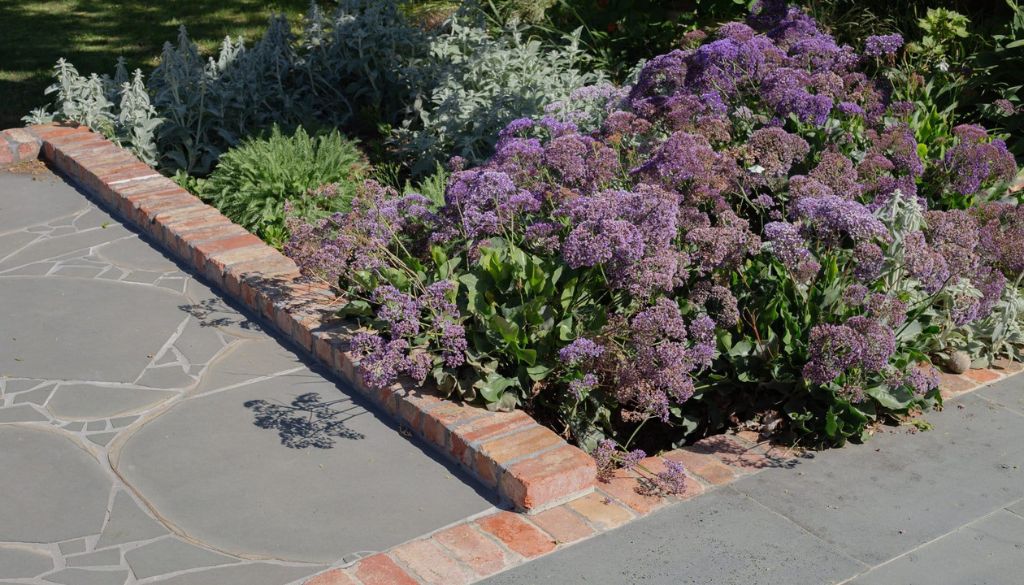
Low-growing plants that hug the ground are naturally resistant to wind damage and play a critical role in protecting exposed soil from drying out. Myoporum parvifolium spreads rapidly and tolerates both wind and drought once established. Carpobrotus (pigface) is exceptionally tough on coastal and exposed inland sites. Prostrate forms of grevillea—such as Grevillea ‘Royal Mantle’—combine wind resilience with attractive foliage and flowers that attract native pollinators.
Lomandra longifolia deserves particular mention. Its dense, strappy foliage flexes with the wind rather than resisting it, and its deep root system anchors soil effectively. It tolerates a wide range of soils and moisture levels, making it one of the most versatile plants for exposed Melbourne gardens.
Shrubs That Tolerate Strong Wind
Mid-layer shrubs provide the body of a windbreak system and create the sheltered microclimate where less tolerant species can thrive. Coastal tea tree (Leptospermum laevigatum) is a proven performer in exposed positions across southeastern Australia—dense, tough, and attractive. Westringia fruticosa handles wind, salt, and drought with minimal care and can be shaped into hedges or left to grow naturally.
Correa species, Banksia integrifolia (particularly dwarf forms), and Callistemon (bottlebrush) all contribute to a resilient mid-layer that provides year-round structure and seasonal flowers. For a broader selection of tough, low-care shrub options suited to challenging conditions, explore our guide to the best low-maintenance shrubs for Australian gardens.
Trees for Windy Gardens and Windbreaks
Canopy trees form the tallest layer of a windbreak system and provide the greatest extent of shelter. She-oaks (Allocasuarina and Casuarina species) are among the most effective windbreak trees in Australia—their needle-like foliage filters wind beautifully and their deep root systems provide stability in exposed soil.
Banksia species (particularly Banksia integrifolia and Banksia marginata) handle wind and poor soils well while providing food for native birds. Melaleuca and Callistemon species offer flexible timber that bends rather than snaps in strong gusts. When selecting trees for windy positions, prioritise species with deep tap roots over those with shallow, spreading root systems—the latter are more vulnerable to wind-throw in storms.
Grasses and Plants That Move Beautifully in the Wind
Not all wind management is about resistance. Some of the most visually striking windy gardens embrace movement as a design feature. Ornamental grasses like Miscanthus, Pennisetum, and native tussock grasses (Poa labillardieri) create flowing, kinetic displays when the wind moves through them.
Designing sections of the garden specifically for movement—banks of grasses, swaying Dianella, or nodding flower heads of Echinacea—turns wind from a problem into an aesthetic asset. These areas feel alive and dynamic rather than battered, and they complement the calmer, sheltered zones elsewhere in the garden.
Protecting Young and Newly Planted Gardens
Even wind-tolerant species are vulnerable during establishment. Temporary protection—such as hessian windbreak screens, shade cloth barriers, or brush fencing—gives new plantings time to develop root systems strong enough to anchor them in exposed soil.
Staking young trees is important, but over-staking is a common mistake. A tree staked too rigidly never develops the trunk strength needed to stand independently. Use two low stakes with flexible ties that allow the trunk to move in the wind while preventing the root ball from rocking.
Heavy mulching with coarse organic mulch around new plantings retains moisture in the root zone, reduces soil temperature fluctuation, and protects the surface from wind erosion. Water deeply and less frequently rather than giving light, shallow applications that encourage surface roots. Timing your planting to coincide with the cooler, wetter months gives roots the best chance to establish before summer wind and heat arrive—our spring gardening tips cover the best preparation strategies for seasonal planting success.

Common Mistakes in Windy Area Landscaping
The most frequent error is reaching for tall, fast-growing trees first. Large specimens planted into exposed positions without existing shelter are the most likely to fail. Instead, establish the mid-layer windbreak shrubs and groundcovers first, then introduce taller species into the sheltered zones they create.
Solid fences, as discussed, often make wind problems worse rather than better. Overwatering shallow-rooted plants in windy positions is another trap—the soil surface stays wet while deeper layers dry out, encouraging roots to stay shallow and increasing wind vulnerability. Choose deep-rooted species and water deeply to encourage downward root growth.
Finally, avoid the temptation to choose plants purely for fast growth. Species that grow quickly in benign conditions often have weak timber, shallow roots, and brittle branches—exactly the qualities you do not want in an exposed garden.
When to Get Professional Help
Simple windbreak planting and protective screening on moderately exposed suburban sites are well within the reach of confident home gardeners. However, severely exposed ridgeline properties, coastal clifftop sites, or gardens where large trees are close to buildings or boundaries benefit significantly from professional design input.
An experienced landscape designer can assess wind patterns, recommend appropriate structural and planting solutions, and coordinate construction management for retaining walls, earthworks, and shelter belt establishment.
For over 40 years, John French Landscape Design has been creating resilient, beautiful gardens across Melbourne’s diverse terrain—from sheltered courtyards to exposed hilltop properties. We understand the unique challenges that wind, slope, and exposure present, and we design gardens that work with your site, not against it. Book a consultation to discuss your landscape project today.
Frequently Asked Questions
What plants grow best in windy areas?
Deep-rooted, flexible species perform best. Lomandra, Westringia, coastal tea tree, Banksia, and Allocasuarina (she-oak) are all excellent choices for exposed Melbourne gardens. Ornamental grasses also thrive and add movement to windy landscapes.
How do you stop wind damaging a garden?
Use semi-permeable windbreaks rather than solid barriers. Layered planting belts, slatted fences, and earth mounds slow wind progressively without creating destructive turbulence. Protect new plantings with temporary screens until they establish.
Are retaining walls good wind barriers?
Retaining walls reduce wind at ground level and create sheltered planting pockets on their leeward side, but they function best when combined with planting above and around them. A wall alone can create turbulence similar to a solid fence.
Can you garden successfully in very windy locations?
Yes. With proper site assessment, layered windbreak design, and wind-tolerant plant selection, even severely exposed sites can support thriving, attractive gardens. The key is working with the wind rather than trying to eliminate it entirely.
