

Concrete patios offer one of the most versatile foundations for outdoor living spaces. Durable, cost-effective, and endlessly adaptable, concrete provides the structural backbone that good landscaping transforms into genuinely inviting outdoor rooms. The difference between a plain concrete slab and a beautiful patio lies not in the concrete itself, but in what surrounds it.
With thoughtful landscaping—strategic planting, clear zoning, appropriate lighting, and careful material choices—concrete patios become seamless extensions of your home that work beautifully year-round. This guide covers the principles and practical approaches that turn functional concrete into stylish outdoor living. If you’re weighing up materials and costs, find out why a patio is a smart landscape investment before you commit to a concrete design.
What Is Concrete Patio Landscaping?
Concrete patio landscaping is the intentional design of both hardscape and softscape elements to enhance a concrete outdoor area. This encompasses choosing appropriate concrete finishes, integrating plants and planters, creating functional zones for different activities, managing drainage and runoff, and adding elements like shade, privacy screening, and lighting.
The goal is balance. Concrete provides structure, durability, and a clean canvas; landscaping adds softness, comfort, and visual interest. When these elements work together, the result feels neither too hard nor too wild—simply a well-designed outdoor space that invites use. For insights on how concrete patios fit within broader hardscaping strategies, check our guide on hardscaping design options including concrete features.
Start With Layout: How the Patio Will Be Used
Before selecting finishes or plants, define how the space will actually function. Different activities require different considerations, and understanding intended use shapes every subsequent decision.
Common concrete patio uses include outdoor dining, entertaining and lounging, poolside relaxation, fire pit gatherings, and transitional walkways connecting different garden areas. Most patios serve multiple purposes, which makes thoughtful zoning essential. If you want to take your concrete patio to the next level, adding a fire pit zone creates a warm focal point for evening entertaining — explore our complete fire pit landscaping design guide for ideas that complement paved surfaces.
Allow clear circulation paths—900mm minimum for comfortable movement. Position dining zones close to indoor kitchens for practical serving. Place lounge areas where wind and sun exposure suit relaxation. Use landscaping elements to define zones rather than physical barriers, keeping the space feeling open while creating distinct areas for different activities. To add warmth and contrast alongside concrete surfaces, consider incorporating weathering steel edging and planter features that develop a rich rust-orange patina over time.
Choosing the Best Concrete Finish for Landscaping
The concrete surface itself sets the tone for the entire outdoor space. Different finishes suit different aesthetics and integrate with landscaping in distinct ways. For a textural contrast that elevates a concrete patio, consider incorporating gabion walls as borders, seating bases, or decorative accents around your entertaining area.
Exposed aggregate offers texture and slip resistance while blending naturally with garden settings—the visible stones create visual connection with gravel paths and rock features. Brushed concrete provides subtle texture ideal for modern landscapes where clean lines dominate. Coloured concrete warms up large slabs and can be matched to complement house exteriors or planting schemes. Stamped concrete mimics stone or pavers while remaining cost-effective for larger areas.
For landscaped patios, finishes with texture and natural variation tend to integrate most successfully with plants and soil. High-gloss sealed finishes can feel disconnected from garden surroundings and present slip hazards when wet.

Landscaping Around a Concrete Patio
Soften Edges With Planting
Straight concrete edges can feel harsh without greenery to soften transitions. This is perhaps the single most important landscaping intervention—where concrete meets garden determines whether the patio feels integrated or imposed.
Effective edge treatments include low garden beds along patio borders planted with groundcovers or low shrubs, native or ornamental grasses that provide movement and softness, raised planters in concrete, steel, or timber that add height variation, and sprawling plants that spill slightly over edges to blur the hard line. These approaches visually connect patio and garden, creating seamless flow between spaces.
Use Planters to Add Height and Privacy
Planters are essential in concrete patio landscaping—especially in courtyards, terraces, or spaces overlooked by neighbours. They introduce greenery where in-ground planting isn’t possible and create vertical interest that breaks up horizontal concrete expanses.
Effective planter strategies include tall containers for screening neighbours or creating privacy, fewer large feature pots rather than many small ones for cleaner visual impact, and built-in bench planters that combine seating with greenery for space efficiency. Plant choice depends on climate and aspect—clumping bamboo, lilly pilly, and frangipani all work well in Melbourne conditions for different screening and feature purposes.
Introduce Vertical Greenery
When floor space is limited, vertical planting adds greenery without consuming patio area. Trellises with climbing plants, wire systems supporting jasmine or star creeper, and modular green wall panels all introduce foliage on walls and screens.
Vertical planting provides privacy from overlooking windows, shade that reduces summer heat, cooling through evapotranspiration, and visual interest that makes small patios feel like enclosed garden rooms rather than exposed outdoor floors.
Creating Zones on a Concrete Patio
Landscaping helps visually divide concrete patios into distinct usable areas, making large slabs feel purposeful rather than empty. Zoning creates the sense of moving between different spaces even within a single patio footprint.
Frame dining zones with planters or low hedging to create enclosure. Define lounge areas with outdoor rugs and potted plants at corners. Set fire pit zones apart with gravel borders or contrasting concrete finishes. Mark transition paths with stepping stones, texture changes, or linear planter arrangements. Each zone should feel distinct while remaining part of a cohesive whole. A great patio balances structure and greenery — learn more through integrating hardscape and softscape for patios so you can enhance comfort and aesthetics.
Lighting as a Landscaping Tool
Lighting is often overlooked in concrete patio landscaping but makes enormous difference to both aesthetics and usability. Good lighting extends patio use into evening hours while highlighting the landscaping that transforms concrete into garden.
Effective approaches include low-level path lights near garden beds for safety and ambience, uplighting on feature plants or trees to create drama after dark, recessed LED strip lighting under built-in seating or along planter edges, and warm white colour temperatures for relaxed, welcoming atmosphere. Avoid harsh floodlighting that flattens the space—pools of light and shadow add depth that uniform illumination destroys.
Drainage and Stormwater Considerations
Concrete patios must manage water properly to avoid damage to both the patio itself and adjacent structures. Poor drainage causes ponding, erosion, and potential moisture problems in nearby buildings.
Slope concrete away from the house at one to two percent grade. Direct runoff toward garden beds, swales, or rain gardens that can absorb and filter stormwater. Include permeable areas nearby—gravel, lawn, or planted beds—that allow water to infiltrate rather than sheet off site. Avoid designs that trap water between patio and walls. Landscaping plays a key role in absorbing and slowing stormwater runoff, turning a potential problem into an irrigation resource.
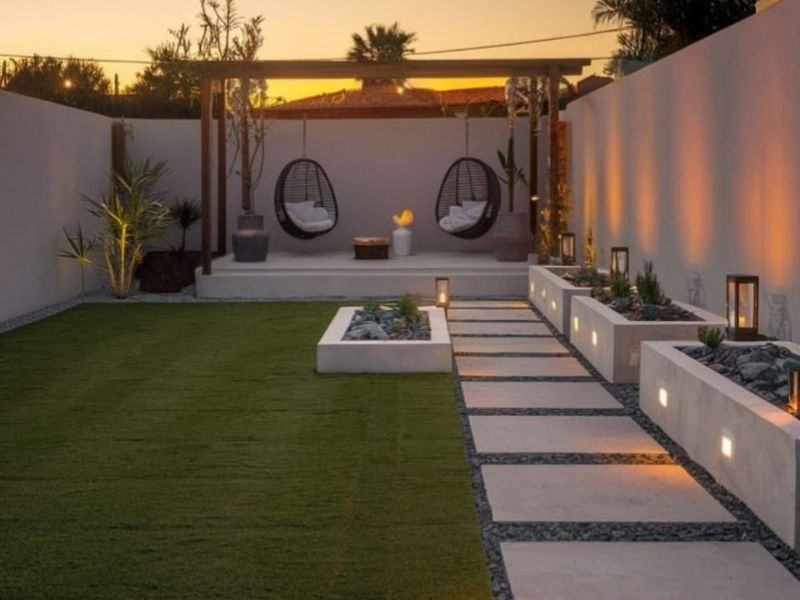
Low-Maintenance Landscaping for Concrete Patios
Concrete patios pair best with low-maintenance planting that won’t create ongoing cleaning headaches or demand constant attention. Choose plants that are drought-tolerant once established, slow-growing to avoid rapid overcrowding, evergreen where possible for year-round structure, and suitable for container growing if used in planters.
Native plants, succulents, and ornamental grasses reduce watering and pruning needs while providing texture, movement, and colour. Avoid plants that drop excessive debris—fallen leaves, flowers, and seed pods on concrete create mess and potential staining that undermines the clean aesthetic concrete patios offer. To explore ways to connect patio spaces with complementary zones, read about popular hardscaping features for outdoor living areas and how they bring function to a concrete patio
Common Mistakes to Avoid
Several errors commonly undermine concrete patio landscaping. Leaving concrete edges bare creates harsh transitions that make patios feel disconnected from gardens. Overcrowding with too many pots produces visual clutter that contradicts concrete’s inherent cleanliness. Ignoring drainage causes ongoing problems that damage both patio and plantings.
Choosing glossy sealers reduces slip resistance and creates artificial-looking surfaces that fight natural planting. Selecting plants that rapidly outgrow their space means constant pruning or eventual replacement. A restrained, planned approach always looks more polished than enthusiastic accumulation.
Frequently Asked Questions
What plants work best around concrete patios?
Low-maintenance plants that tolerate reflected heat and don’t drop excessive debris work best. Ornamental grasses, succulents, native groundcovers, and compact shrubs provide texture without high maintenance. Avoid deciduous plants directly adjacent to patios, and choose species that won’t rapidly outgrow their positions.
How do I make a concrete patio feel less stark?
Soften edges with planting that blurs the concrete boundary. Add planters with structural plants for vertical interest. Use outdoor rugs and furniture to create warmth. Install lighting that highlights greenery after dark. Choose textured concrete finishes that integrate better with garden surroundings than smooth, glossy surfaces.
What concrete finish is best for landscaped patios?
Exposed aggregate and brushed finishes integrate most naturally with garden settings. Their texture provides visual connection to gravel, stone, and planted areas while offering practical slip resistance. Coloured concrete in earthy tones also works well. Avoid high-gloss sealed finishes that feel disconnected from natural surroundings.
How much does concrete patio landscaping cost?
Costs vary based on patio size, concrete finish complexity, number and size of planters, irrigation requirements, and lighting installation. Professional landscaping typically ranges from modest edge planting to comprehensive designs with built-in planters and integrated lighting. A well-landscaped concrete patio often delivers better long-term value than replacing concrete with expensive natural stone.
Can I landscape an existing concrete patio?
Absolutely. Most concrete patio landscaping happens around existing slabs rather than during initial construction. Adding planters, creating garden beds along edges, installing lighting, and introducing vertical greenery can all transform existing patios without replacing the concrete itself.
Making Concrete Feel Like Garden
Concrete patios don’t have to feel cold or unfinished. With thoughtful landscaping—plants, zones, lighting, and texture—you can turn a concrete slab into a welcoming outdoor living space that feels balanced, functional, and genuinely connected to your garden. For ideas on reducing upkeep while keeping your patio attractive, explore our low‑maintenance patio and landscape ideas guide, especially useful for busy homeowners.
For Melbourne homeowners seeking to transform existing concrete patios or design new outdoor living spaces, professional landscape design ensures integration between hardscape and planting that feels natural rather than forced. With over forty years creating outdoor spaces across Eltham and surrounding suburbs, John French Landscape Design brings expertise in patio landscaping, hardscape integration, and creating outdoor rooms that work beautifully year-round.
Ready to transform your concrete patio? Contact John French Landscape Design on 0419 725 344 or email info@johnfrenchlandscapes.com.au to discuss your project.
