

For homeowners in bushfire-prone regions of Australia, the landscape surrounding your home is more than an aesthetic choice—it’s a critical line of defence. Fire resistant landscaping combines thoughtful plant selection, strategic layout, appropriate materials, and ongoing maintenance to reduce the risk of bushfire damage to your property. These same fire-safe plant selections and material principles apply when designing a dedicated gathering space around an open flame — our article on how to design an outdoor fire pit area walks through positioning, base preparation, and planting in detail.
While no garden can guarantee complete protection against an intense bushfire, a well-designed landscape can significantly reduce ember attack, limit radiant heat exposure, and slow flame progression. Understanding these principles empowers you to make informed decisions that protect both your home and your family.
What Is Fire Resistant Landscaping?
Fire resistant landscaping refers to the deliberate design and management of outdoor spaces to minimise bushfire risk. This approach considers how vegetation, hardscape materials, and garden layout influence fire behaviour around a property.
The concept works on a simple principle: by reducing available fuel, increasing moisture retention, and creating physical barriers, you can limit the intensity and speed at which fire moves through your garden. This buys valuable time—for you to evacuate safely and for emergency services to defend your property.
It’s important to maintain realistic expectations. Fire resistant landscaping reduces risk rather than eliminating it. In catastrophic fire conditions, even the most carefully designed gardens can be overwhelmed. Landscaping should always be considered one component of a broader bushfire preparedness plan.
Why Fire Resistant Landscaping Matters
Bushfires threaten properties through three primary mechanisms: ember attack, radiant heat, and direct flame contact. Understanding each helps explain why landscape design matters so much.
Ember attack occurs when burning debris travels ahead of the fire front, sometimes kilometres in advance. These embers land in gutters, on decks, and in garden beds, igniting spot fires that can destroy homes before the main fire arrives. Dense, dry vegetation provides perfect fuel for these embers.
Radiant heat is the intense thermal energy radiating from a fire. Vegetation close to buildings absorbs and re-emits this heat, potentially igniting external walls, windows, and roofing materials. Strategic spacing between plants and structures reduces this transfer.
Direct flame contact happens when fire physically reaches your home. Continuous vegetation creates pathways for flames to travel from surrounding bushland right to your doorstep. Breaking these pathways with cleared zones and non-combustible materials disrupts fire progression.
Creating Defendable Space Around the Home
Defendable space is the buffer zone between your home and the surrounding vegetation. This area should be designed to reduce fire intensity and give occupants or firefighters a safer environment to work within.
Most bushfire authorities recommend establishing distinct zones radiating outward from your home. The inner zone, typically extending 10 metres from buildings, requires the most intensive management. Here, vegetation should be minimal, well-spaced, and kept green. Combustible materials like firewood stacks, garden furniture, and pot plants should be stored away from walls.
The outer zone extends further into your property and can accommodate more vegetation, though careful species selection and spacing remain essential. The goal is to filter and slow any approaching fire, reducing its intensity before it reaches the inner zone.
Key principles for defendable space include maintaining at least two metres of clearance between tree canopies and rooflines, ensuring shrubs don’t create a continuous fuel layer beneath trees, and keeping grass short and green during fire season.
Choosing Fire Resistant Plants
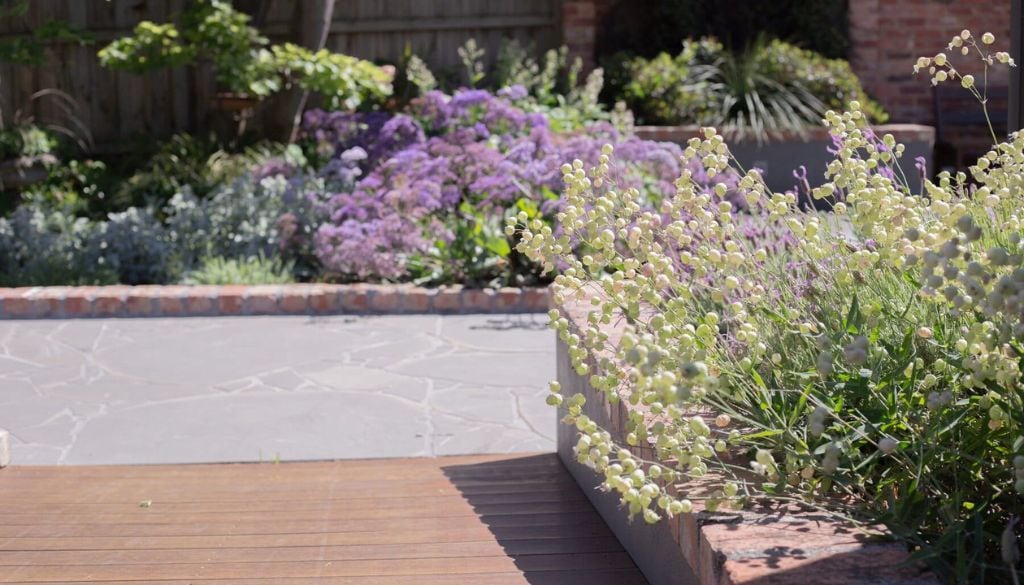
Not all plants burn equally. Fire resistant plants share characteristics that make them less likely to ignite and less likely to sustain intense flames. When selecting species for bushfire-prone gardens, look for plants with high moisture content in their leaves, low oil and resin levels, open and airy growth habits, and the ability to recover quickly after fire.
Deciduous plants offer particular advantages since they drop their leaves in autumn, reducing available fuel during the summer fire season. However, this doesn’t mean all evergreens should be avoided—many native Australian species with low oil content perform well in fire resistant designs. Many Australian natives have evolved with fire and can be incorporated into your bushfire-safer landscape—learn more about designing a native plant garden that balances fire safety with wildlife habitat.
Recommended Fire Resistant Trees
Several tree species suit fire resistant landscaping in Melbourne and surrounding regions. Deciduous options include ornamental pears, liquid amber, and various maple species. These trees provide summer shade while minimising fuel loads during high-risk months.
For evergreen options, consider species like lilly pilly varieties with high moisture content, or certain eucalypts known for lower oil levels. Fruit trees, particularly citrus and stone fruits, maintain good moisture content and can form part of a productive, fire-conscious garden.
Fire Resistant Shrubs and Ground Covers
Lower vegetation plays an equally important role. Succulents make excellent ground covers near buildings due to their high water content—varieties like pigface and various sedums create attractive, low-maintenance options that resist ignition. A well-planned fire-resistant garden often requires less ongoing care, allowing you to enjoy the benefits of low-maintenance landscaping while keeping your property protected.
Native ground covers such as kidney weed and native violet provide greenery without creating significant fuel loads. For shrubs, consider westringia, which maintains reasonable moisture content and an open growth habit, or coastal rosemary for similar reasons.
Plants to Avoid in Bushfire-Prone Areas
Certain plants pose elevated risks and should be avoided or carefully managed in fire-prone landscapes. Species with high oil content, papery bark, or dense, fine foliage present the greatest concerns.
Plants to reconsider include most cypress and juniper species, which contain volatile oils and dense foliage. Many native Australian species, while beautiful and ecologically valuable, require careful placement—paperbarks, tea trees, and certain wattles can ignite readily and burn intensely.
This doesn’t mean eliminating these species entirely from your property, but rather positioning them well away from buildings and ensuring they’re not part of continuous vegetation pathways leading to your home.
Strategic Plant Placement and Garden Layout
How you arrange plants matters as much as which plants you choose. Garden zoning creates a graduated transition from minimal vegetation near buildings to more natural planting further away.
Avoid continuous shrub beds that connect to trees above—this layered structure creates “fire ladders” allowing flames to climb into tree canopies. Instead, maintain clear gaps between ground covers, shrubs, and tree canopies.
Consider your property’s topography. Fire travels faster uphill, so properties on slopes require wider defendable spaces on the downhill side. North and west-facing aspects receive more sun and dry out faster, warranting extra attention.
Group plants in isolated clusters separated by paths, driveways, or other non-combustible surfaces. This compartmentalised approach means a fire igniting in one section won’t necessarily spread to adjacent areas.
Fire Resistant Landscaping Materials
Hardscape materials contribute significantly to fire resistance. Replace organic mulches near buildings with non-combustible alternatives like gravel, decomposed granite, or pebbles. While bark mulch and wood chips improve soil health, they become fire hazards within several metres of structures.
Paving and pathways using stone, concrete, or brick create natural firebreaks. Consider extending paved areas around your home’s perimeter to create a buffer between vegetation and walls.
Fencing materials matter too. Timber fences can carry fire directly to buildings—consider metal, masonry, or fire-rated alternatives for fences connecting to your home. Retaining walls in stone or concrete provide non-combustible structural elements that can also function as fire barriers.
Maintenance: The Most Critical Factor
Even the best-designed fire resistant landscape requires ongoing maintenance. During fire season, this becomes critical. When choosing fire-resistant plants, many low-maintenance shrubs for your garden also offer excellent drought tolerance and reduced flammability.
Leaf litter and debris accumulate quickly and represent significant fuel loads. Regular clearing from garden beds, gutters, and around buildings prevents ember ignition. Dead branches and spent flower heads should be removed promptly.
Pruning maintains the open structure that makes plants more fire resistant. Remove lower branches from trees to prevent ground fires climbing into canopies, and thin dense shrubs to improve airflow and reduce fuel density.
Irrigation keeps plants hydrated and therefore more resistant to ignition. Prioritise watering in the inner zone during dry periods, maintaining that green buffer immediately surrounding your home.
Water Features and Irrigation as Fire Mitigation
Water in the landscape offers multiple benefits. Well-maintained lawns, when kept green, provide low-fuel zones that slow fire progression. While lawns consume water, strategically placed turf areas near buildings can serve as effective firebreaks.
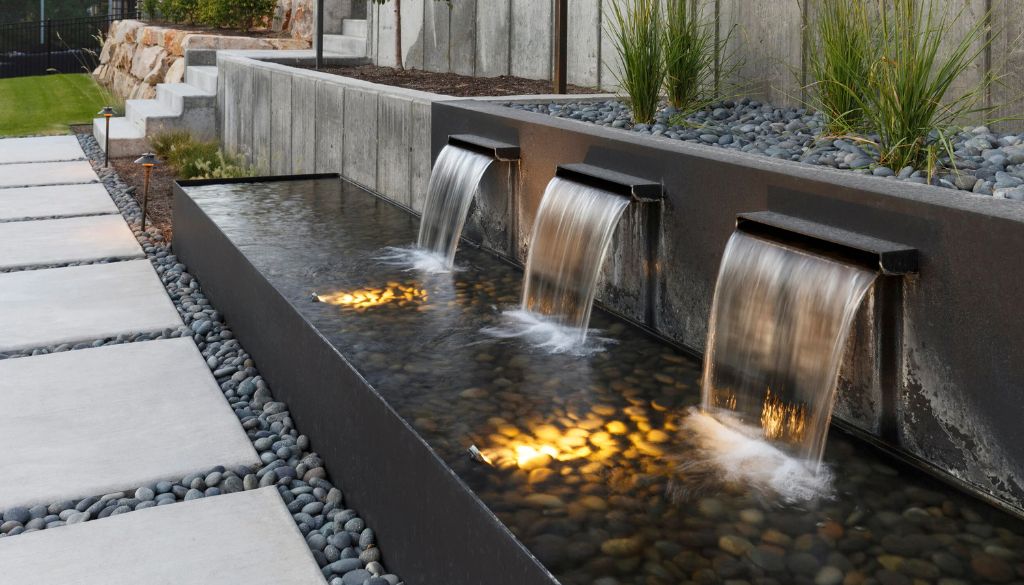
Pools, ponds, and dams provide emergency water supplies for firefighting while creating non-combustible elements within your garden. Even smaller water features contribute to localised humidity and interrupt continuous fuel beds.
Irrigation systems, particularly sprinklers that can wet down vegetation and structures during a fire threat, provide active defence. Ensure any system can operate independently of mains power, which may fail during bushfire emergencies. Fire-resistant plants are often drought-tolerant, so combining bushfire protection with water conservation garden ideas creates a landscape that’s both safer and more sustainable.
Important Limitations and Safety Warnings
Fire resistant landscaping is one component of bushfire preparedness, not a complete solution. In extreme fire weather, even well-prepared properties face serious risk. Poor plant placement and overcrowding increase fire risk, so understanding the common landscape mistakes to avoid is essential when creating a bushfire-safer garden.
Always have a bushfire survival plan that includes early evacuation as the safest option. Never rely on your landscape to protect you during catastrophic fire conditions.
Consult your local council for specific requirements regarding vegetation clearance and defendable space in your area. Regulations vary between regions and fire risk categories.
Frequently Asked Questions
What is fire resistant landscaping?
Fire resistant landscaping is the practice of designing and maintaining gardens to reduce bushfire risk. It involves selecting plants with low flammability, using non-combustible materials, creating defendable space around buildings, and maintaining vegetation to minimise fuel loads. The goal is to slow fire progression, reduce ember attack opportunities, and limit radiant heat transfer to structures.
Are there plants that won’t burn in a bushfire?
No plant is completely fireproof. In intense bushfire conditions, virtually any vegetation can ignite. However, some plants resist ignition better than others due to high moisture content, low oil levels, and open growth habits. Succulents, deciduous trees, and species like lilly pilly perform better than oil-rich plants such as cypress, juniper, and paperbark. The term “fire resistant” indicates reduced flammability rather than immunity to fire.
How far should trees be from my house?
Tree canopies should be at least two metres from your roofline and external walls. For larger trees, maintain a clearance of at least 10 metres between the trunk and your home. Trees within the inner defendable space zone should be well-spaced, have lower branches removed to prevent fire climbing into the canopy, and be kept clear of accumulated debris beneath them.
Is mulch safe in bushfire-prone areas?
Organic mulches like bark chips and wood shavings present fire risks when used close to buildings. Within the inner defendable zone (typically 10 metres from structures), replace organic mulch with non-combustible alternatives such as gravel, pebbles, or decomposed granite. Further from buildings, organic mulch can be used but should be kept moist during fire season and cleared of accumulated leaf litter.
How often should I maintain my fire resistant garden?
During fire season, inspect your garden weekly and remove fallen leaves, dead branches, and accumulated debris. Mow grass regularly to keep it short, and water inner zone vegetation to maintain moisture content. Before fire season begins, conduct a thorough clean-up: prune trees and shrubs, clear gutters, remove stored materials from against walls, and check that non-combustible zones remain clear. Year-round maintenance is easier and more effective than last-minute preparation.
Design Your Bushfire-Safer Garden
For homeowners across Melbourne’s suburbs, professional guidance can help balance aesthetic goals with safety requirements. If you’re planning a landscape redesign or want to assess your current garden’s fire resilience, consulting an experienced landscape designer ensures your outdoor space works harder to protect your home. Contact John French Landscape Design on 0419 725 344 to discuss how thoughtful design can enhance both the beauty and safety of your property.
